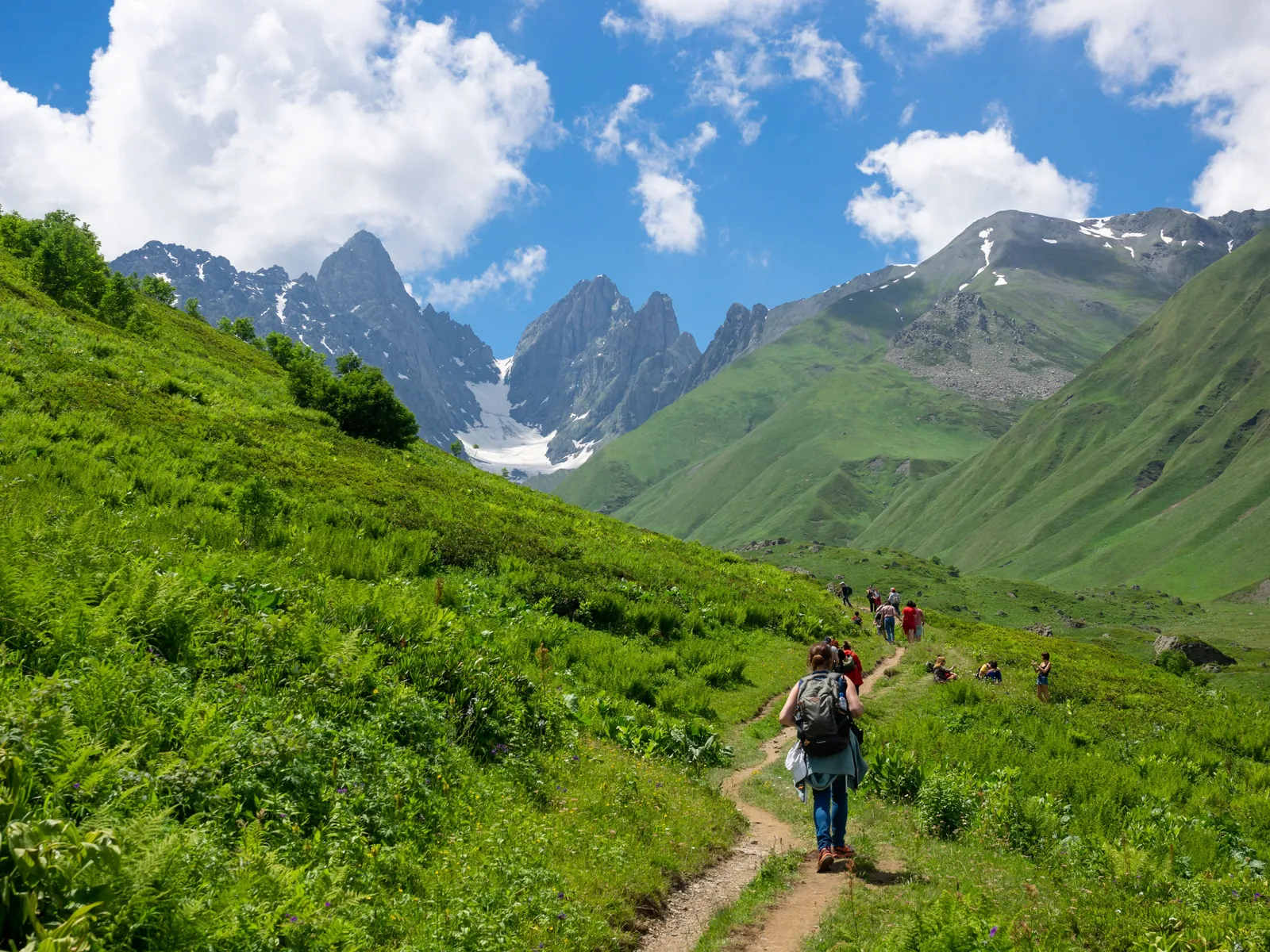
Georgia is a hiking country that happens to also have wine, and most first trips get the ratio the wrong way round. The Greater Caucasus runs along the northern border with peaks well above four thousand metres, and the walking underneath them ranges from a two hour climb to a church to a four day crossing between villages.
The constraint is not difficulty. It is season. Get that right and the rest follows.
The season, honestly
The high routes are open from roughly late June to early October, and the exact opening depends on how much snow fell and how fast it went. Nobody can tell you in March what the trail will be like in June.
July and August are the most reliable and the busiest, with the warmest nights and the fullest guesthouses.
September is the month most people who have been several times will name. Clearer air, thinner crowds, autumn colour in the valleys, and cold nights that catch out anyone who packed for summer.
Outside that window the passes hold snow, several access roads close, and the walking shifts to lower valleys and the national parks. That is not a lost trip, it is a different one.
The four regions, and what each one gives you
Kazbegi
The most accessible mountains in the country, roughly three hours from Tbilisi on the Georgian Military Road. Stepantsminda is the base, and the classic walk up to Gergeti Trinity church climbs steadily for a couple of hours with Mount Kazbek behind it. There is a road, which many people take up and then walk down.
Beyond that, the Juta valley and the Chaukhi massif, and the Truso valley with its mineral springs and travertine terraces, are both day walks from the same base. The full picture of the area is in our Kazbegi and Gergeti guide.
Svaneti
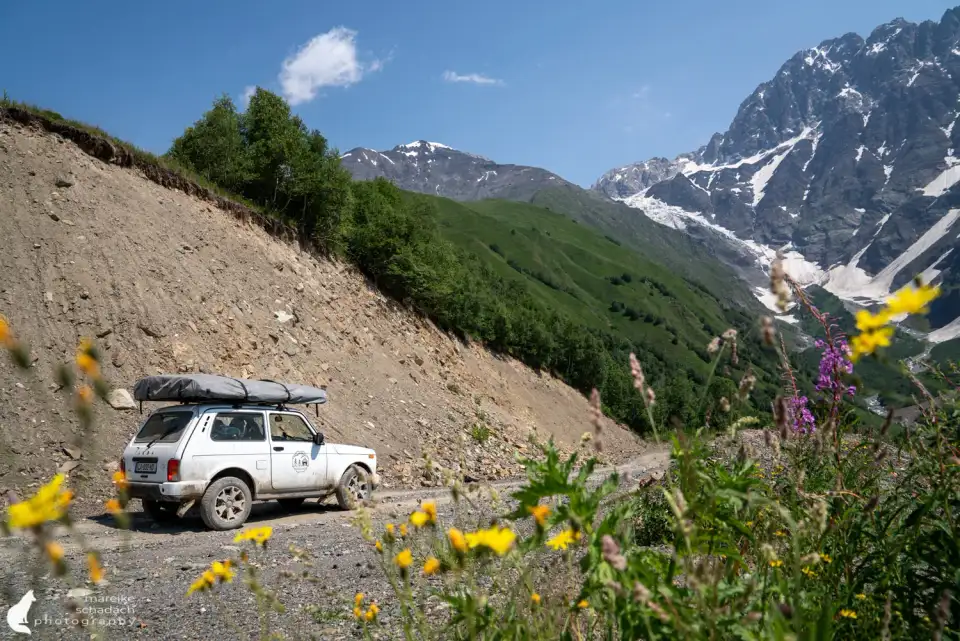
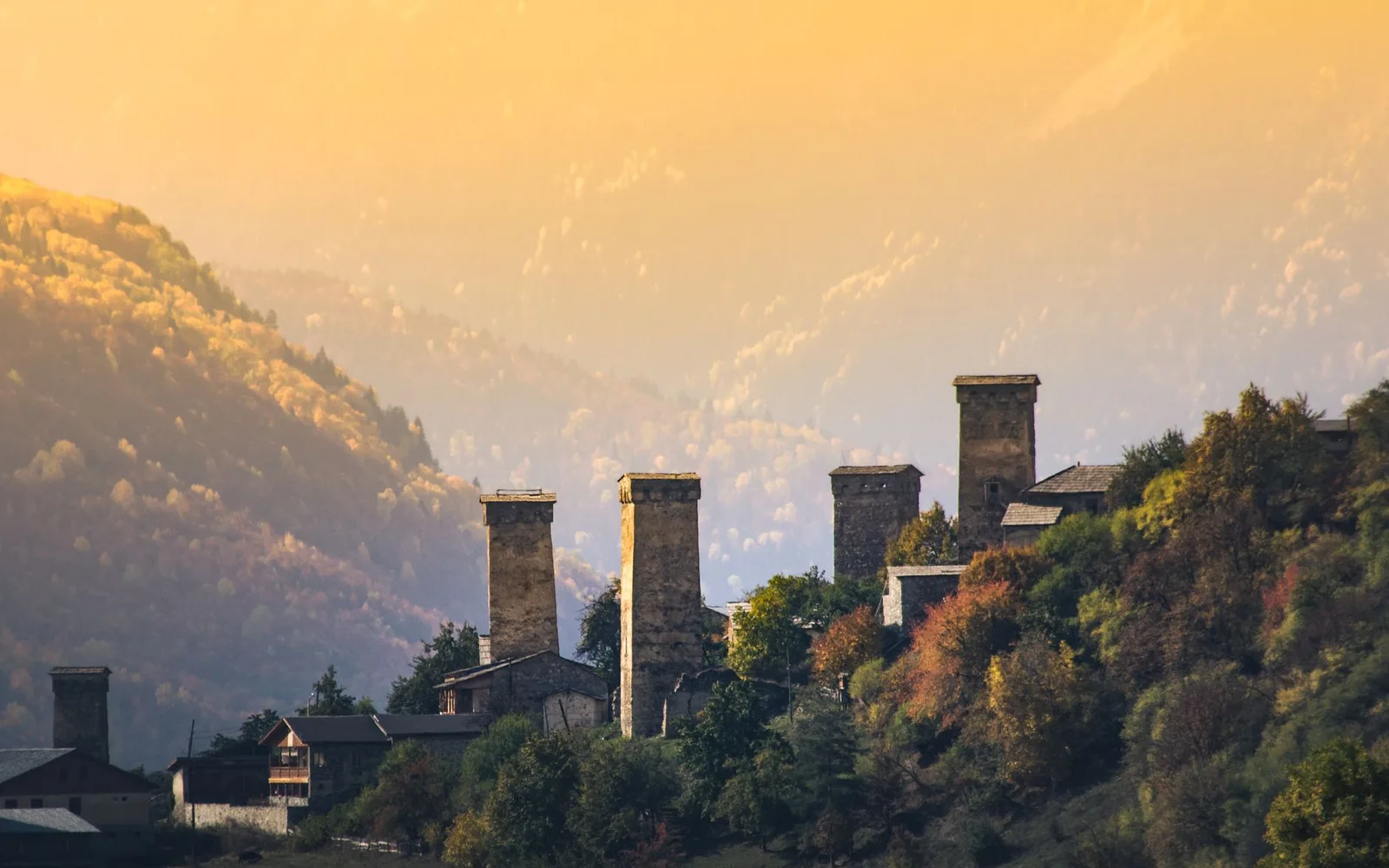
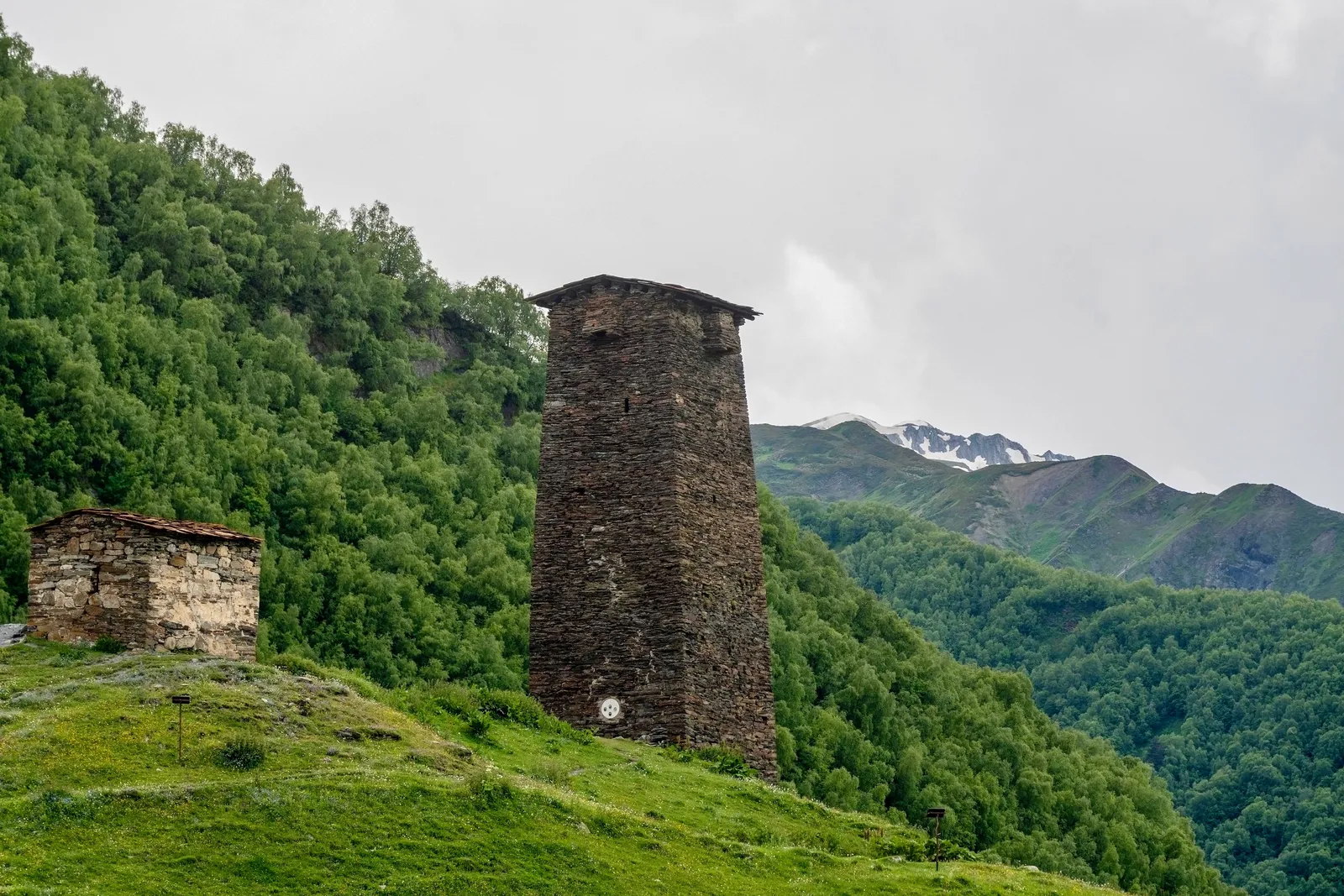
The one people travel for. Mestia to Ushguli over four days is the best known trek in the Caucasus, and the practical detail that makes it work is that you sleep in village guesthouses rather than tents, so you carry a day pack. Around Mestia itself, the Chalaadi glacier is an easy half day and the Koruldi lakes are a hard one.
Getting there is its own subject, and the road is a large part of the experience, covered in the driving to Svaneti guide.
Tusheti
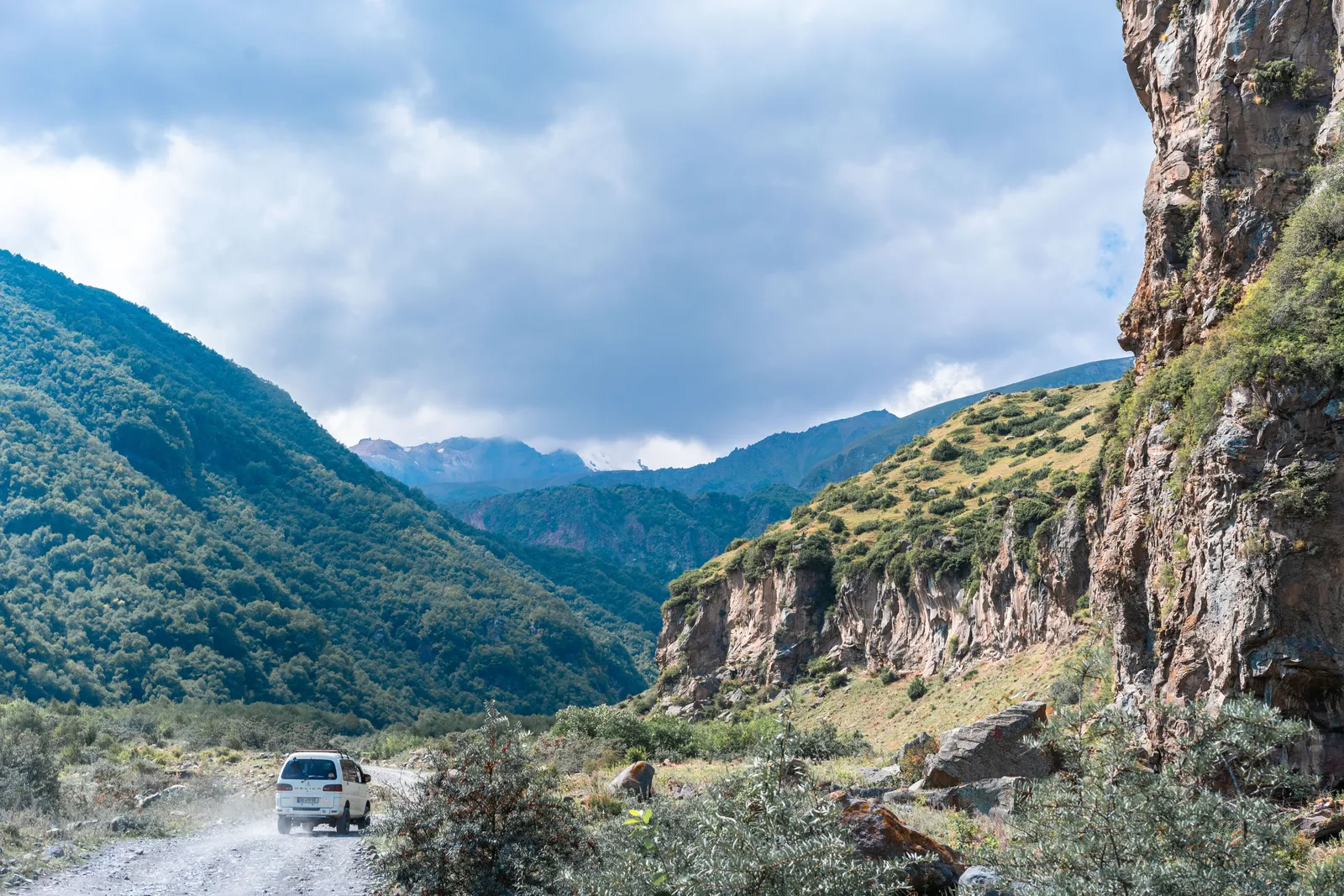
The remote one. Reaching it means the Abano Pass, a high unpaved road that is open only in summer and that has a reputation it has earned. The walking beyond Omalo, including the route towards Shatili, is the most isolated in the country.
This is the region where going with a guide, or at minimum with local advice, stops being optional. Our Tusheti and Abano Pass guide covers the access.
The national parks
Borjomi Kharagauli in the centre has a network of marked and numbered routes with huts, and it is the most organised hiking in Georgia. Lagodekhi in the far east has waterfall walks and a long route to an alpine lake. Racha in the north west is quiet and underused.
These are the answer for shoulder season, when the high passes are still closed.
Walking above the treeline?Check what your policy excludesWhat actually makes it hard
Georgian trails are rarely technical. What catches people is different.
Altitude. Sleeping above two thousand metres and walking towards three affects most people at least a little. Give yourself a night before a hard day.
Weather that changes inside an hour. Clear morning, cloud by eleven, thunderstorm by two is a normal summer pattern in the high Caucasus. Start early and be off the exposed ground in the afternoon.
Descents. The climbs are honest and the descents are loose. Most of the sore knees and turned ankles happen on the way down.
Livestock dogs. Shepherd dogs guarding flocks are territorial and large. Do not run, do not approach the flock, walk a wide arc around it, and wait for the shepherd if one is nearby.
What to bring
⚠️ Boots you have already worn. Not a new pair. This is the single most common mistake on the Mestia to Ushguli route, where four consecutive days punish anything unfamiliar.
Layers, including a warm one, even in August. Nights at altitude are cold and the wind on a pass is a different climate from the valley you started in.
A waterproof shell. Afternoon rain is normal, not exceptional.
Water and a way to treat it. Streams are plentiful and not all of them are above the livestock.
🔑 Offline maps, downloaded before you leave the village. Coverage on the trails is patchy and disappears exactly where the route decisions are. Tell your guesthouse where you are going.
Guesthouses, and why they change the planning
The thing that makes Georgian trekking unusually pleasant is that you generally do not need to camp. Village guesthouses along the popular routes provide a bed and a very large dinner, which means a light pack and no cooking.
They also fill up in August. In Svaneti in high season, book ahead or start early enough to have options. In quieter regions turning up is normal and expected.
Where hiking fits in a first trip
If you have a week and want one mountain block, take Kazbegi: it is closest, the walking starts immediately, and the road there is itself worth the drive.
With ten days or more, Svaneti earns the travel time and is the part of the trip people talk about afterwards.
Tusheti is for a second visit, or for travellers who specifically want the remote end and have the days to absorb a road that cannot be hurried.
And if you are building the route around the walking rather than fitting walking into a route, that changes the shape of the whole itinerary, which is worth deciding before you book anything.