Georgia has one wine region that everybody visits and a second that almost nobody does. The second is Racha, in the mountains north of Kutaisi, and it makes something the east of the country does not: a naturally semi-sweet red called Khvanchkara.
This is a detour rather than a stop. The roads are slow, the villages are small and there is nothing that could reasonably be called visitor infrastructure. That is also most of the appeal.
What Khvanchkara actually is
Khvanchkara is an appellation, not a brand. It is a protected micro-zone covering the hamlets of Khvanchkara and Bugeuli, and a wine can only carry the name if the fruit came from that ground.
The grapes are Aleksandrouli and Mujuretuli, two red varieties that are effectively confined to this corner of the country. Blended, they give a red that is deep in colour, moderate in alcohol and noticeably sweet on the finish.
The word doing the work is natural. Fermentation slows and stops in the cold of a mountain autumn before all the grape sugar has been converted, so the sweetness that remains is the fruit’s own rather than something stirred in at the end. That is the whole distinction, and it is the reason the style could only ever have come from somewhere cold and high.
If your reference point is Kakheti, this will not taste like it. The east is dry Saperavi and skin contact amber whites fermented in buried clay qvevri, and the regional picture there is set out in the Kakheti wine guide. Racha is a different proposition, and visitors who dislike sweet reds as a category are often caught out by it.
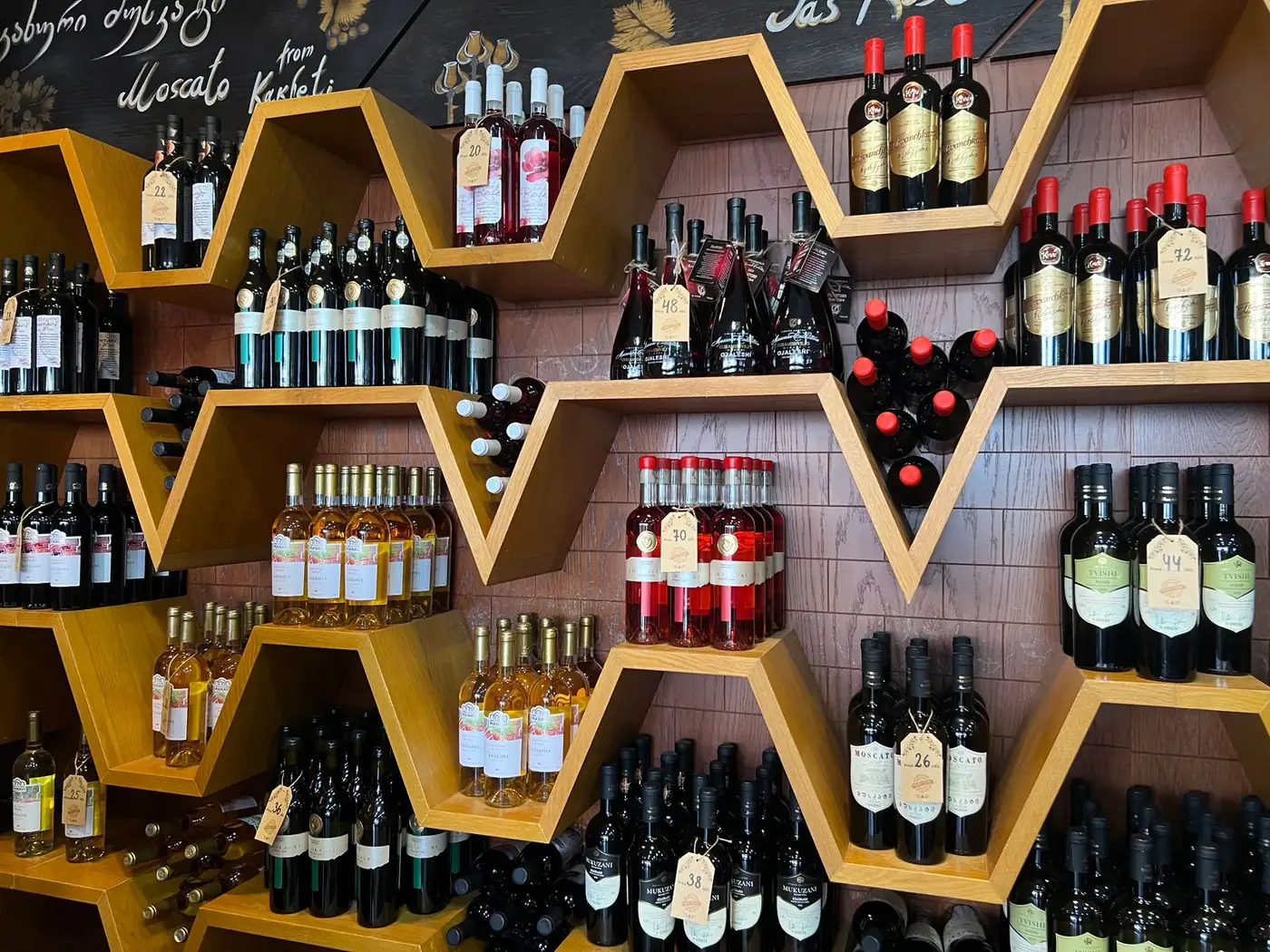
⚠️ The name sells, which is why you see it on so many shelves. Bottles labelled Khvanchkara turn up across the country and in every airport shop. The appellation is protected, but the surest way to know what is in the bottle is to buy it in the villages that made it.
You will also be told locally that this was the favourite wine of a certain Georgian born Soviet leader. It is repeated everywhere and nobody can check it, so treat it as folklore rather than history.
The villages: Ambrolauri, Sadmeli and Khvanchkara
Ambrolauri is the administrative centre of Racha and the practical base. It is a small town on the Rioni river with guesthouses, a handful of places to eat and somewhere to draw cash.
Sadmeli and Khvanchkara are villages strung along the same valley a short drive away, and between them they hold most of the cellars worth the trip.
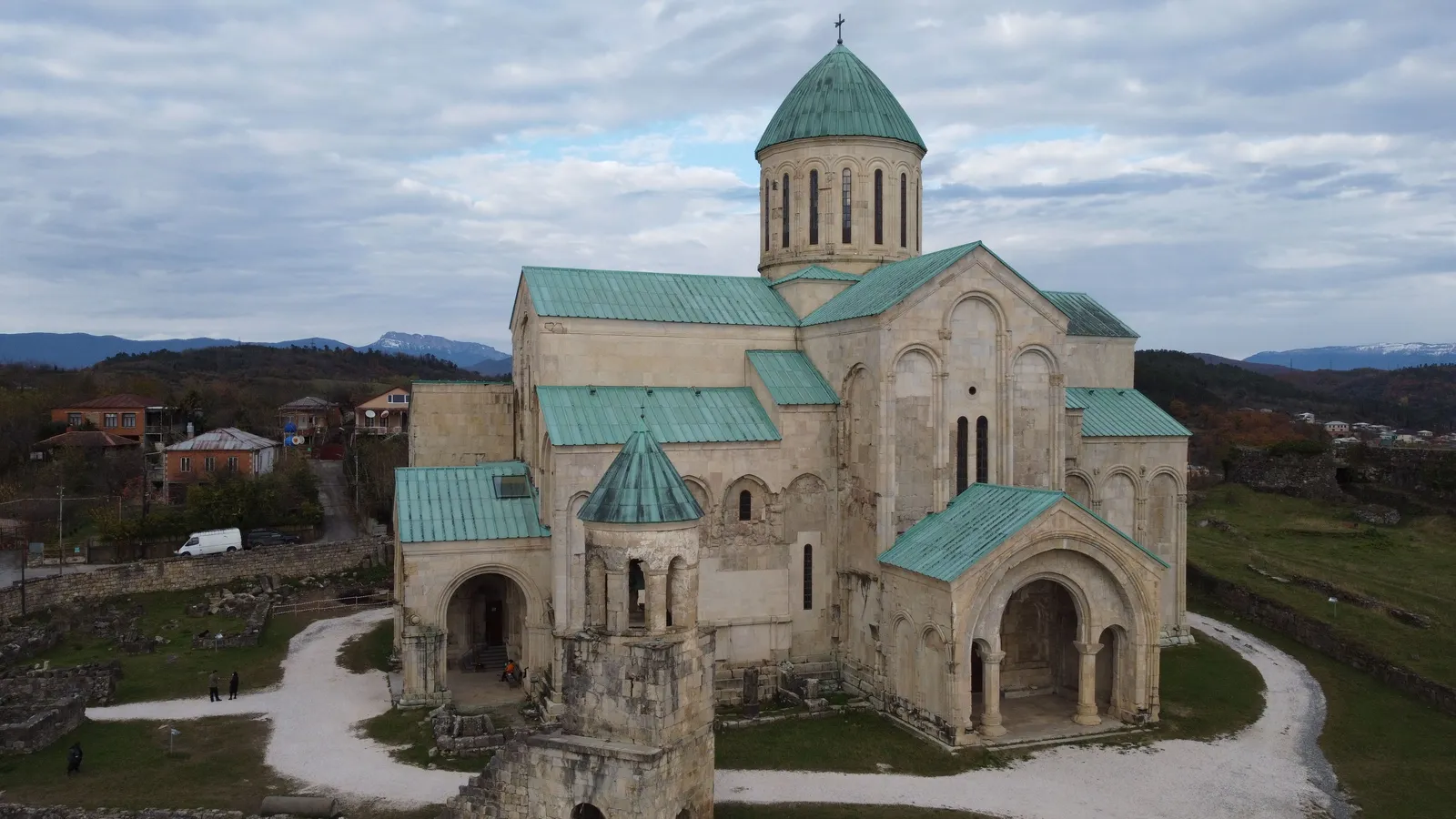
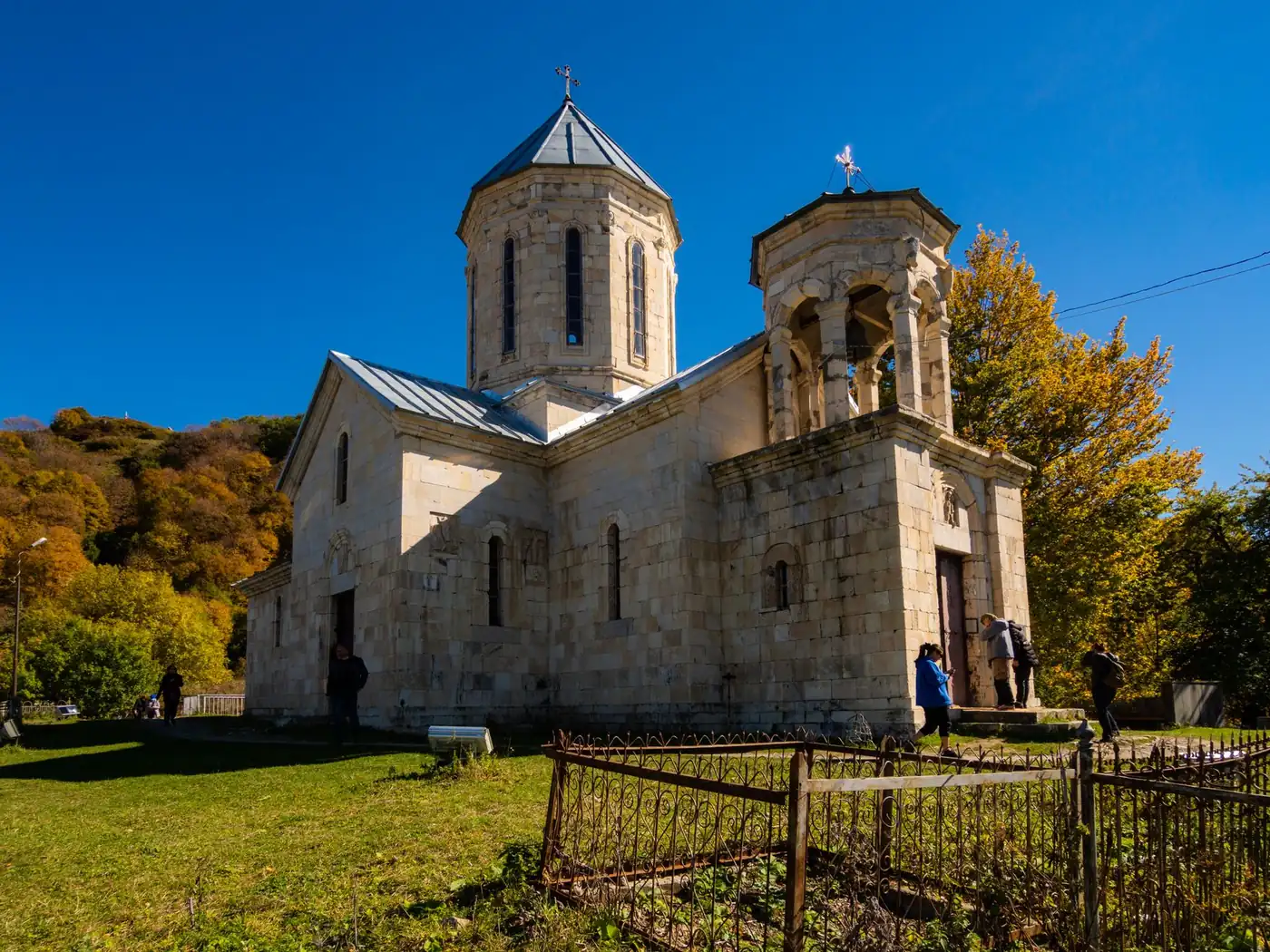
Nikortsminda is the region’s set piece and has nothing to do with wine. It is an eleventh century church, densely carved on the outside and painted within, and it is the single strongest argument for coming to Racha even if you do not drink.
🔑 Lower Racha, where the wine is, is ordinary car country. The paved road follows the river and an ordinary hire car copes with it. Upper Racha, further up the valley beyond Oni, is a different kind of trip and needs a different kind of vehicle.
Shovi is not a resort any more
This one matters, because itineraries are still being sold with it in them.
Shovi was a mountain resort in upper Racha. On 3 August 2023 a landslide came down onto it. Between 32 and 33 people were killed, the resort infrastructure was destroyed, and it has not been rebuilt. The site is abandoned and a memorial is planned there.
Tour operators nevertheless continue to advertise Shovi and its mineral springs as a stop. If it appears on a programme you are being offered, that programme has not been updated since 2023, and it is a fair thing to raise with whoever is selling it to you. It is also a useful signal about how current the rest of the itinerary is.
There is no reason for a visitor to go there. A disaster site is not a sight, and the point of saying this plainly is so that nobody books a route built around a place that no longer exists. What upper Racha still has is the valley, the forest and the villages, and none of that needs Shovi in the description.
Getting to Racha
Racha is reached from Kutaisi. That is the nearest city, the nearest airport and the natural place to start and finish.
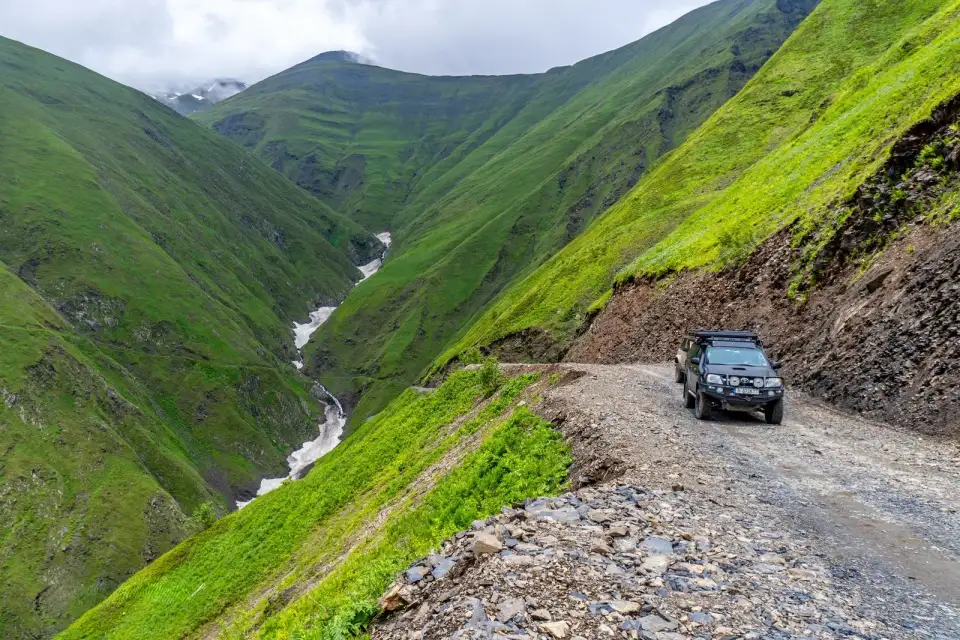
The map will mislead you about the time. The road climbs into the mountains and then follows a river valley, so your average speed is set by the terrain. Allow most of a morning in each direction and plan the day around that rather than around the kilometres.
Public transport exists and is thin. Marshrutkas run to Ambrolauri from both Kutaisi and Tbilisi, but the frequency is low, the timings move with the season and the last departure back may be earlier than suits you. Ask at the station on the day. A schedule found online is a starting point for a question, not an answer.
Which is why most people drive. Mountain driving here has its own habits and they are covered properly in the guide to driving in Georgia. The Racha specifics are simple enough: paved but narrow, slow, unpleasant to overtake on, and no reason at all to be on it after dark.
⚠️ Winter changes the question rather than answering it. Lower Racha and Ambrolauri are usually reachable through the winter, while the higher roads leading out of the region are frequently not, and conditions shift from week to week. Check locally before committing to a winter route, and never assume a road is open because a map shows it.
Racha does not really work without your own wheelsThe cellars sit in separate villages and the buses are thin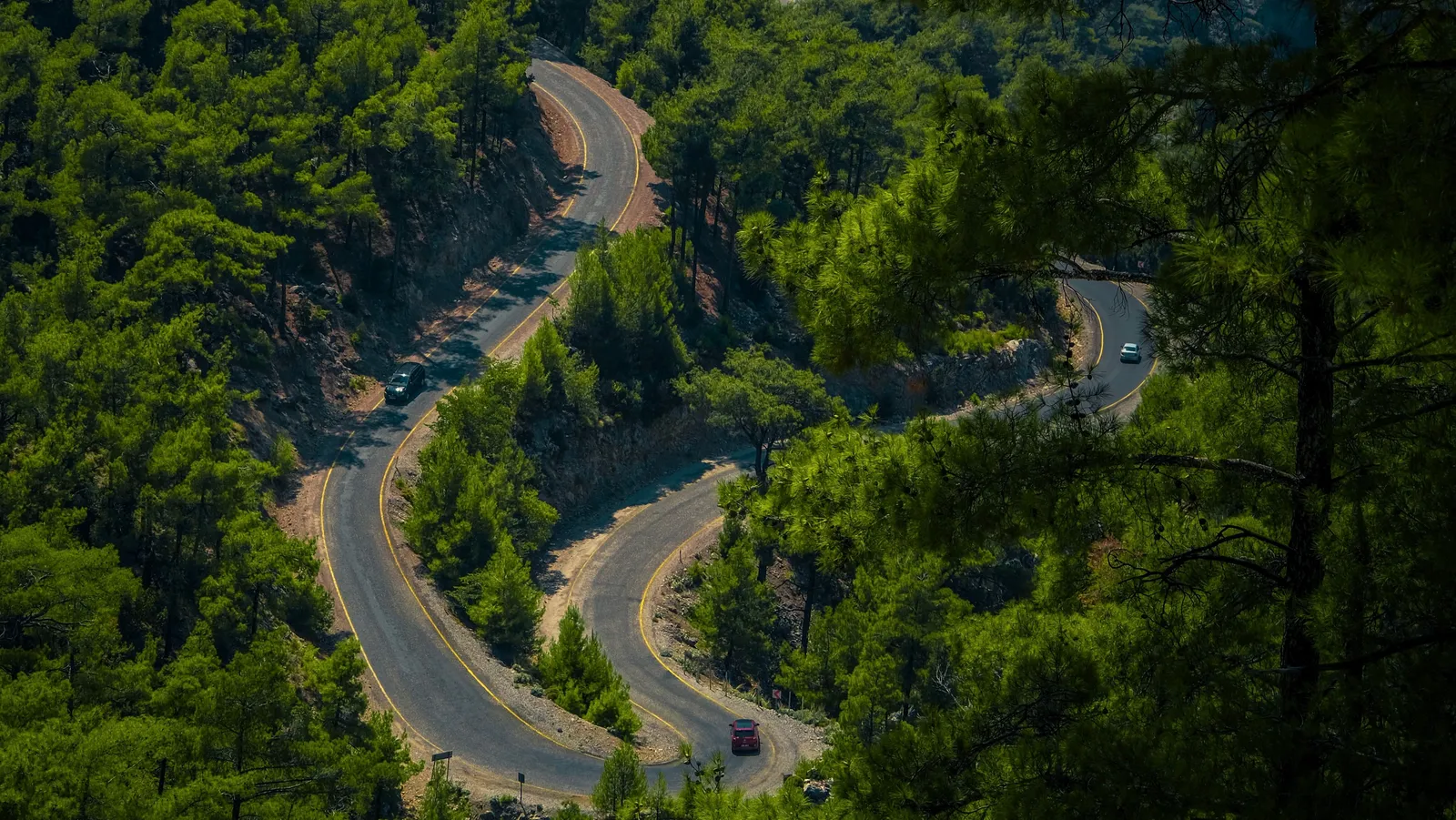
Visiting cellars, and what to expect
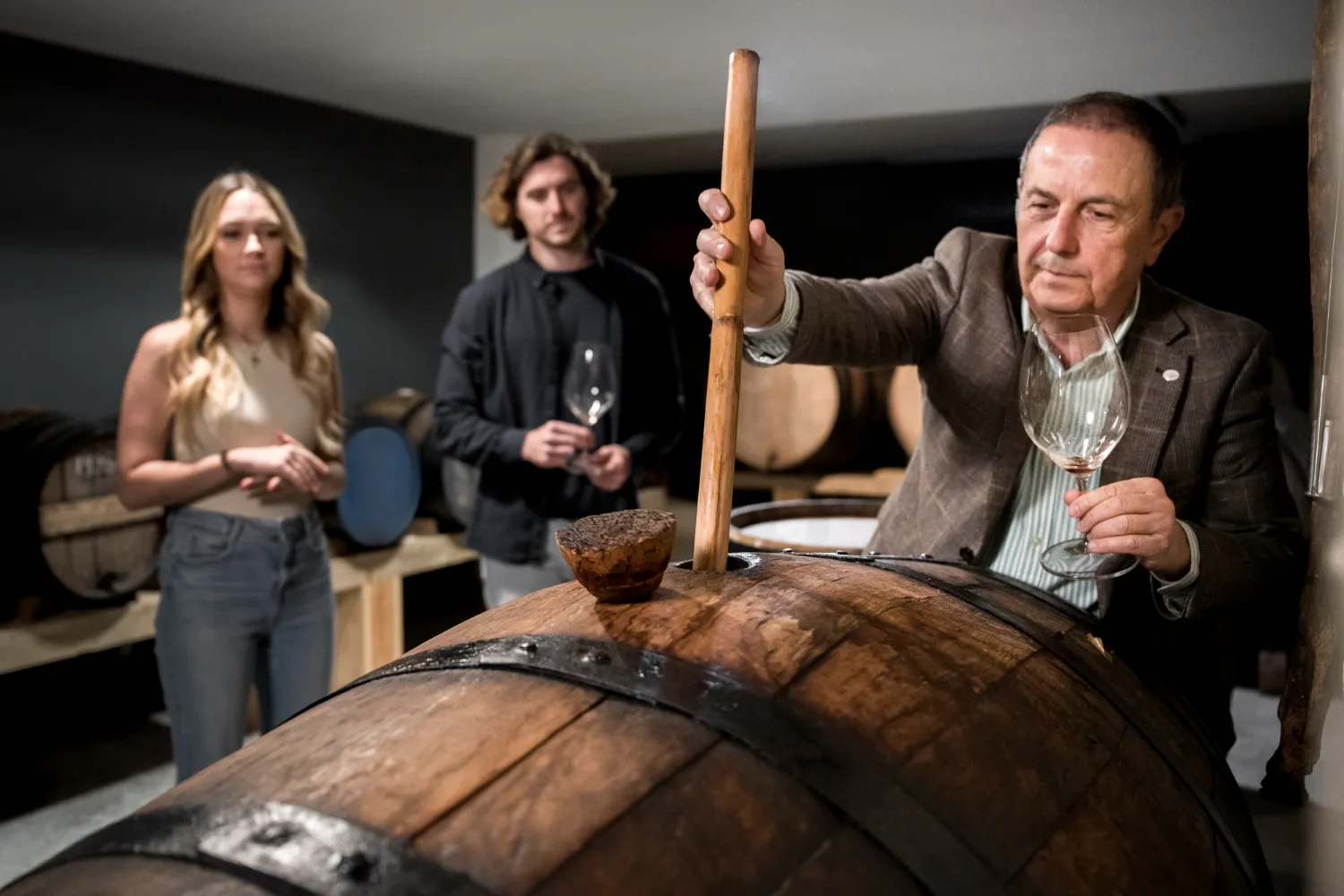
Do not turn up expecting a tasting room. Racha’s producers are mostly small, mostly family run and mostly not staffed for visitors. There is no reception and no scheduled tour, and the cellar is somebody’s cellar.
So arrange it ahead. A message or a phone call a day in advance is the difference between a visit and a locked gate. Guesthouses in Ambrolauri will usually make that call for you, and it is the simplest reason to stay a night rather than attempt the whole thing in a day.
There are larger commercial cellars as well, with set hours, a tasting room and English spoken, and they are a perfectly reasonable fallback if a family visit does not come together.
On money. Everything is priced in lari. Tasting fees range from nothing at all at a small family producer, where buying a bottle is the courtesy, to a set charge at a commercial cellar, and those charges change. Ask when you arrange the visit rather than assuming, and carry cash: card acceptance in village Georgia is not something to rely on.
⚠️ And the obvious point. Whoever is driving is not tasting, and Georgia enforces its drink driving rules. In a region where the cellars are a drive apart, that either means a nominated driver or a hired one.
When to go, and whether it is worth the detour
Autumn is the answer, as it is everywhere in Georgian wine country. The harvest is on, the cellars are working and visitors are frequently pulled into it. The dates move every year with the weather and with the altitude, so treat any specific week you have read as an estimate and ask locally.
Spring and summer are green, cool by Georgian standards and very quiet, and they suit anybody who wants to walk as well as drink.
Winter is empty and beautiful and comes with the road caveats above.
Is it worth it? Not instead of the east, which has the volume, the cellars and the infrastructure, and which is the right first wine trip in this country. But as a second region it is genuinely different rather than more of the same, and it pairs naturally with Imereti, where Kutaisi sits at the bottom of the road and makes an obvious base at either end.
In one line: Racha is a small, cold, green wine region making a style you cannot get in Kakheti, reached on a road that takes longer than it looks, and the one thing to fix before you book is any itinerary that still promises you Shovi.