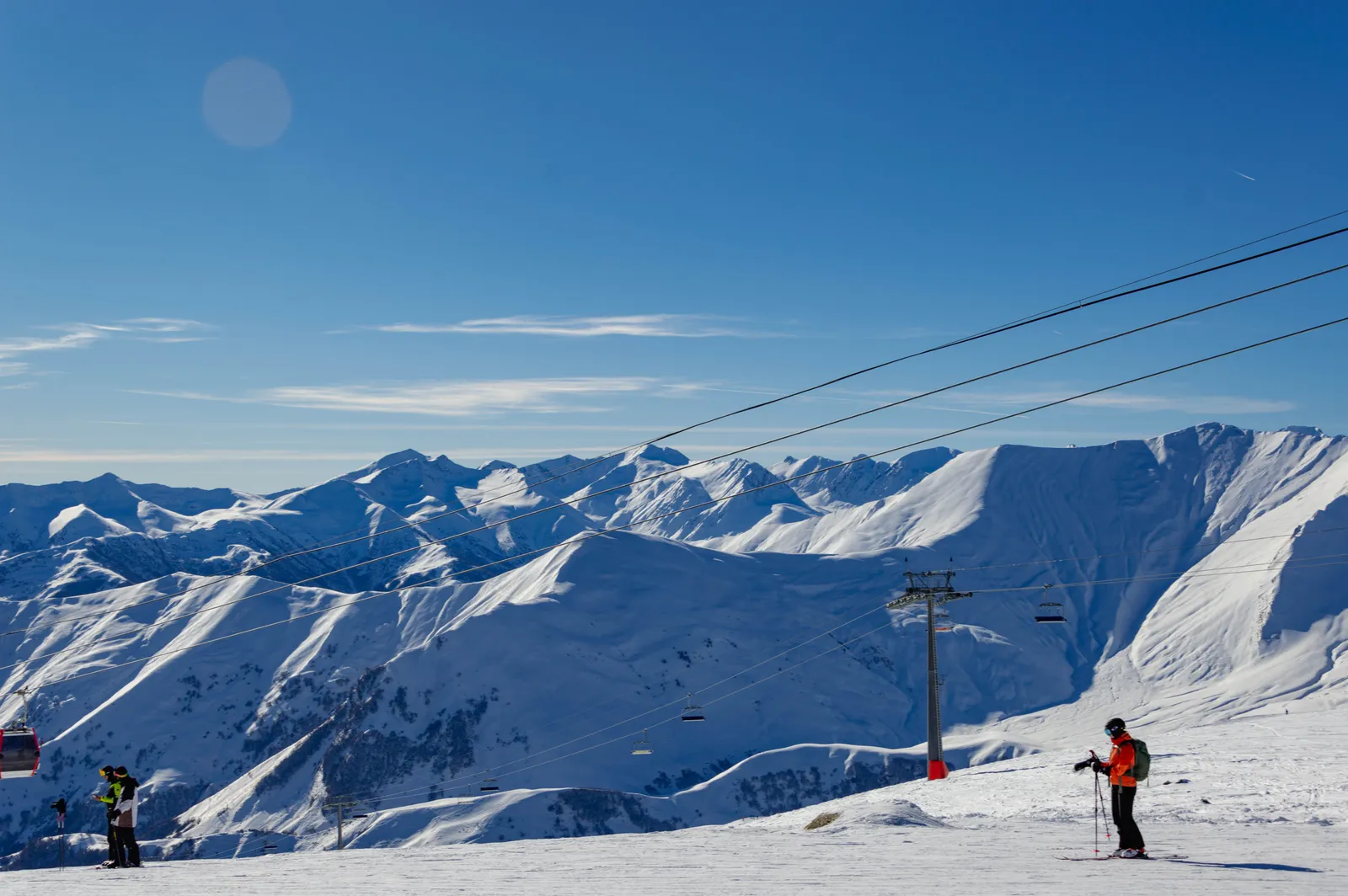
Georgia is the cheapest serious skiing in Europe and it took a while for that to get out. Gudauri sits at over two thousand metres on the Caucasus front range with lifts running to around three thousand three hundred, almost all of it above the tree line, and a lift pass costs a fraction of an Alpine one. Five days is the right length: two on the big mountain, one gentler, and enough left over for the things that make a Georgian ski trip different from an Austrian one, which are the food, the sulphur baths and the fact that you are an hour and a half from a capital city. Read our resort comparison before you book and the winter guide for what the rest of the country is doing in the meantime.
Itinerary at a glance
| Day | Base | The signature experience |
|---|---|---|
| 1 | Gudauri | The drive up the Military Highway in the snow |
| 2 | Gudauri | An off piste morning above the tree line with a guide |
| 3 | Gudauri | The Friendship monument, then the top lifts |
| 4 | Bakuriani | Gentle slopes and the narrow gauge railway |
| 5 | Tbilisi | A sulphur bath and a long dinner |
Day 1: Up the Military Highway
The drive from Tbilisi to Gudauri takes around two hours in good conditions and is the introduction to the trip. Ananuri, the fortified complex on the Zhinvali reservoir, is worth the twenty minute stop even in winter, when the water is steel grey against the snow on the walls. Above Pasanauri the road starts to climb, the snow banks rise on both sides, and the last stretch of switchbacks up to the resort is the point at which most people stop talking.
Arrive, sort the rental and take a couple of runs to find your legs. Gudauri is almost entirely above the tree line, which means big open bowls, excellent visibility on a clear day and very poor visibility in cloud, since there is nothing to give the light a reference. That trade off shapes the whole trip: on a bluebird day this is a superb mountain, and in a whiteout there is nowhere to hide.
Food: the base restaurants are plain and cheap; the guesthouses do better, and lobio in a clay pot with cornbread is what you want after a first day in the cold. The signature experience: the last set of switchbacks with the resort appearing above you. Optional tour: a private transfer costs little more than the shared shuttle and lets you stop at Ananuri properly.
Day 2: Off the piste with a guide
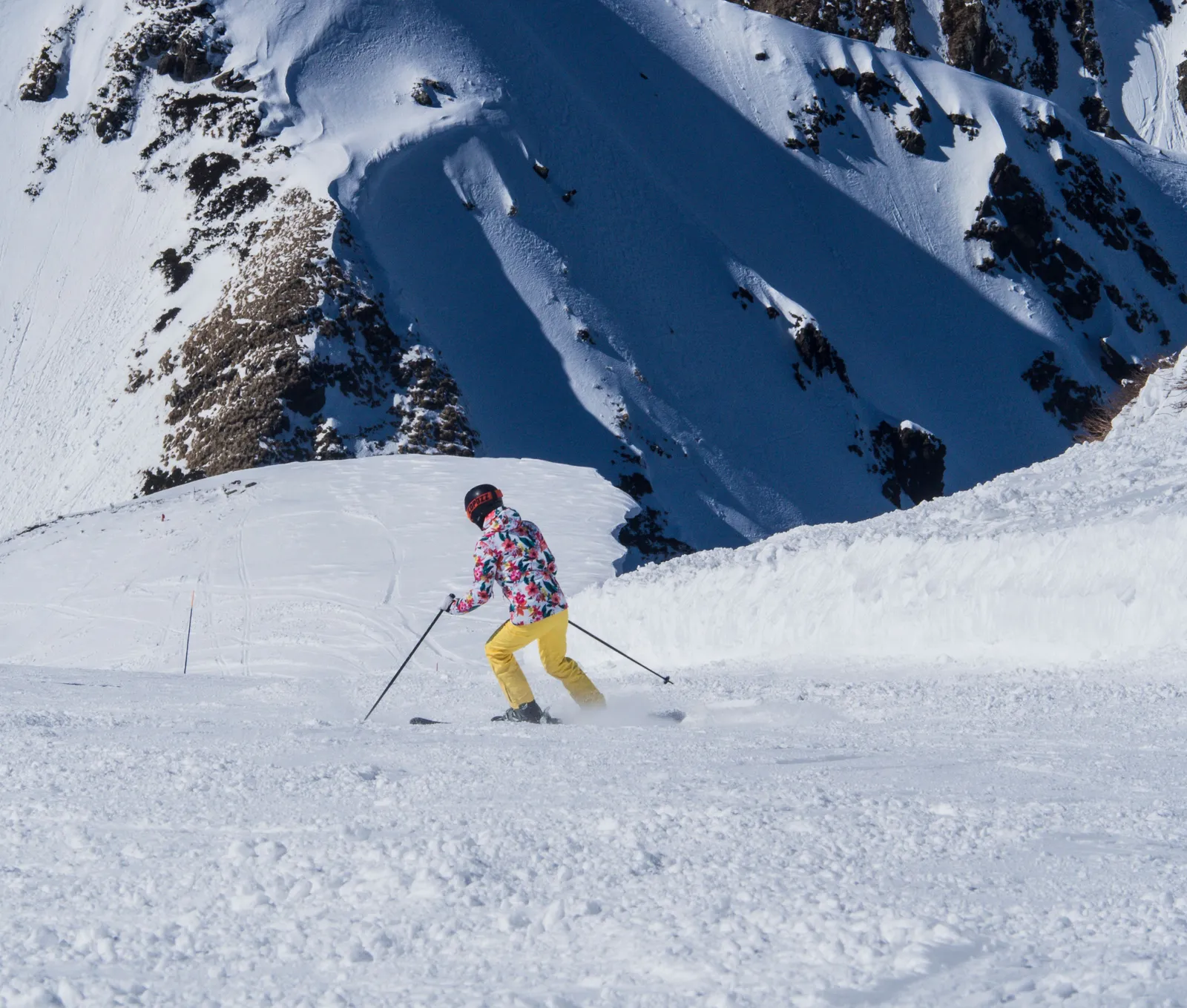
The reason skiers come here rather than to the Alps is the terrain just off the marked runs. Gudauri’s bowls are wide, the snow stays soft for days in a cold spell, and the resort is known for cat skiing and heli operations that access ridges far beyond the lifts. None of that is a do it yourself proposition: this is avalanche terrain, patrol coverage is thinner than you may be used to, and a local guide is the difference between a great day and a serious mistake.
Book the guide for the morning and let them choose the aspect. If you would rather stay inside the ropes, the marked runs are long and quiet by Alpine standards, particularly midweek, and the top station gives you a view across to the main Caucasus ridge that no amount of piste bashing spoils. In the afternoon, the paragliders launch from the ridge above the village all season, weather permitting.
Food: a mountain hut lunch, then khinkali in the village in the evening, which after a day at altitude is the correct amount of food. The signature experience: an untracked bowl with the guide picking the line. Optional tour: cat skiing is the affordable version of heli here and the one most people end up doing.
Day 3: The monument, and the top of the mountain
Give the third morning to the mountain if the weather is good, because the top lifts hold the best snow. If it is not, take the day off the snow and drive up to the Russia Georgia Friendship monument on the ridge above the village: a concrete drum lined with a Soviet era mosaic, standing on the lip of a valley with a long drop below it. In winter it is stark and largely empty, which suits it.
The other winter option is the Jvari pass road beyond it, but this is the moment to be honest about the risk in this itinerary. The pass closes for avalanche control and after heavy snow, sometimes for a day or more, and it is the only road north. Nothing on this trip depends on crossing it, and that is deliberate. Keep an eye on conditions and treat any trip past Gudauri as weather dependent rather than planned.
Food: the village has a couple of places doing a proper Georgian table if you book, which is the better use of a last evening here than the base cafeteria. The signature experience: the mosaic drum in snow, with nobody else there. Optional tour: snowmobile and snowshoe trips run from the village on days when the visibility is too poor to ski well.
Day 4: Down to Bakuriani
Transfer south. It is a long drive, around four hours, and it goes back through Mtskheta, where the old capital’s cathedral in the snow is worth the stop and takes an hour. Bakuriani, at the other end, is a different proposition entirely: lower, wooded, gentler, and built around families rather than freeriders. The slopes at Didveli and Kokhta suit beginners and intermediates, the ski school is cheap, and there is a rope tow at the bottom of town for children.
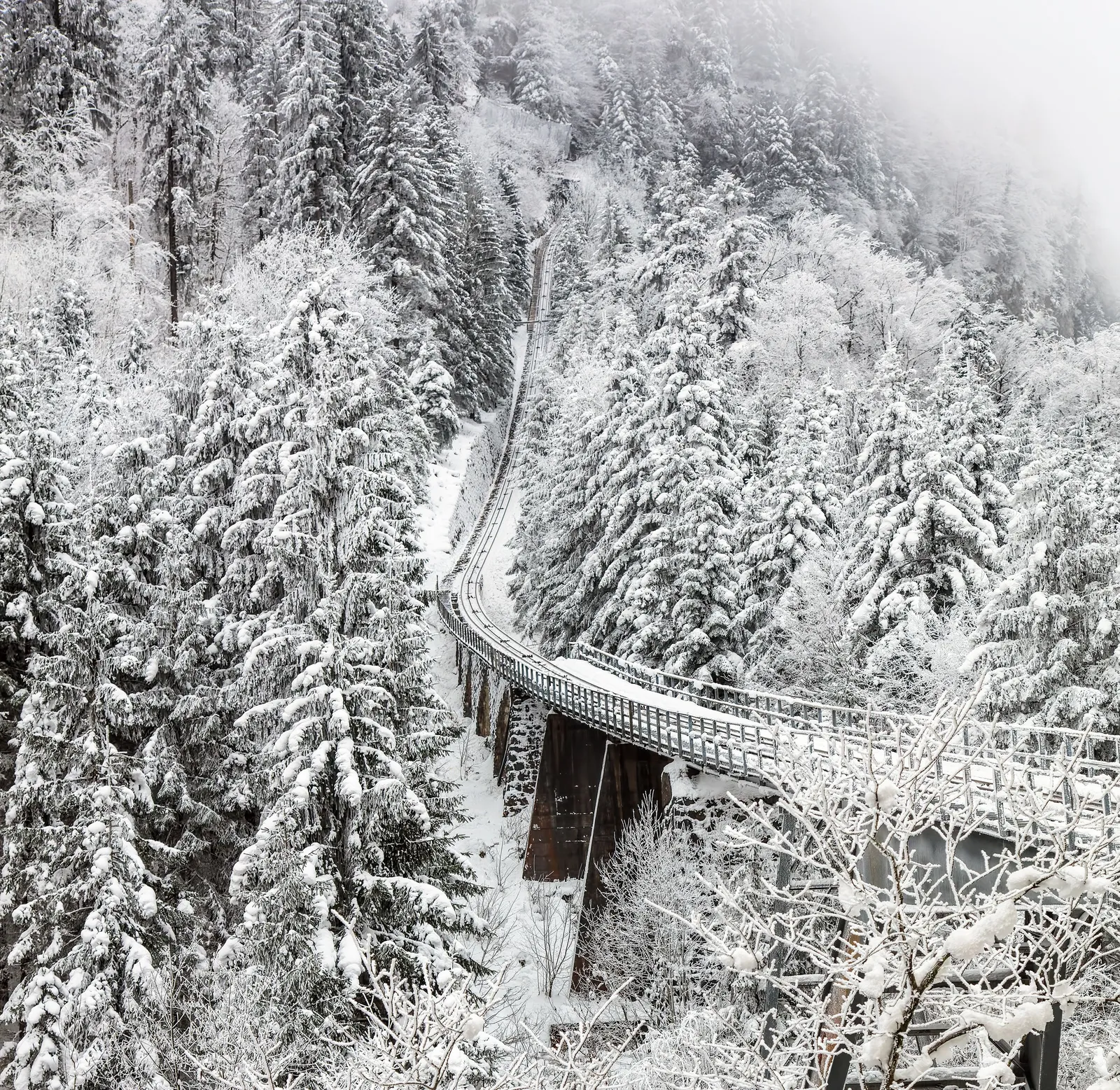
The other thing here is the railway. The narrow gauge line down to Borjomi, over a steel viaduct in the forest, runs as a local service and is the best two and a half hours in the region. In winter, with snow on the trees, it is better still. Check the times when you arrive rather than trusting anything written in advance.
Food: Bakuriani runs on mountain food, honey and mulled wine, and the town is full of small guesthouses that cook for their guests. The signature experience: the viaduct crossing with snow in the forest below. Optional tour: sledging and horse drawn sleigh rides are the local winter entertainment and are aimed at families rather than tourists.
Day 5: Baths and a table in Tbilisi
Drive back to the capital and give the last day to the two things Georgia does better than any ski country: hot sulphur water and a long meal. The bath district in the old town is a cluster of brick domes over natural springs, with private rooms rented by the hour and a scrub that is more of an event than a treatment, and after four days on snow it is exactly the right idea. Our guide to the baths covers how the rooms work.
Then eat. A supra, the Georgian feast, with a tamada leading the toasts, is the correct end to this trip, and Tbilisi has more good places to have one than it did five years ago. If your flight is late, the old town and the ridge above it fill an afternoon comfortably, and our city guide has the rest.
Food: the full table: khinkali, mtsvadi, badrijani with walnut, and a bottle of something amber from Kakheti. The signature experience: an hour in a private sulphur room with the scrub. Optional tour: a food and wine walk is a good last afternoon if you would rather not plan dinner yourself.
Practical tips
- The season broadly runs from December into early April and varies year to year. Late January and February are the most reliable for snow.
- Gudauri is above the tree line, so a whiteout day is a genuine write off. Build a flexible day into five, which is what day three is for.
- Off piste here is not patrolled like an Alpine resort. Hire a guide, and carry the transceiver, shovel and probe they provide.
- Travel insurance must cover skiing and specifically off piste if you intend to leave the marked runs, which many standard policies do not.
- Rental gear is cheap and adequate rather than excellent. Bring your own boots if you have them.
- Cash is useful in the villages and for the bath rooms; see money and payments.