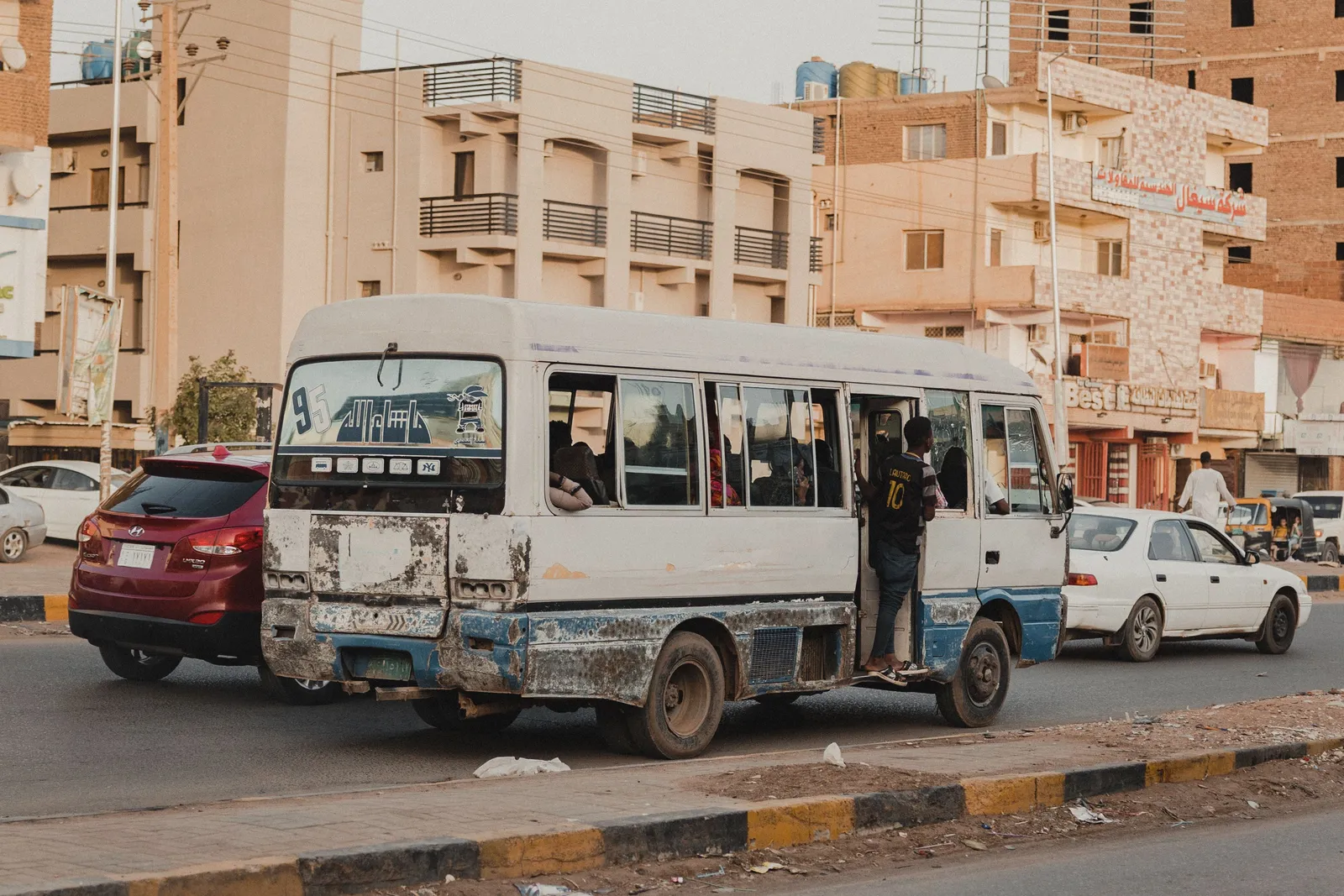
There is a white minibus in Georgia that goes everywhere, costs almost nothing, and does not tell you when it leaves. It leaves when it is full.
The marshrutka is how the country actually moves, and understanding it is the difference between travelling Georgia cheaply and being stuck in a car park in a town you cannot pronounce.
The three rules that explain everything
It goes when it fills. Not at a time. On busy routes that means roughly hourly. On a village route it can mean a wait, or it can mean the driver decides today’s run is not happening.
Morning is the reliable window. Departures thin out through the day and dry up in the late afternoon on rural routes.
And there is no central station. In Tbilisi, different directions leave from different lots on different sides of the city.
🔑 That last one is the single most common mistake. Turning up at the wrong departure point costs an hour and there is no information desk to correct you. Ask your accommodation which lot serves your route before you set out.
Finding one
Ask locally, and ask specifically. Not “where is the bus station” but “where does the marshrutka to this place leave from”.
Show the destination in Georgian on your phone. The Latin spellings of Georgian place names vary considerably, and the sign in the windscreen will be in Georgian script.
And arrive early rather than on time, because there is no on time. A vehicle that is nearly full leaves sooner.

Riding one
Tell the driver where you are getting off as you board, and again as you approach. There are no announcements, no screens and no stop button.
On rural routes you can usually get off anywhere along the way, which is genuinely useful for trailheads and monasteries that are not in any town.
Pay in cash, in lari, usually to the driver, sometimes on boarding and sometimes at the end depending on the route.
⚠️ Carry small notes. Paying a long fare with a large note at a village stop is a real problem rather than a theoretical one.
And expect it to be full. Luggage often rides on laps, the seats are close together, and the windows may or may not open.
What it is genuinely good for
Getting between towns cheaply, which it does better than anything else in the country.
Reaching places with no other option, including a lot of the interesting ones.
And travelling the way Georgians travel, which is not a small part of the appeal for some visitors.
 Route with two departures a day?A car removes the connection risk
When to pay for a car instead
Being honest about this matters more than defending the minibus.
Large luggage. There is nowhere to put it and it will be on you.
Small children. Seat belts are not a given and the ride is winding.
Routes with one or two departures a day, where missing one costs a day.
Mountain roads in poor weather, where a marshrutka may simply not run.
And any day with a fixed commitment at the end of it, particularly a flight.
🔑 The economics are unusual here. A shared taxi or a hired driver for a long leg costs a fraction of the western European equivalent, so the gap between the cheapest option and the comfortable one is much smaller than the difference in experience. The route to the mountains specifically is covered in the Tbilisi to Kazbegi guide.
The mountain caveat
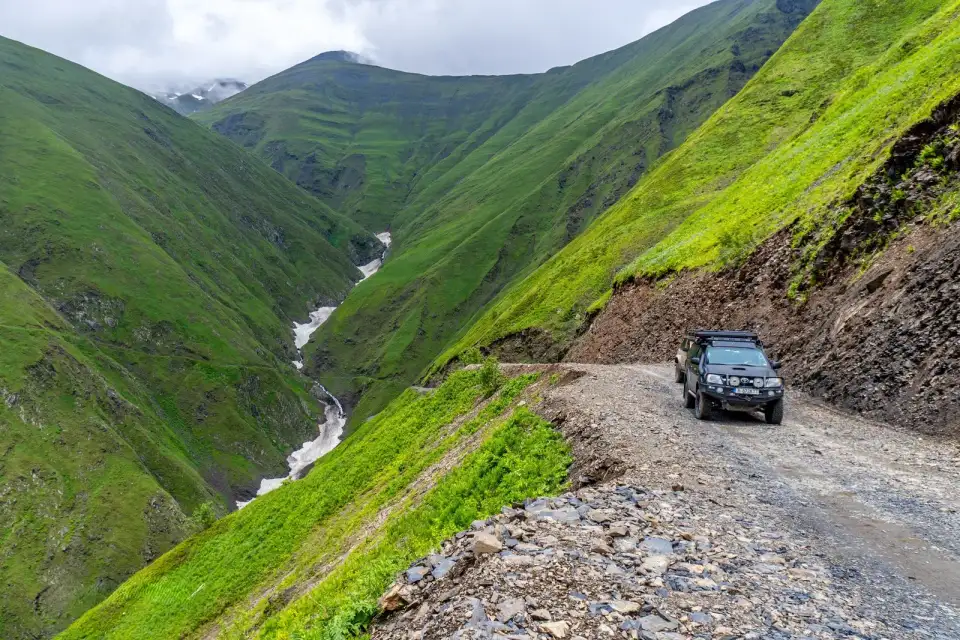
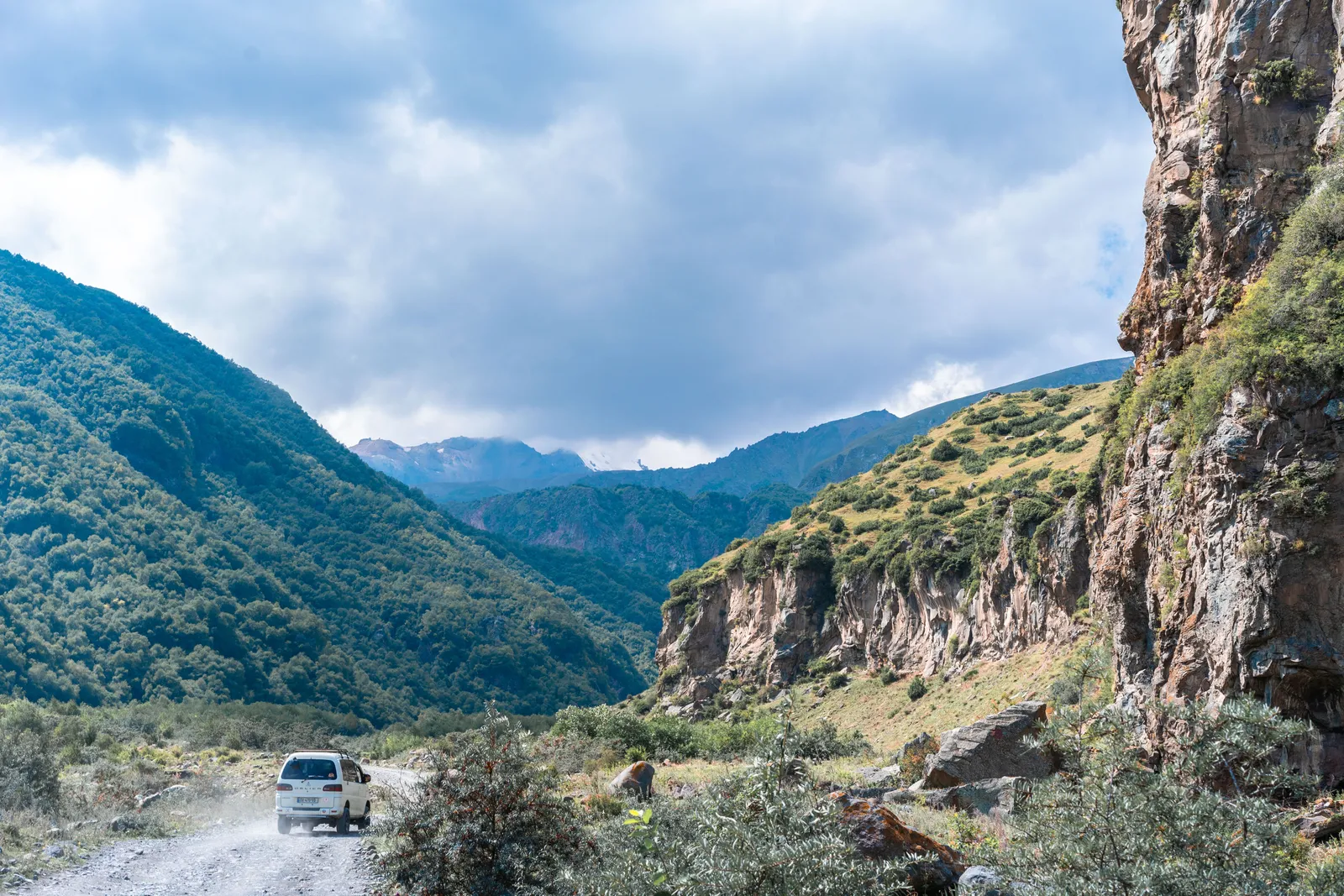
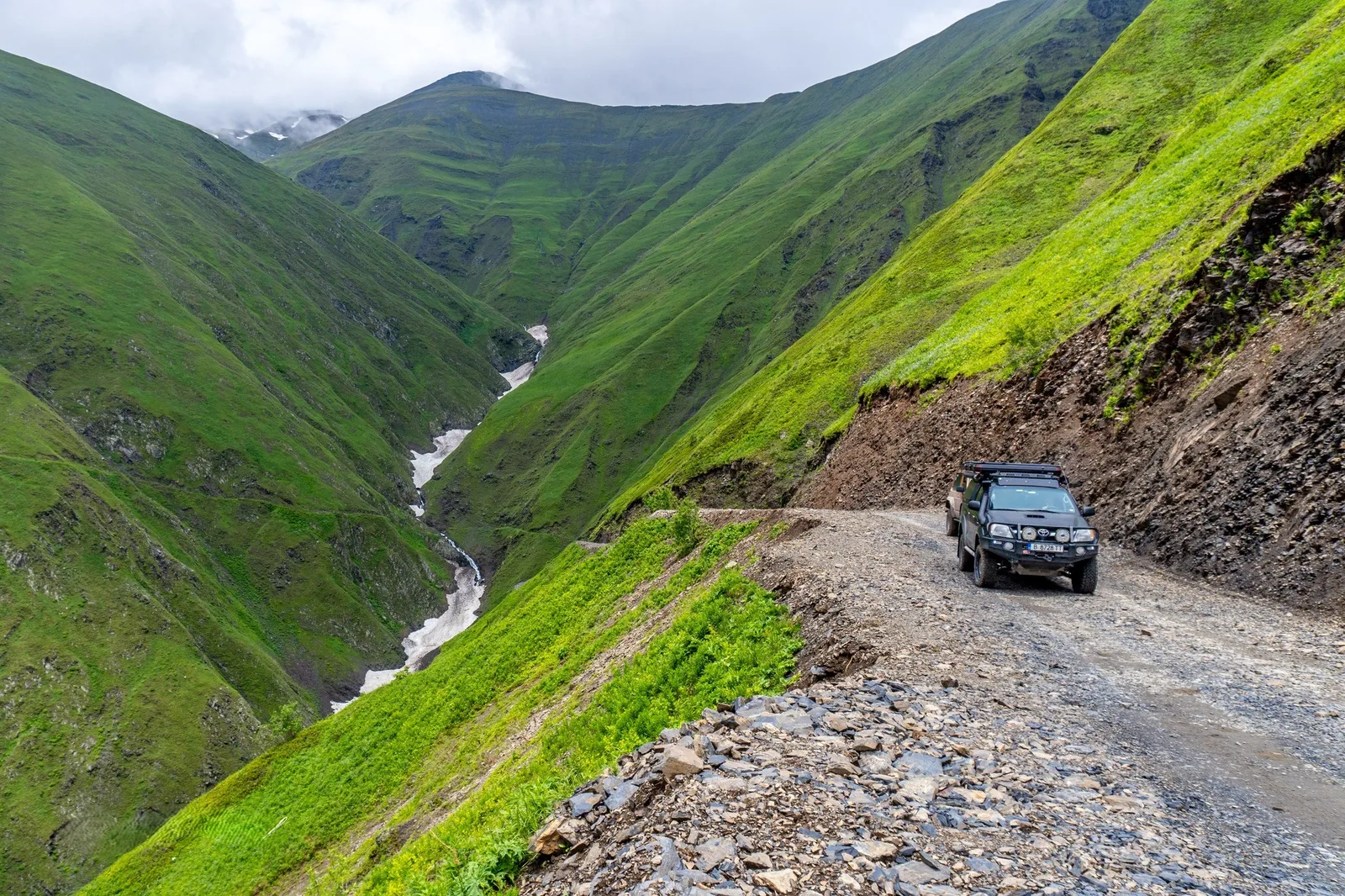
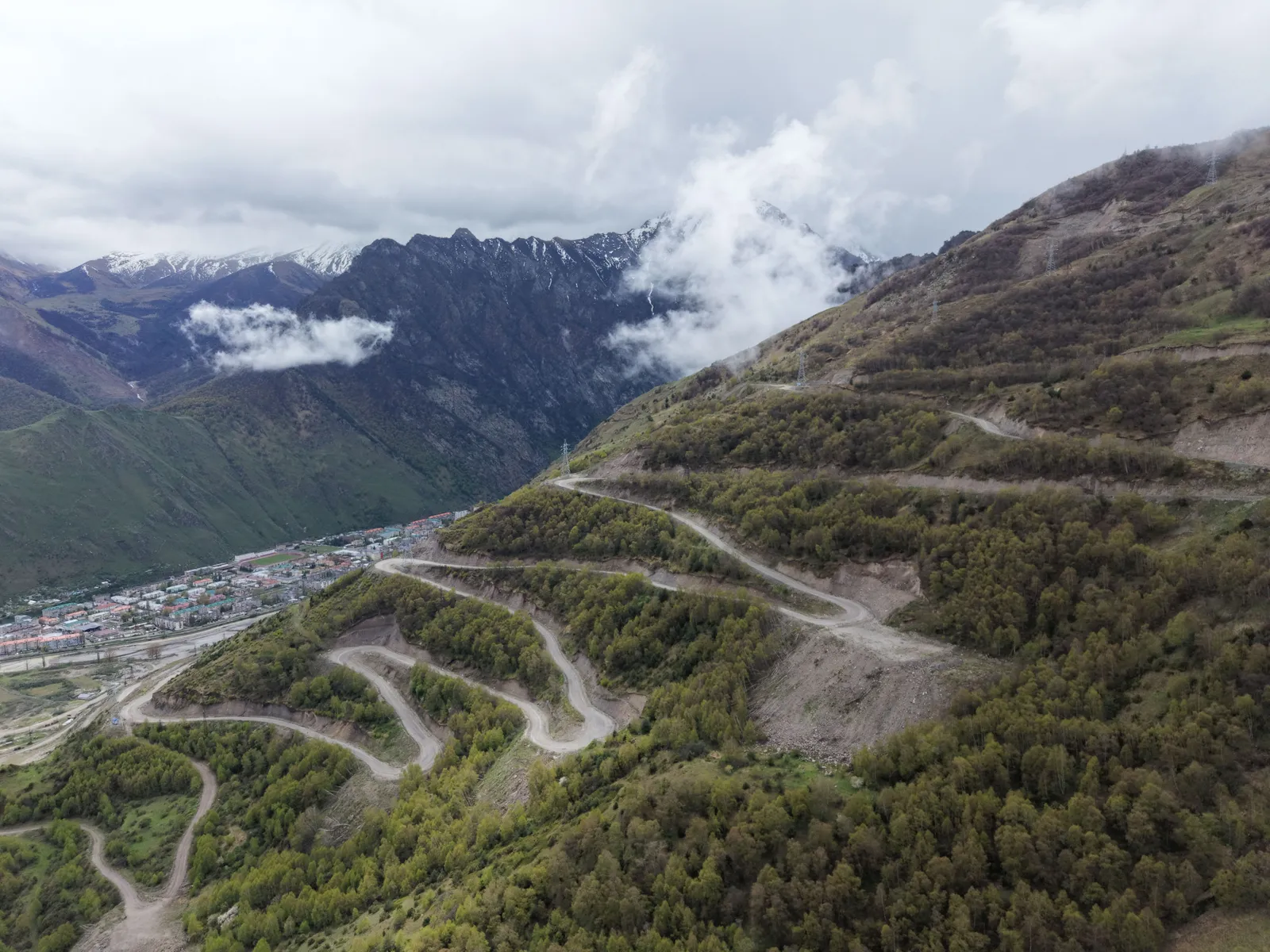
The road north into the high Caucasus is spectacular, slow, and subject to weather closures in winter and to landslides after heavy rain.
⚠️ A marshrutka on that road in poor conditions is not the place to be, and services stop when the road does. Check conditions before committing, and treat any winter mountain plan as provisional. The driving picture is in the driving in Georgia guide.
Practical notes
Motion sickness. Georgian roads wind, the driving is brisk, and the seats face forward in a small box. If you are susceptible, sit at the front and take something before boarding rather than after.
No toilet stops as a matter of course on shorter routes. Longer ones usually make one.
Music. Loud, and not negotiable.
And the driving. It is faster and closer than most visitors are used to. It is also what the whole country does every day.
Is it worth using
Yes, for at least one leg, and for budget travellers for most of them. It is cheap, it works, and it goes places nothing else does.
What it is not is a way to run a schedule. Build slack around every marshrutka leg, and pay for a car on the days where slack is not available.
In one line: the marshrutka will take you almost anywhere in Georgia for very little, as long as you are not in a hurry to be somewhere by a particular hour.
The first ride
Almost nobody’s first marshrutka is the one they planned. Arrivals are the common exception: the run from the airport into the capital has its own rules, its own stops and a taxi trade built around visitors who do not know them, and our guide to getting from Tbilisi airport into the city covers that leg specifically.
Once you are in the country, the system described above is the one you will use for everything else, and it is considerably easier than it looks from the outside.