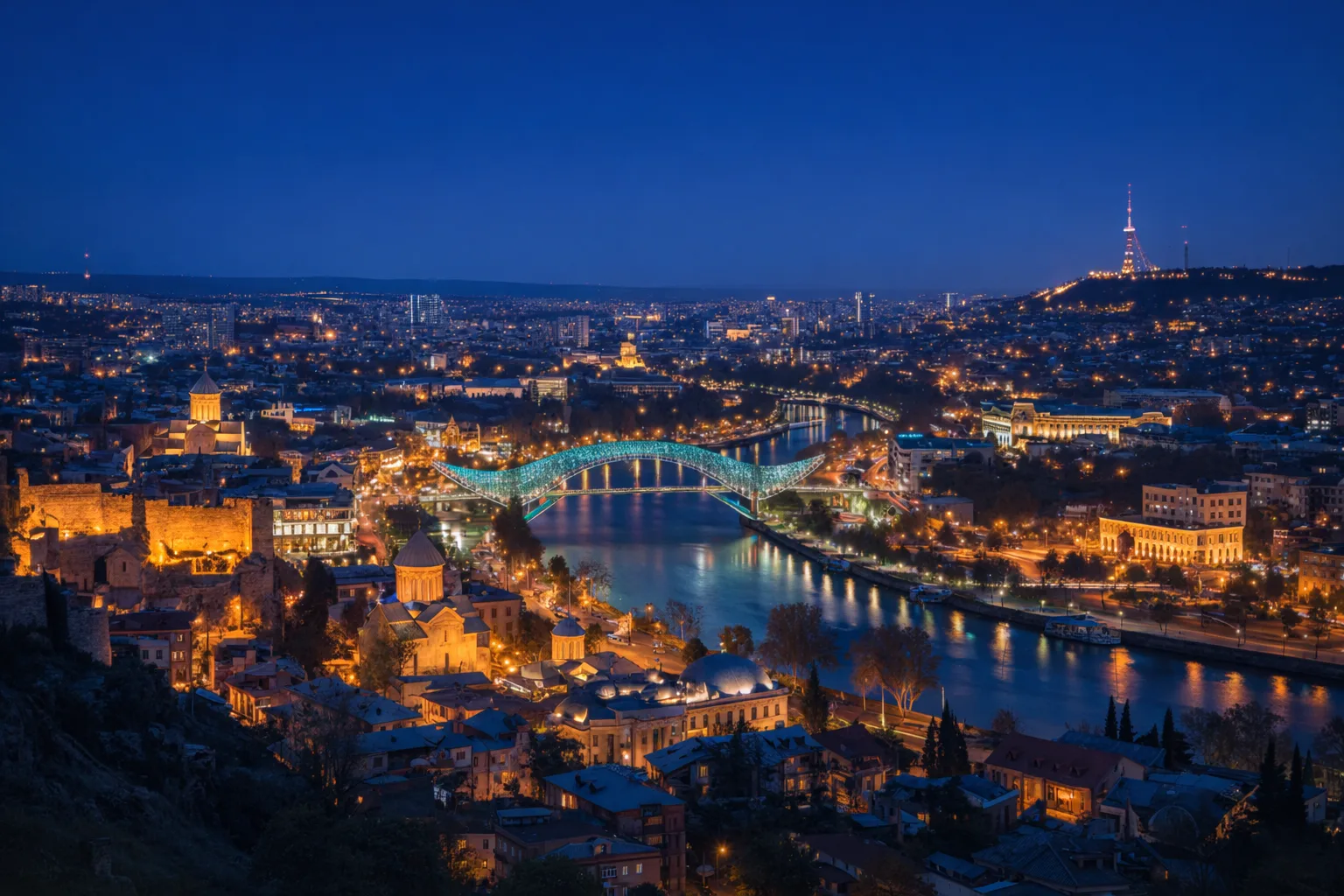
Tbilisi is a city of hills, and that fact should shape your accommodation decision more than any review score will. Two guesthouses four hundred metres apart can be separated by a climb that turns a casual dinner stroll into a project, and no booking site tells you that.
The city is also compact enough that almost everywhere central is walkable in principle. The question is which version of the city you want outside your door: the tourist heart, the faded elegance of the hill streets, the modern avenues, or the converted-industrial creative quarter.
The quick answer
| Area | Best for | Trade-off |
|---|---|---|
| Old Town | First visits, sights, the baths | Touristy, uneven streets, noisy in parts |
| Sololaki | Atmosphere, architecture, value | Steep, fewer big hotels |
| Vera and Rustaveli | Cafes, walkability, calm | Less character on the doorstep |
| Marjanishvili and Fabrika | Nightlife, creative scene, budget | Grittier, across the river |
| Vake | Quiet, green, residential | Furthest from the sights |
First visit, three or four nights: Sololaki or the edge of the Old Town.
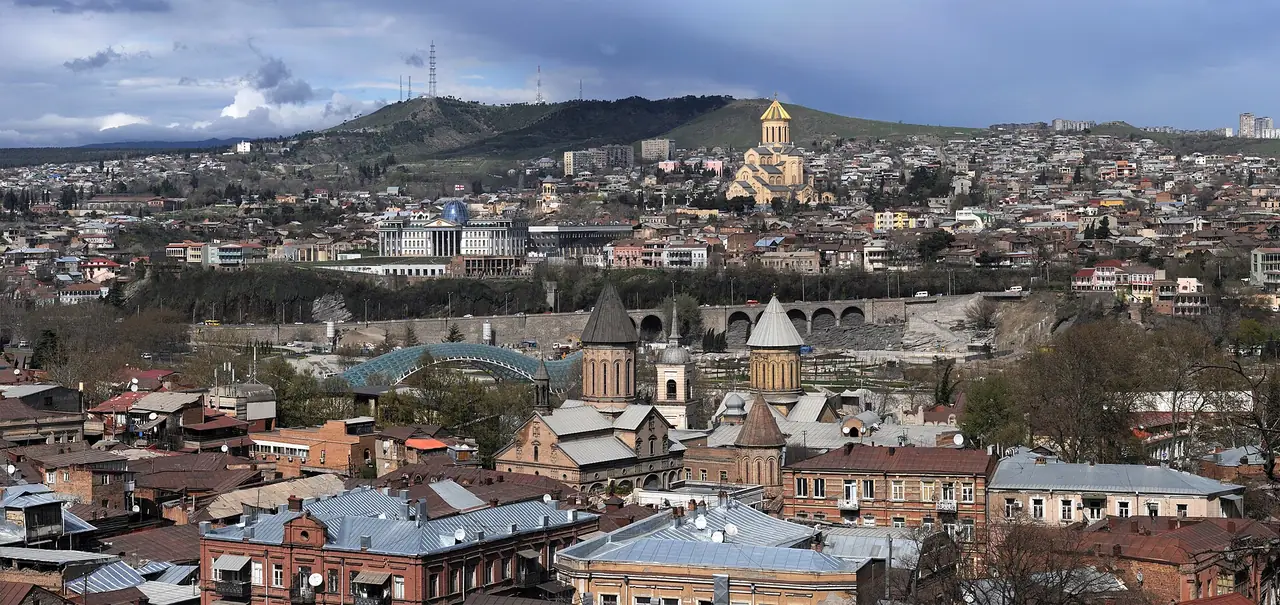
The Old Town
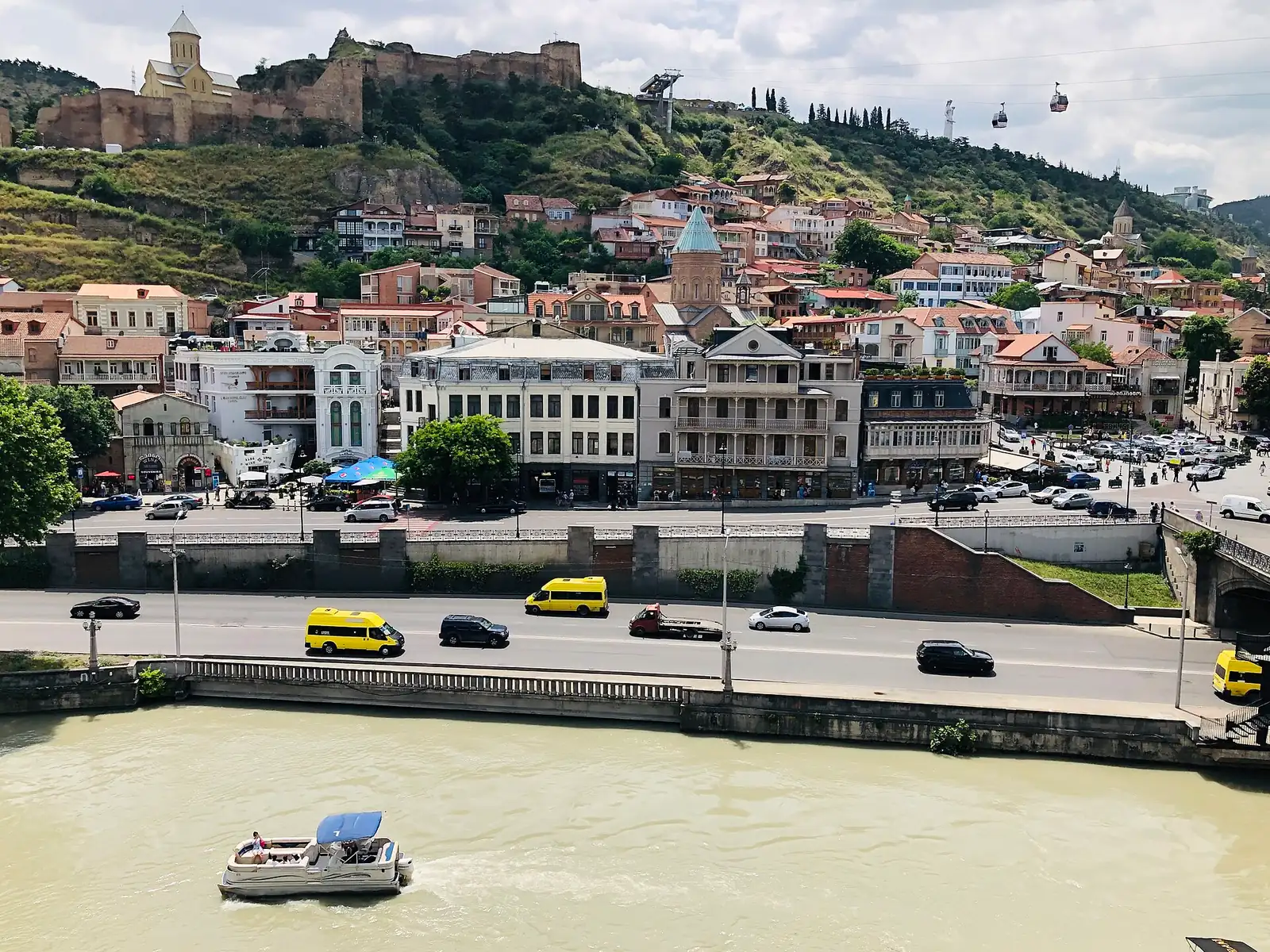
The historic core, wrapped around the sulfur bath district and under the fortress. Balconied houses, narrow lanes, churches, and the highest concentration of restaurants and guesthouses in the city.
Stay here for convenience and atmosphere on a short trip. Everything you have read about is within walking distance, and the evening wander is genuinely lovely.
The trade-offs are real though. Parts of it are heavily touristed and priced accordingly, some streets are loud late, and the surfaces are uneven, with cobbles, steps and pavements that come and go. If you have mobility limits or heavy luggage, ask specifically about stairs and how close a car can get.
Sololaki, which is what I would pick
Immediately west of the Old Town and climbing the hillside, Sololaki is the district of grand nineteenth-century apartment buildings with painted stairwells and carved doors, many of them faded and some of them magnificent.
It is quieter than the Old Town, better value, full of small cafes and wine bars, and it is a three-minute walk down into the tourist centre. The atmosphere is residential rather than staged.
The catch is the gradient. Sololaki goes uphill, and the higher streets are a genuine climb. That is charming for three days and tiring for ten if you are not used to it. Look at the map before you book, and if you want the neighbourhood without the climb, stay on its lower edge.
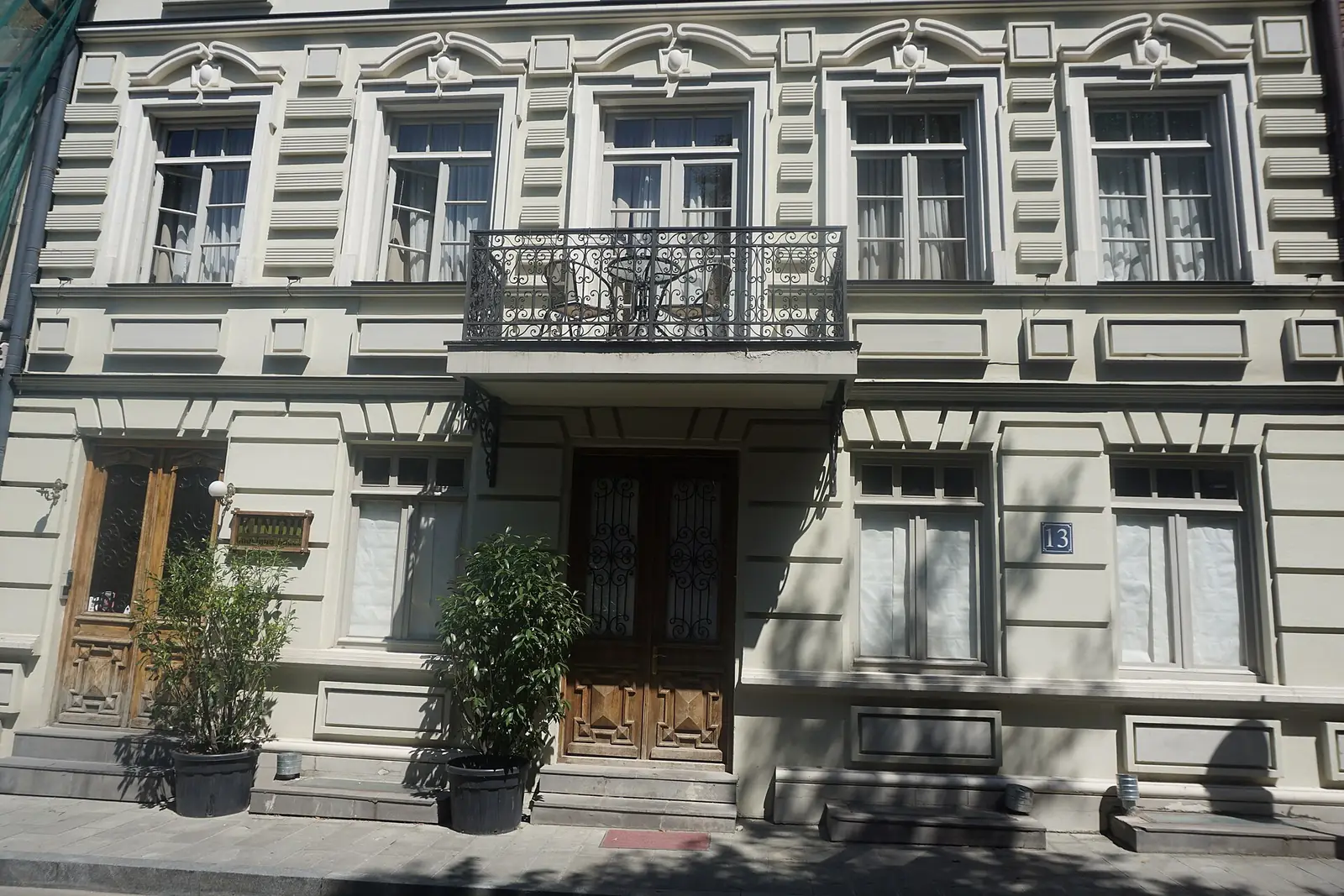
Vera and around Rustaveli
North of the Old Town, along and above the main avenue. This is the comfortable, walkable, slightly more modern part of central Tbilisi: leafy streets, good coffee, bookshops, theatres and the main museums.
Stay here if you want a proper-sized room, level ground, and a neighbourhood that functions as a normal city rather than a heritage district. It is the sensible choice for a longer stay or a second visit, and for anyone who would rather sleep than be in the middle of things.
Marjanishvili, Fabrika and the left bank
Across the river, the left bank is grittier, cheaper and where much of Tbilisi’s creative and nightlife energy has gone. The converted Soviet sewing factory that anchors the area has become a hostel, courtyard and bar complex that functions as a social hub for a certain kind of traveller.
Stay here if you are on a budget, travelling solo, or came for the nightlife. Stay elsewhere if you want quiet, or if walking back over the bridge at two in the morning does not appeal.
Old Town or Sololaki?Compare both, and check the gradient before you commit to a street.Vake
West and uphill, Vake is the leafy, affluent residential district with a large park and good restaurants. It is calm and pleasant and it is a genuine distance from the sights.
Worth considering for a stay of a week or more, or with children. Not worth it for three nights.
Matching the base to the trip
Two or three nights. Old Town edge or lower Sololaki. Walkable to everything, and you are not spending your short trip in taxis.
Four to seven nights. Sololaki or Vera. Both give you a neighbourhood rather than a tourist zone.
Two weeks or more. Vera or Vake, with space and a normal-city rhythm. Georgia’s generous entry rules mean long stays are common here, and the accommodation market has adapted with plenty of apartment options.
Nightlife is the priority. Left bank, near Marjanishvili.
Using Tbilisi as a base for trips out. Anywhere central. Day trips to the wine country and the mountains generally collect from the centre, so being close to it saves you an early taxi. If your plan includes the wine region, our Kakheti guide explains how those days are usually structured.
Old Town or Sololaki?Compare both, and check the gradient before you commit to a street.Practical things worth knowing
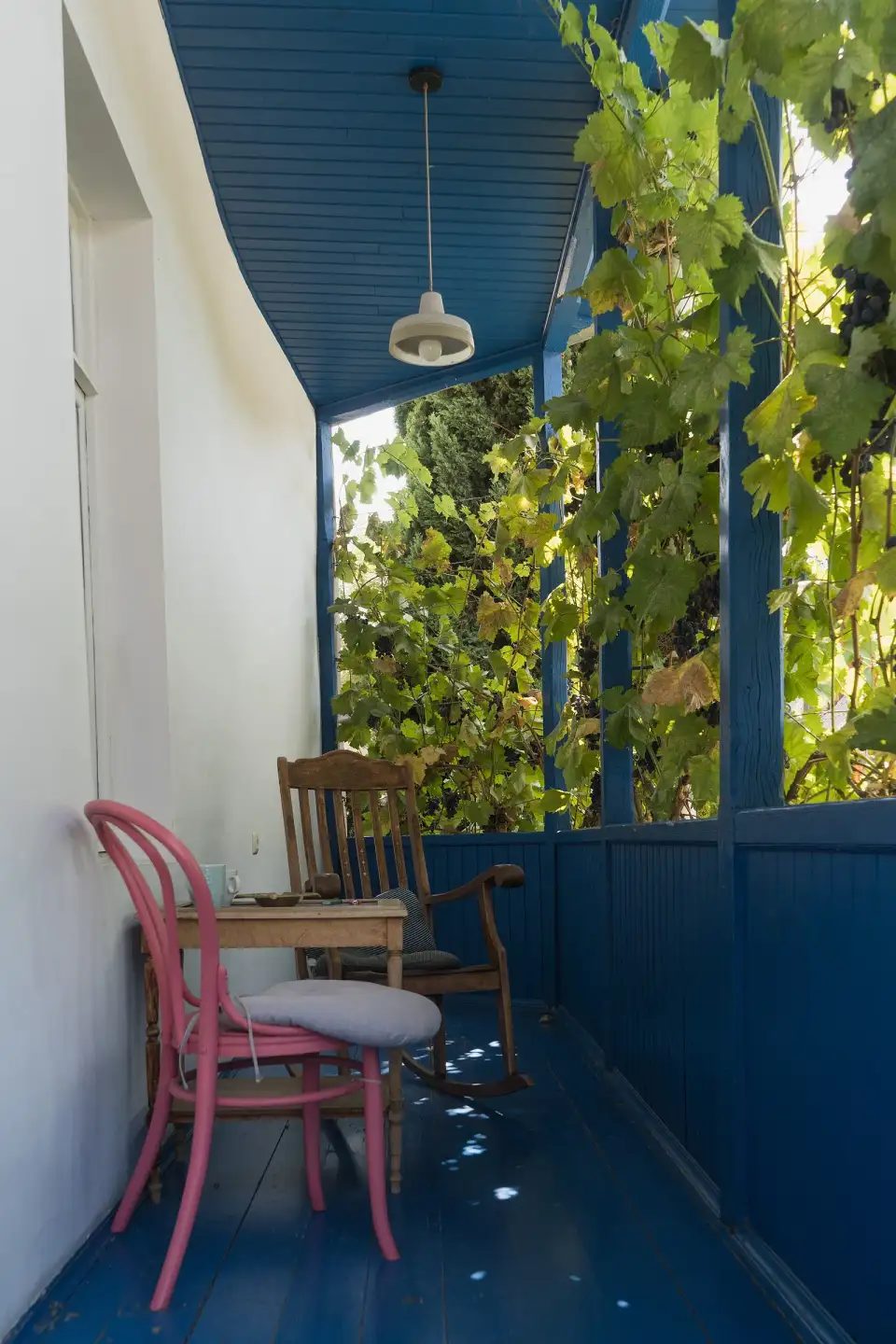
Guesthouses and apartments outnumber hotels, and many of the best places are family-run flats in old buildings. That usually means warmth, good breakfast and local advice, and sometimes means no lift and a hallway that has seen better decades.
Ask about heating and hot water if you are travelling outside summer. Tbilisi winters are properly cold and older buildings vary enormously.
Air conditioning matters in summer. The city sits in a bowl and holds heat.
Noise. Courtyard-facing rooms are noticeably quieter than street-facing ones in the central districts, and it costs nothing to request one.
The airport is a straightforward drive from the centre. Arrange a transfer or use a ride-hailing app rather than negotiating at arrivals.
What a room actually costs
Tbilisi is inexpensive by Western European standards and its prices have moved more than most of the country’s in recent years, so it pays to know what drives the number.
District matters less than you would expect and season matters more. A restored flat in Sololaki and a similar one two streets outside the tourist core can differ substantially for a five-minute walk, and the same room in July costs more than in February.
Type is the bigger lever. Family-run guesthouses and apartments dominate the market and represent the best value, boutique hotels in restored old buildings sit above them, and the international chains sit higher again without offering much the city cares about.
Three things to check before comparing two rates. Whether breakfast is included, since a guesthouse breakfast here is a real meal and not a pastry. Whether there is a lift, because old buildings frequently do not have one and the city is built on hills. And what the cancellation terms are, since the cheapest rates are usually the inflexible ones and mountain weather has a habit of rearranging Georgian itineraries.
The hills, and why they decide everything
Maps of Tbilisi lie by omission, because they do not show the gradient, and the gradient is what people remember about choosing badly.
The centre sits in a river valley with districts climbing the slopes on either side, which means two addresses the same distance from the old town can be a flat stroll or a fifteen-minute climb apart. Upper Sololaki, for instance, is beautiful and quiet and involves a serious uphill walk home after dinner; lower Sololaki is three minutes downhill into everything.
Three practical consequences. Check the walk on a map with terrain before you book, not just the distance. Take the hills into account with luggage, because arrival day is the worst possible time to discover them, and cobbles and wheeled suitcases are a poor combination. And use the cable car and funicular, which exist precisely because the city is vertical and turn two of the biggest climbs into a few minutes.
None of this argues against the hillside districts, which are the loveliest parts of the city to stay in. It argues for knowing which side of the hill your door is on.
The building matters as much as the district
An unusual amount of Tbilisi accommodation sits inside nineteenth-century buildings, and that is both the appeal and the catch.
The good version is genuinely special: carved wooden balconies, a shared courtyard, tiled entrance halls and ceilings you cannot get in a new build. The less good version is the same building with cold rooms, thin walls, uneven plumbing and four flights of stairs.
The questions that separate them are simple and worth asking directly. Is the room courtyard-facing or street-facing, which decides your nights in the central districts. How is it heated, which decides everything between roughly November and March. Is there air conditioning, which decides July and August in a city that sits in a bowl and holds heat. And which floor, and is there a lift, which decides how you feel about your luggage.
None of this is a reason to avoid old buildings. It is a reason to book a good one, and the difference in price between the two is usually small.
Where it fits in a route
Most itineraries use Tbilisi as the hub, going out and coming back rather than moving on each night, and that is the right instinct given how small the country is. Our ten-day itinerary is built that way, and our Tbilisi guide covers what is actually in each district once you have chosen one.
What I would book
Lower Sololaki, in a restored old building with a courtyard-facing room, four nights. Three minutes downhill into the Old Town, quiet at night, half the price of the equivalent inside the tourist core, and surrounded by the architecture that makes this city look like nowhere else.
Which district did you stay in, and did the hills catch you out? Tell me in the comments.