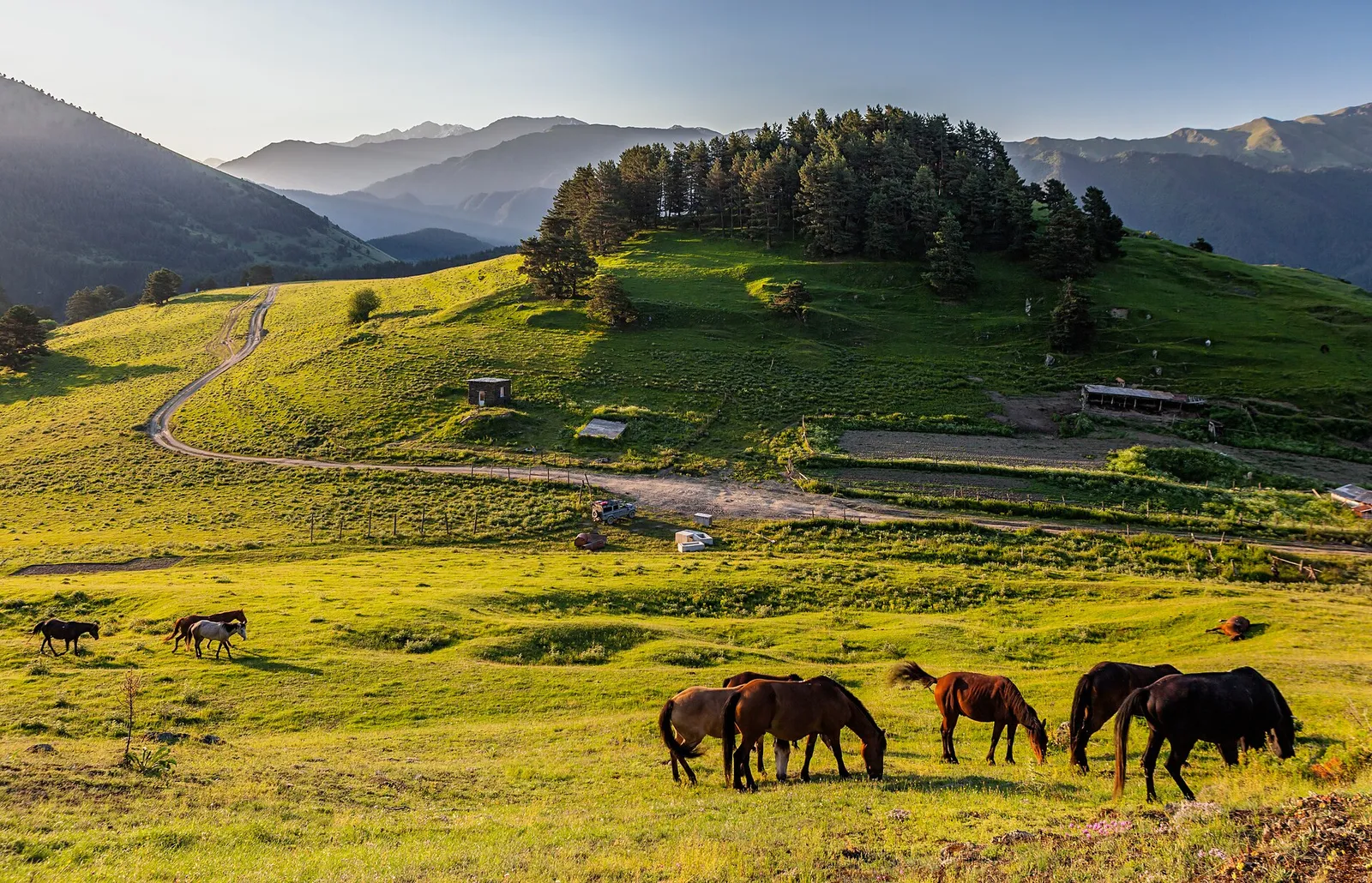
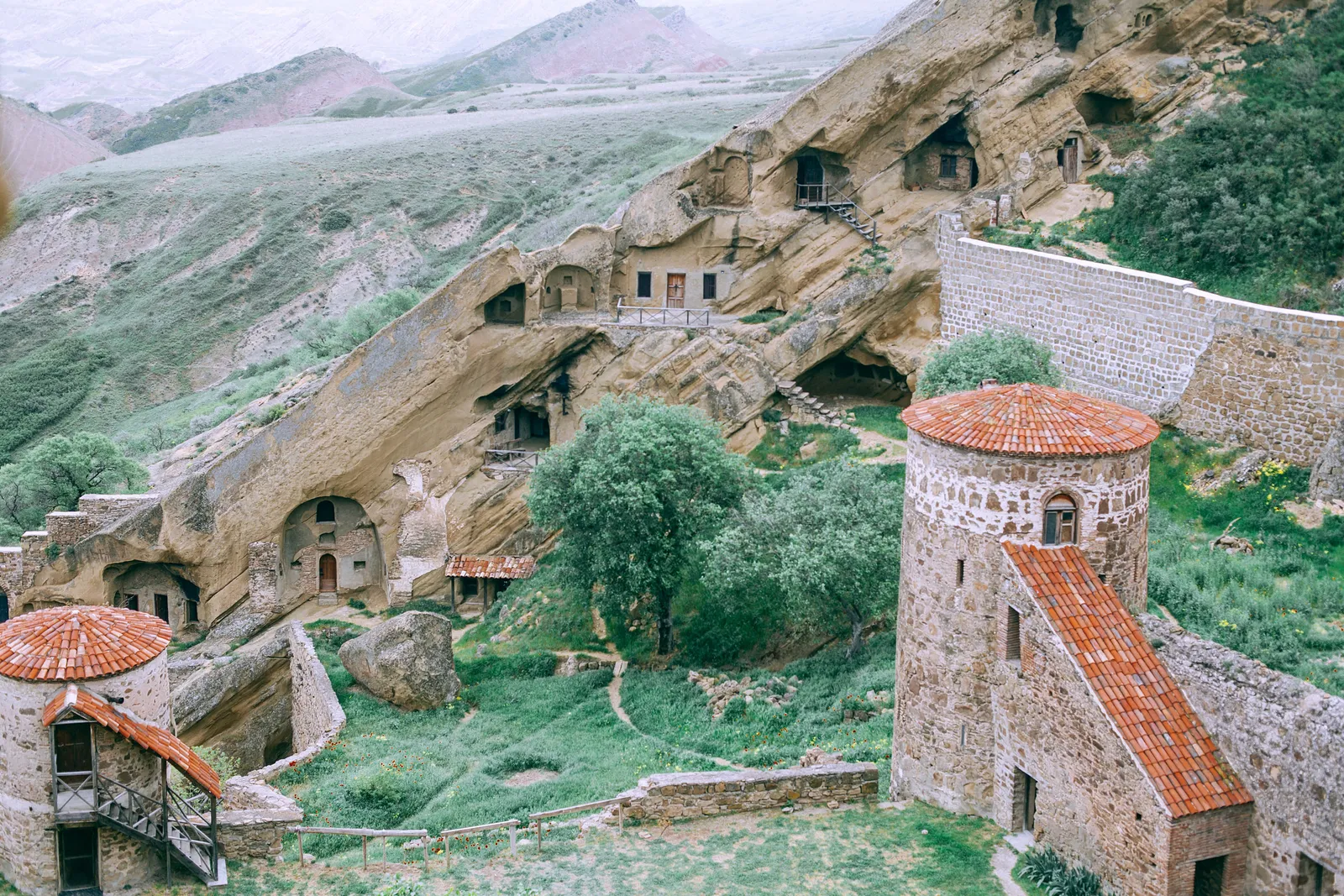
Two hours southeast of Tbilisi the country empties out. The vineyards stop, the villages thin, and the landscape turns to bare ridges in ochre and grey that look nothing like the rest of Georgia.
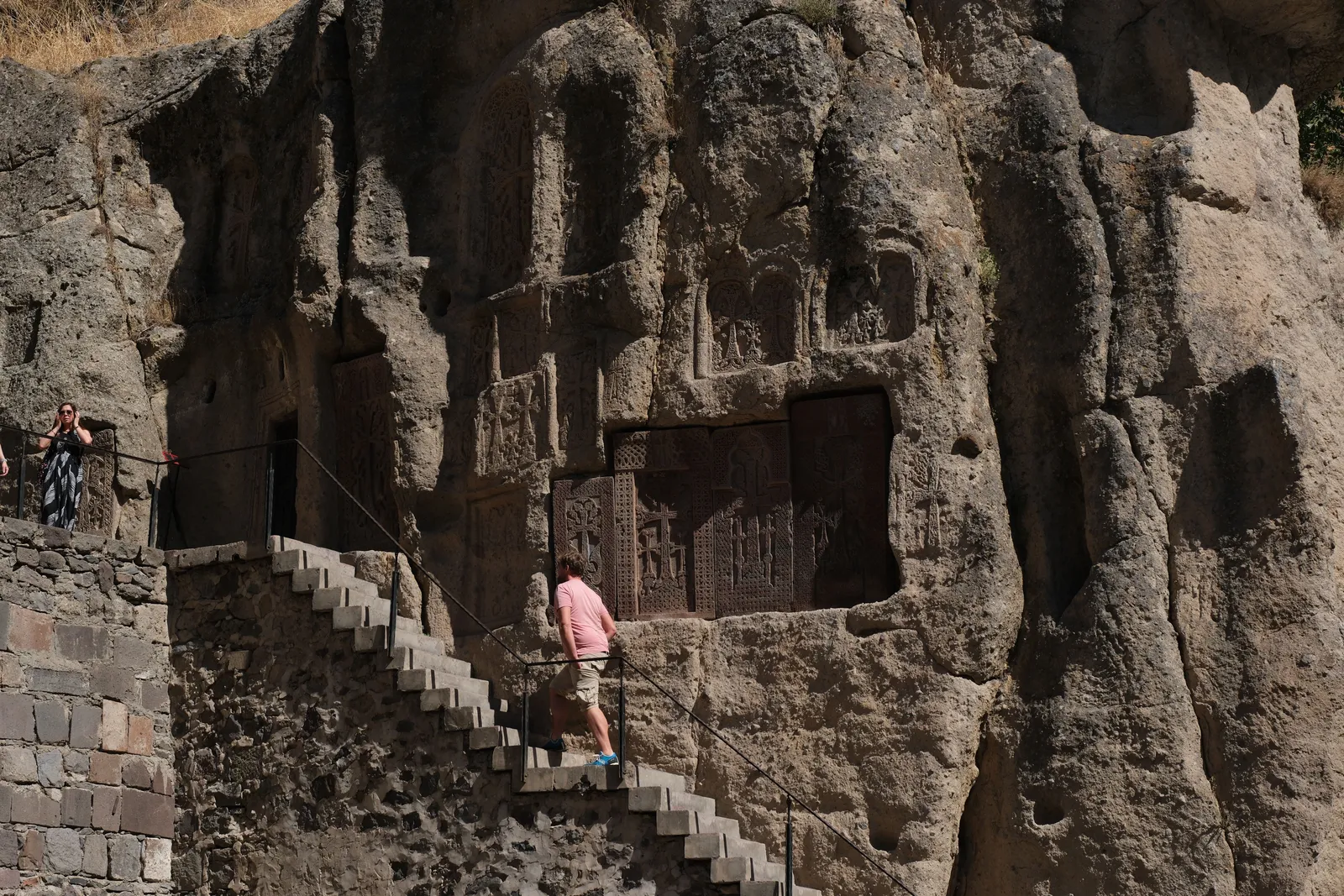
On one of those ridges, monks started cutting rooms into the rock in the sixth century, and kept going for several hundred years.
What is actually there
Two things, and they are quite different.
The lower monastery is a working religious community at the base of the ridge, with cells cut into the cliff face behind it. It is active, which means it has rules about dress and behaviour.
The upper caves are a walk up and along the ridge, and they are the reason serious visitors come: chapels cut into the rock with painted interiors, some of them remarkably intact for their age and exposure.
🔑 Most people who report being underwhelmed only did the lower part. The lower monastery is interesting. The climb is the point.
The complication worth knowing first
⚠️ The frontier with Azerbaijan runs along the ridge, and the precise line has been disputed. That has at times affected access to the upper chapels, and it can change at short notice for reasons that have nothing to do with weather or season.
Check locally before you go. A guesthouse in Tbilisi, a tour operator, or the driver you hire will know the current situation. Do not plan a day around the upper caves on the assumption that they are open because they were last year.
This is also a good argument for an organised trip, since somebody else is tracking it.
Getting there
Car or organised tour. There is no useful public transport for a day visit, and the final stretch of road is rough.
Roughly two hours each way from Tbilisi across increasingly empty country.
With the walk, this is a full day, not a morning. Anyone planning to combine it with a second site is planning badly.
A hired driver is inexpensive here by European standards and removes the road surface question entirely. The wider point about Georgian roads is in the first time in Georgia guide.
The walk
This is the part people underestimate.
It is a real climb on a loose, exposed path, with no shade and no water anywhere on the ridge.
It takes a couple of hours to do properly, including time in the chapels.
And it is exposed in every sense: sun, wind, and a long drop in places.
What to bring: more water than feels reasonable, sun protection, and shoes with grip. Trainers are fine, sandals are not.
The dress code
The lower monastery is active, and the rules are the usual ones for a working Georgian monastery.
Covered shoulders and knees for everyone.
A headscarf for women, and long skirts or a wrap where trousers are not accepted. Wraps are sometimes available at the entrance and it is better not to rely on it.
This is not a formality. Monasteries here enforce it, and being turned away after a two hour drive is an avoidable disappointment.
 Two hours out, no busOrganised day trips from Tbilisi
When to go
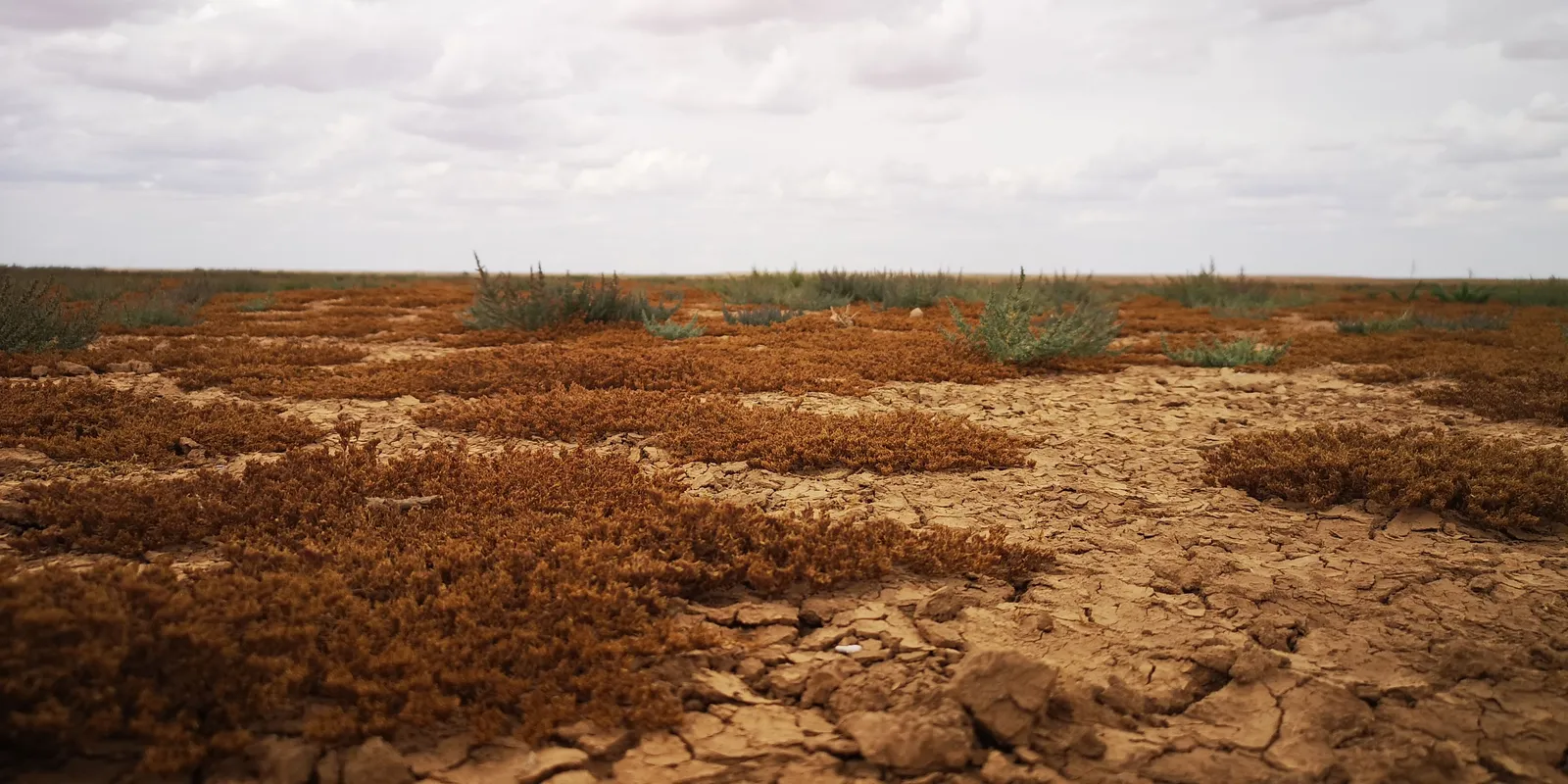
Spring is the best window. The semi desert turns briefly green, wildflowers appear, and the temperature on the ridge is manageable.
Autumn works and is quieter.
⚠️ Summer is punishing. An exposed ridge in the Georgian summer with no shade and no water source is not a pleasant walk, and this is the season when people abandon the climb halfway.
Winter is cold and the track can be poor, though the light on the landscape is excellent.
And whatever the season, go early. It avoids the heat and the tour buses in one move.
How it compares to other Georgian sites
Mtskheta is closer, easier, and more conventionally impressive as architecture. It is the obvious first day trip from Tbilisi and it is covered in the Mtskheta day trip guide.
Gelati near Kutaisi has the better preserved interiors and takes no effort to reach, and it is in the Kutaisi guide.
Davit Gareja has neither of those advantages and has something neither can offer: a landscape that looks like nowhere else in the country, and the sense of a place built deliberately far from everything.
Who should go
Travellers who like walking, empty landscapes and old religious architecture, in roughly that order. It rewards effort and it does not reward a quick look.
Who should skip it: anyone short on days, anyone who does not want a full day in a car and on a ridge, and anyone visiting in high summer without an early start.
In one line: the drive is long, the climb is hot, and it is the only place in Georgia that looks like this.