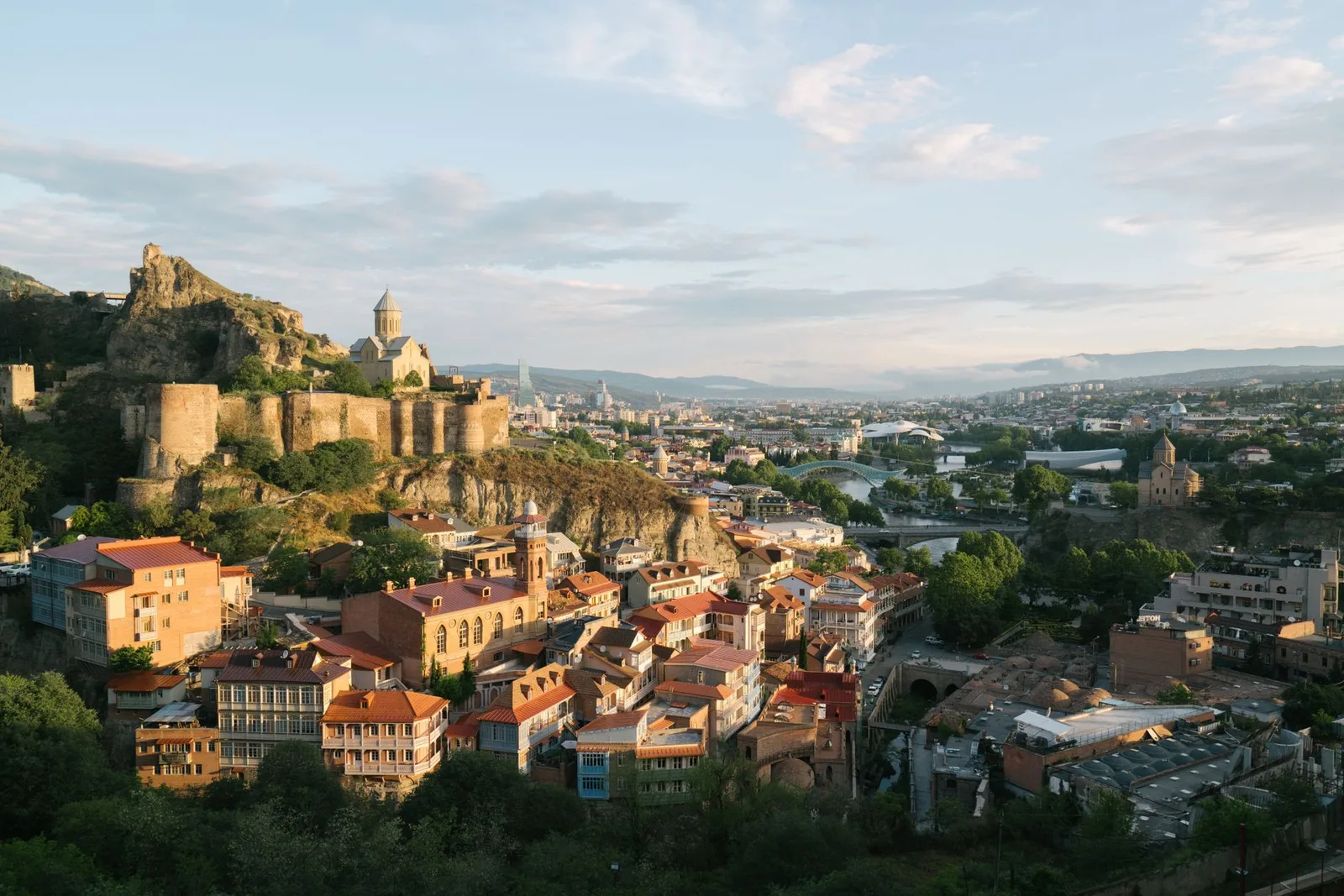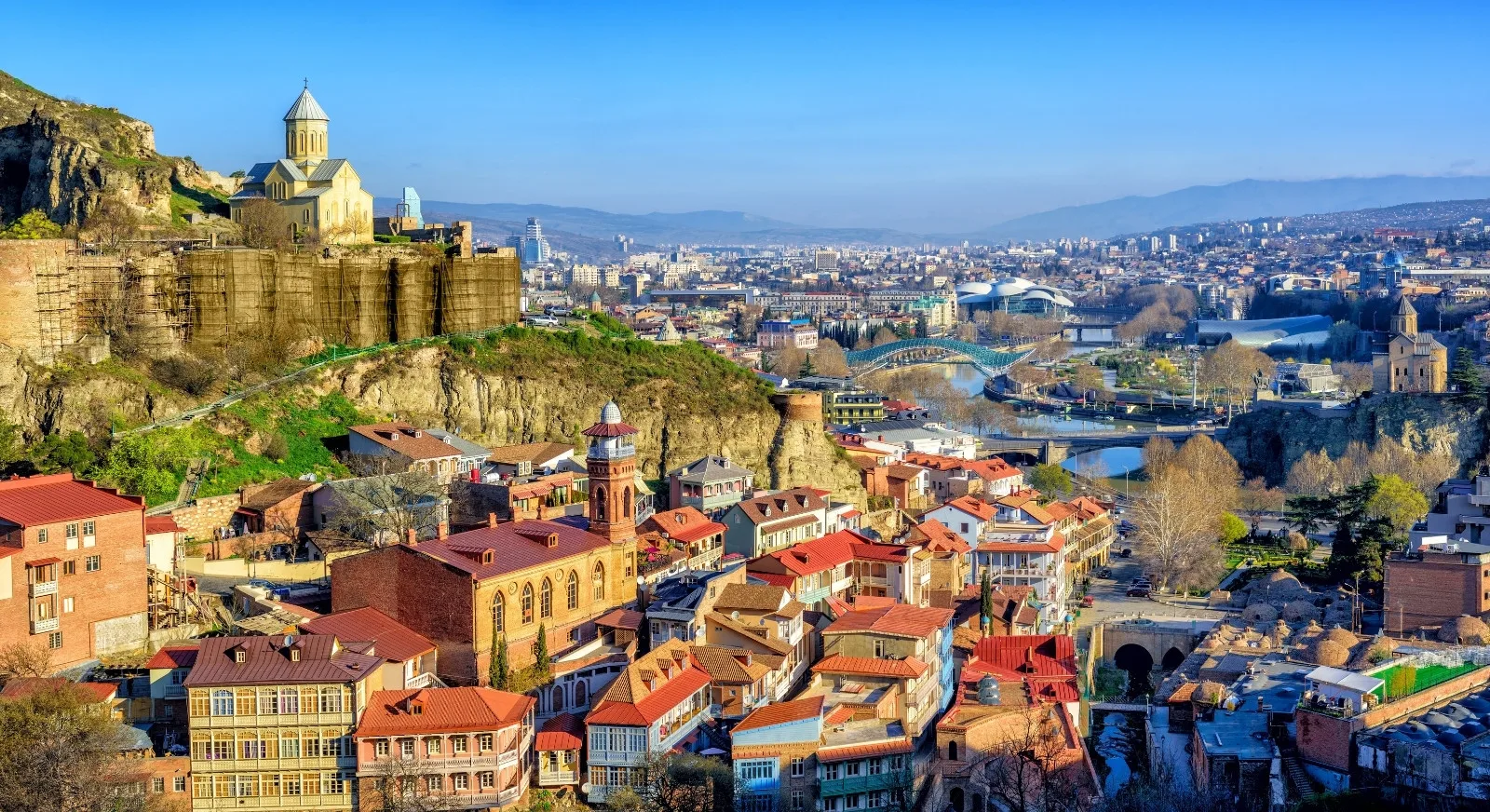
Georgia sits right where Europe meets Asia, a small country with towering Caucasus peaks, an 8,000-year-old wine culture, cobbled old towns and a hospitality that borders on the theatrical. It rewards a little planning and forgives almost none of the panic. Get a handful of decisions right before you fly, where you sleep, how you move, when you go, and a first visit unfolds like the country has been waiting for you. This is the guide we wish someone had handed us the first time.
When to go
Georgia has real seasons, and they matter more here than in a tropical destination. The sweet spots are May to June and September to October: warm days, kind evenings, and the country at its most photogenic, whether that is green mountain valleys in early summer or golden vineyards at harvest.
July and August are hot and busy, ideal for the Black Sea coast at Batumi but sweaty in Tbilisi. The high mountains (Kazbegi, Svaneti, the alpine passes) are only reliably open and beautiful from roughly June to September. Winter flips the script entirely: Tbilisi is quiet and atmospheric, and the ski resorts hum. Match the season to what you came for and you cannot go far wrong.
The visa, sorted in one paragraph
For most visitors this is refreshingly simple. Citizens of a long list of countries, including the EU, the UK, Ireland, the US, Canada, Australia and New Zealand, enter visa-free, and the permitted stays are unusually long by regional standards, with no fee and no advance form for a standard tourist stay. That is one of the most generous entry policies anywhere. Just make sure your passport has decent validity left, and because these rules change and depend entirely on your nationality, confirm the current requirement for your own passport before you book, including how long the stay actually runs for. And if you hold a South African passport, or any passport that English-language travel writing rarely covers, check your own position specifically rather than reading across from the British or EU answer, because entry requirements for South African travellers frequently differ across this region.
The insurance question that is easy to miss
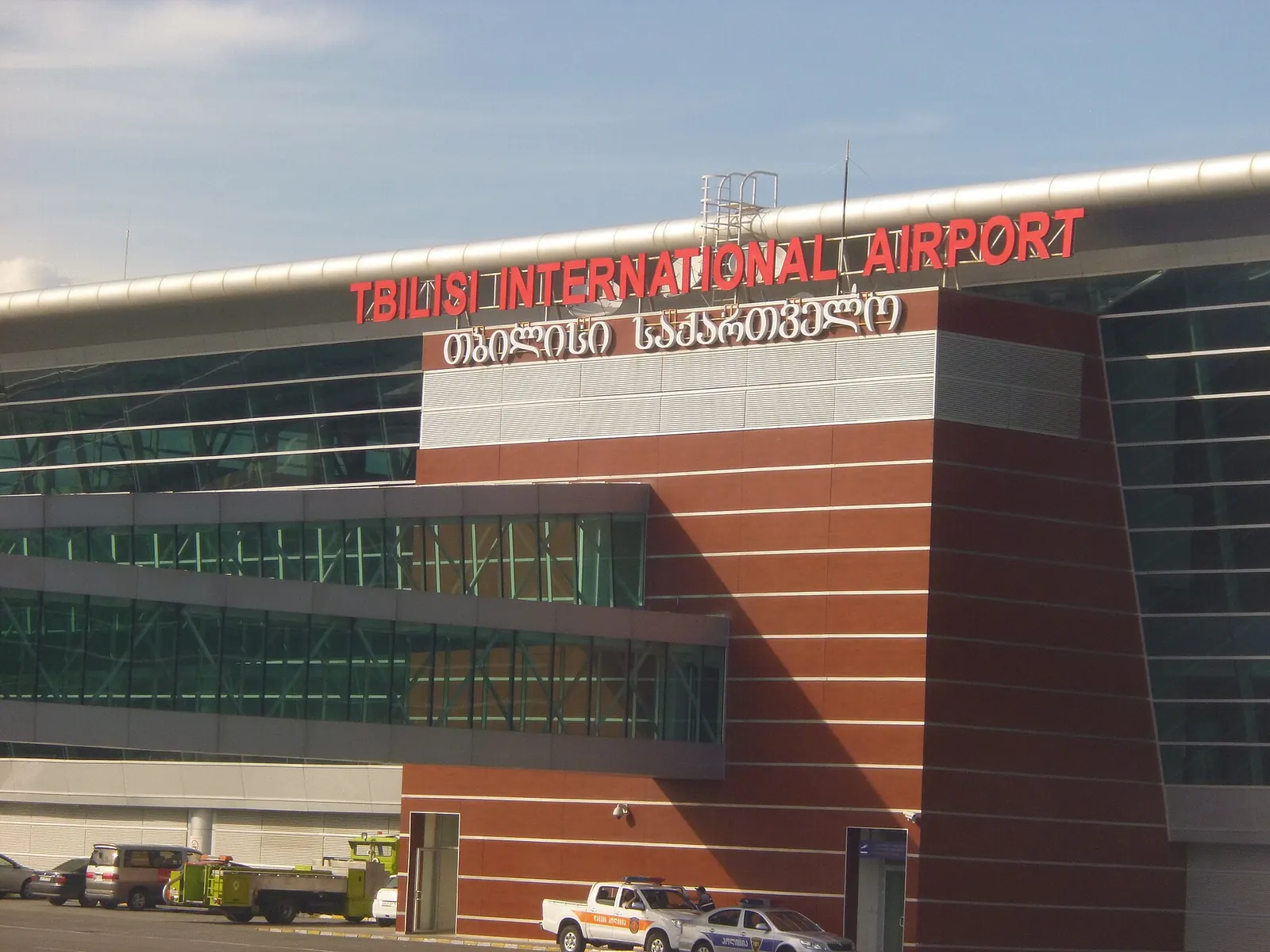
Here is the part that trips people up, because it sits outside the visa question. Since 1 January 2026, Georgia requires every foreign visitor to hold valid travel health and accident insurance covering the whole stay, with a minimum of 30,000 lari of medical and accident cover. It applies whatever your nationality, including the visa-free arrivals above, airlines have been instructed to check before boarding, and border officers can ask to see it. Arriving without it risks delay, being made to buy a policy on the spot, or refusal of entry. Requirements like this do get adjusted, so confirm the current position on an official Georgian government source before you fly.
What is not in doubt is that you want the cover, whoever is asking for it. A policy for Georgia should include emergency medical treatment, hospital care and medical evacuation, should span your arrival and departure dates, and is easiest to produce if it is readable in English. It can be issued by a Georgian or a foreign insurer, and a PDF on your phone is fine.
Practically, that means buying cover before you fly rather than sorting it on arrival, saving the certificate offline, and having it to hand at check-in and at the border in case either asks. A policy that falls short of the stated minimum is the kind of thing that gets caught at the airline desk rather than in Tbilisi.
Where to base yourself
Think in bases, not addresses. Georgia is compact but mountainous, and roads wind, so pick a couple of hubs rather than sleeping somewhere new every night.
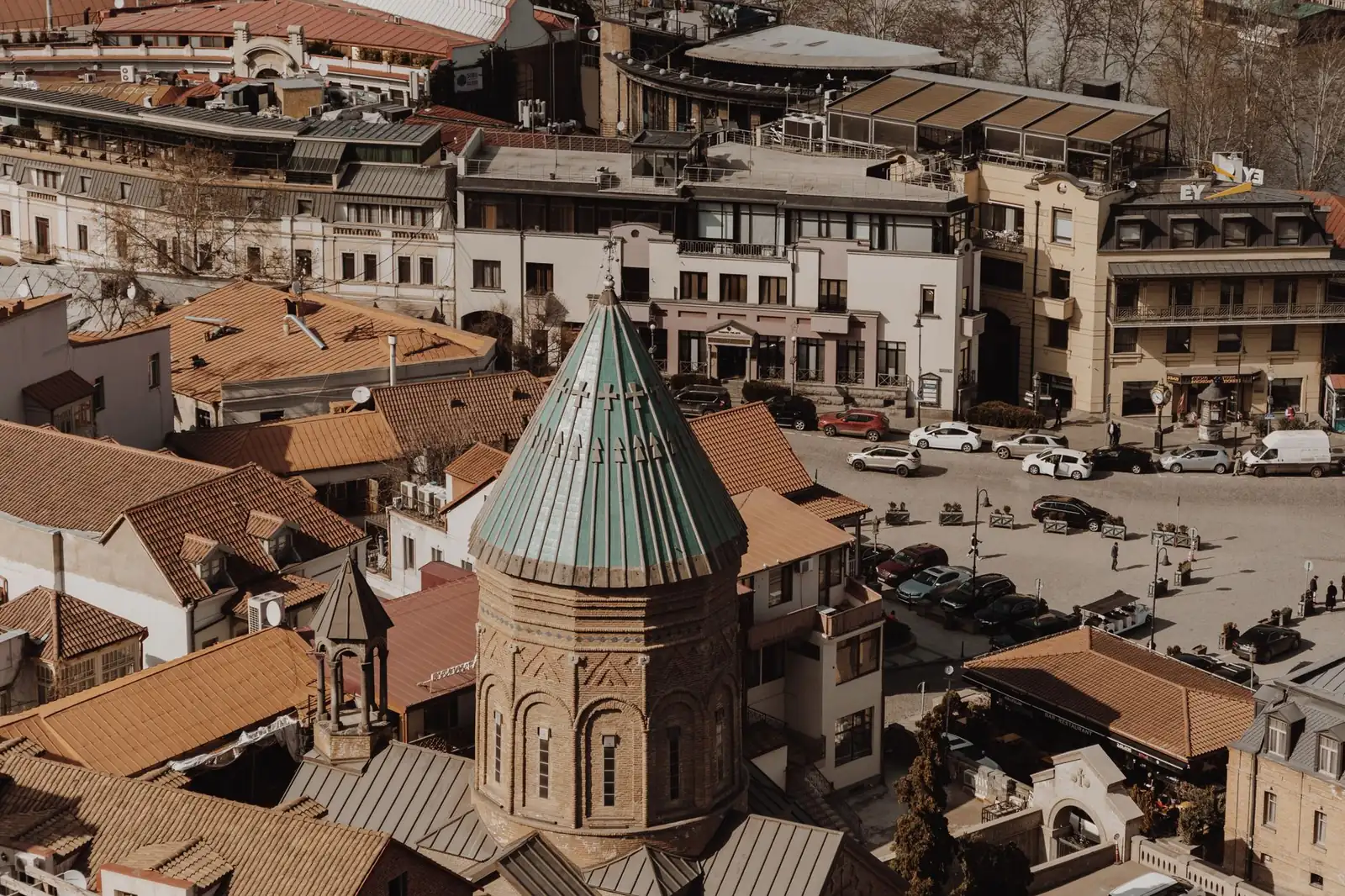
Tbilisi, the capital, is where almost everyone starts: a photogenic old town, sulphur bathhouses, a serious wine-bar and cafe scene, and easy day trips in every direction. Kazbegi (Stepantsminda) in the north is the mountain base, home of the famous Gergeti Trinity Church. Kakheti in the east is the wine country, with the hill town of Sighnaghi as its romantic anchor. Batumi on the Black Sea is the summer beach and nightlife city. For a first week, many people split their time: a few nights in Tbilisi, a mountain overnight, and a wine stop in Kakheti.
Getting around
There is no dense metro network beyond Tbilisi, and the joy of Georgia is out in the regions, so you will use a mix.
The workhorse is the marshrutka, a shared minibus that connects towns cheaply and frequently, if not always comfortably. Trains link Tbilisi with Batumi and a few other cities and are a pleasant, inexpensive way to cover distance. For the mountains and wine country, a private driver for the day or a rental car unlocks the country properly, letting you stop at a monastery, a viewpoint and a cellar in one loop. Driving yourself is doable but Georgian roads and traffic demand confidence, so plenty of first-timers hire a driver instead.
Hire a driver for the big days outA private driver turns the winding regions into one easy, scenic loopWhat to book ahead, and what to leave loose
Book your first two nights so you land somewhere sorted, your headline day trips (Kazbegi, a Kakheti wine tour, a canyon or cave day), and an eSIM so you have data the moment you switch your phone on. Almost everything else, restaurants, extra tours, marshrutka tickets, guesthouses out in the regions, can be arranged easily on the ground and often for less. Georgia is at its best when you leave room to say yes to a spontaneous supra or a detour someone recommends over a glass of wine.
The supra and the art of being a guest
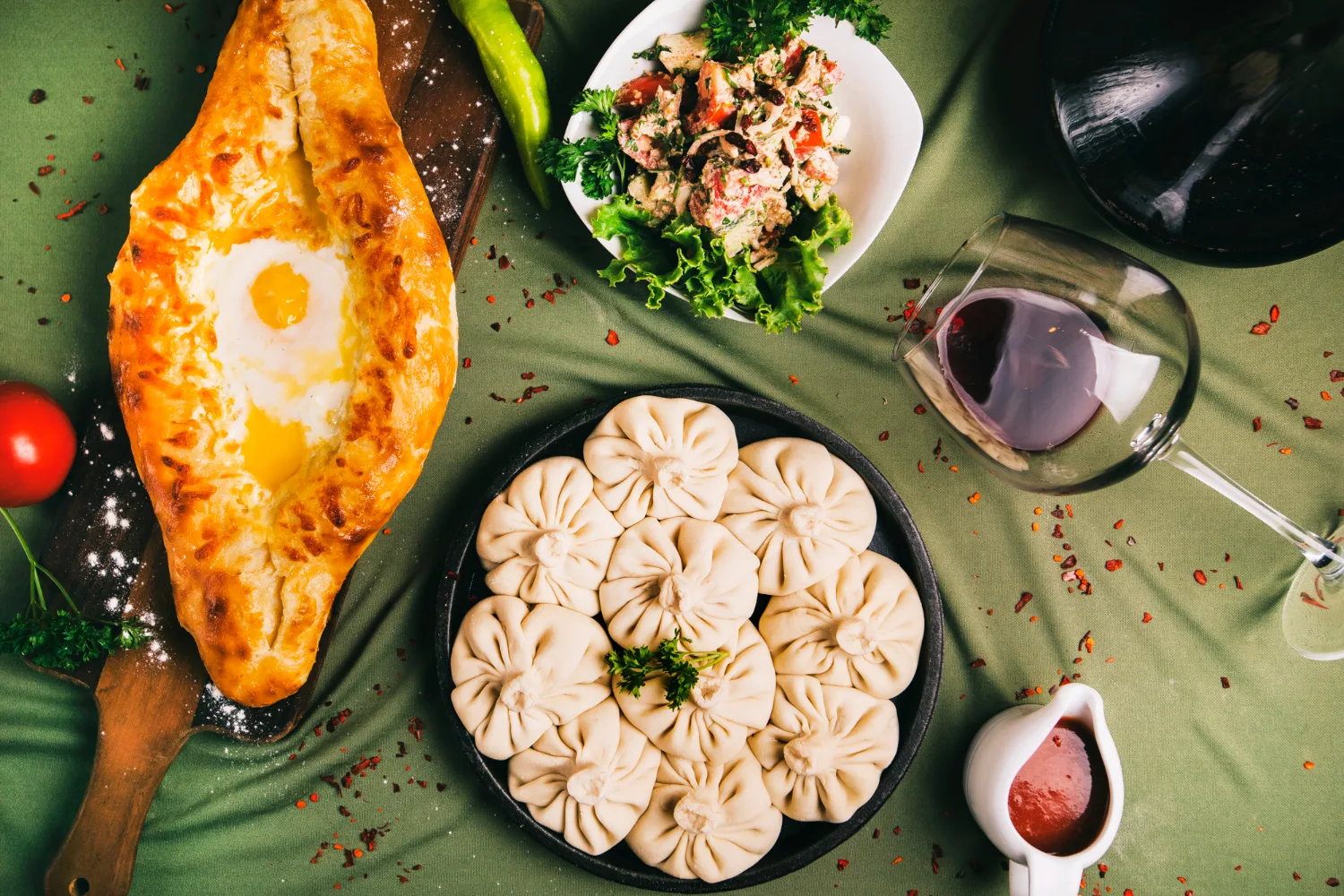
You will almost certainly be pulled into a supra, the Georgian feast, at some point, and it is the heart of the culture. A tamada (toastmaster) leads a long series of heartfelt toasts, plates pile up faster than you can eat, and the wine keeps coming. The etiquette is warm and forgiving: pace yourself, wait for the toast before you drink deeply, and never, ever pour your own wine into a raised toast when someone is honouring you. Say yes to the invitation. These evenings are the memories people carry home.
Money, water and staying well
The currency is the Georgian lari (GEL), which is not pegged to anything, so the rate moves and is worth checking the week you travel rather than trusting a figure printed anywhere. Cards work in cities, hotels and many restaurants, but carry cash for marshrutkas, markets, small guesthouses and rural cellars. Use ATMs attached to real banks and cover the keypad.
If you plan to drive, note that Georgia’s drink-drive limit is 0.03 percent blood alcohol, around a quarter of the usual western European figure, and zero for professional drivers. One glass of wine can put an average adult over it, so treat it as zero rather than something to calculate. Enforcement is strict and penalties include heavy fines and licence suspension. On the paperwork, whether your home licence is accepted on its own or whether you also need an International Driving Permit alongside it depends on the country that issued it, so confirm your own position from an official source, and settle the rental company’s own requirement with that company in writing.
Tap water in Tbilisi and most towns is generally considered safe to drink, and the mountain spring water is superb, but if your stomach is sensitive, stick to bottled to start. Pack layers even in summer, because mountain weather turns fast, and bring any regular medicines you need. Travel insurance is not optional here: as covered above, you may be asked to show it, and you will want proper cover anyway if you plan to hike, ski or drive.
What a first trip actually looks like
Georgia is small on the map and slow on the ground, because the interesting parts are mountain roads. Planning by hubs rather than by stops is what makes it work.
| Length | The shape | What to drop |
|---|---|---|
| Five days | Tbilisi plus one long day out | The mountains as an overnight |
| Eight days | Tbilisi, a mountain overnight, the wine country | The coast |
| Ten days | The same, plus the coast or a second mountain region | Nothing, this is the comfortable version |
| Two weeks | Add a remote region reached by rough road | Only your schedule |
The rule behind it: two or three bases, not six. Journeys here take longer than the distances suggest, roads climb and wind, and the best moments happen when you stay long enough to be invited to something.
Timing matters more here than in most countries, because the high roads are seasonal and the wine country has one unmissable month. Our guide to the best time to visit Georgia sets out which regions are open when, and it is worth reading before you fix the route rather than after.
Choosing your regions
Most first trips come down to a handful of decisions, and they are less about sights than about mood.
The capital is the one fixed point, and almost every route starts and ends there.
The mountains are what people photograph and what they remember, and they need an overnight rather than a day trip to be worth the drive.
The wine country is the cultural heart of the trip, an easy day from the capital and better as two, and it is where the supra tradition is at its strongest.
The coast is the outlier, seasonal and lively and quite unlike the rest of the country, and whether it earns a place depends heavily on the month; our comparison of Batumi and Tbilisi weighs the two cities directly, which is the choice most short trips are really making.
Being a guest, and a few small courtesies
Georgian hospitality is not a tourist-board slogan, it is a real and slightly overwhelming social norm, and knowing how it works makes the trip.
Accept the invitation. If a family, a cellar or a table asks you to stay, staying is the correct answer, and it is where the best evening of the trip usually comes from.
Let the toasts lead. Wine is drunk to toasts rather than sipped continuously, and the toastmaster sets the pace. Waiting for the toast is the whole etiquette in one line.
Pace yourself early. The generosity is relentless and refusing food outright reads badly, so eating slowly across many dishes works far better than declining.
Dress for churches. Monasteries and churches expect covered shoulders and knees, and women covering their hair, and they are a large part of any Georgian itinerary. A scarf and a layer in the daypack save the problem entirely.
Photographs of people deserve asking first, particularly in villages and at religious sites, where a camera can be intrusive in a way it is not on a street in Tbilisi.
Safety and the practical bits
Georgia is an easy and safe country to travel in, and the risks worth preparing for are ordinary rather than dramatic.
The roads are the real hazard. Driving standards are assertive, mountain roads are narrow and weather changes them quickly, and this is the single most common reason a trip goes wrong. It is also the argument for a driver.
Mountain weather deserves respect rather than caution. Conditions shift within an hour at altitude, some passes and remote roads are seasonal, and a hike that looked simple in the valley can be a different proposition higher up.
Everyday crime is low, and the usual city sense in crowds and markets covers it.
Two practical notes that catch people out: carry cash once you leave the cities, because guesthouses, minibuses and rural cellars often cannot take cards, and check the political situation and border areas close to your dates, since parts of the country’s frontiers are not straightforward and official advice on them changes.
If you are still deciding between this country and the one over the southern border, our comparison of Georgia and Armenia sets out what each does better and whether to do both.
The short version
Go in late spring or early autumn if you can, base yourself in two or three hubs rather than five, confirm your own visa rules and the current insurance position for entry, buy the cover before you fly either way, sort an eSIM before you land, use marshrutkas and trains for distance but a driver for the mountains and wine, book your headline days out early, and say yes to the supra. Do that, and your first trip to Georgia will feel less like a logistics puzzle and more like the start of a long friendship with a country that already treats you like family.