Georgia has one of the most welcoming entry policies of any country in the region, and that fact alone changes what a trip here can be. Travellers who arrive expecting the usual thirty-day tourist window discover they have been admitted for far longer, and a surprising number of people who came for a fortnight end up staying for months.
That generosity is also why this page is short on drama and long on the two or three things that actually go wrong. Here is how the system works, what to verify for your own passport, and where people still trip up.
The disclaimer that matters more than the rules
Entry policies change, in both directions, and any specific number of days printed on a travel blog has a shelf life. What does not change quickly is the structure, which is what I will explain.
For the entitlement attached to your specific passport, check an official Georgian government source before you book, and check it again nearer to travel. Do not rely on a blog, do not rely on what a friend of another nationality experienced, and be particularly careful with pages that have not been updated in years.

The structure
Georgia operates on a broad visa-free basis for a large number of nationalities, and the permitted stays are unusually long compared with regional norms. Many Western passport holders receive a substantial visa-free period on arrival with no advance paperwork at all.
For nationalities outside that list, there is an electronic visa applied for online in advance, and standard consular routes beyond that.
The practical implication is that for most visitors from Western Europe, North America and Australasia, entry involves nothing more than turning up with a valid passport. That is genuinely unusual and it is worth knowing, because a lot of travellers over-prepare for a border that barely asks anything.
The passports that need to look more carefully
Do not assume the arrangements described for British, Irish, EU, American, Canadian, Australian or New Zealand travellers apply to you if you hold a different passport.
South African passport holders in particular should check their own position specifically rather than reading a guide written for a British audience, because entry requirements for South African travellers frequently differ across the region and this is the single most common gap in English-language travel writing.
The same care applies to anyone travelling on a passport not commonly covered by Western travel media.

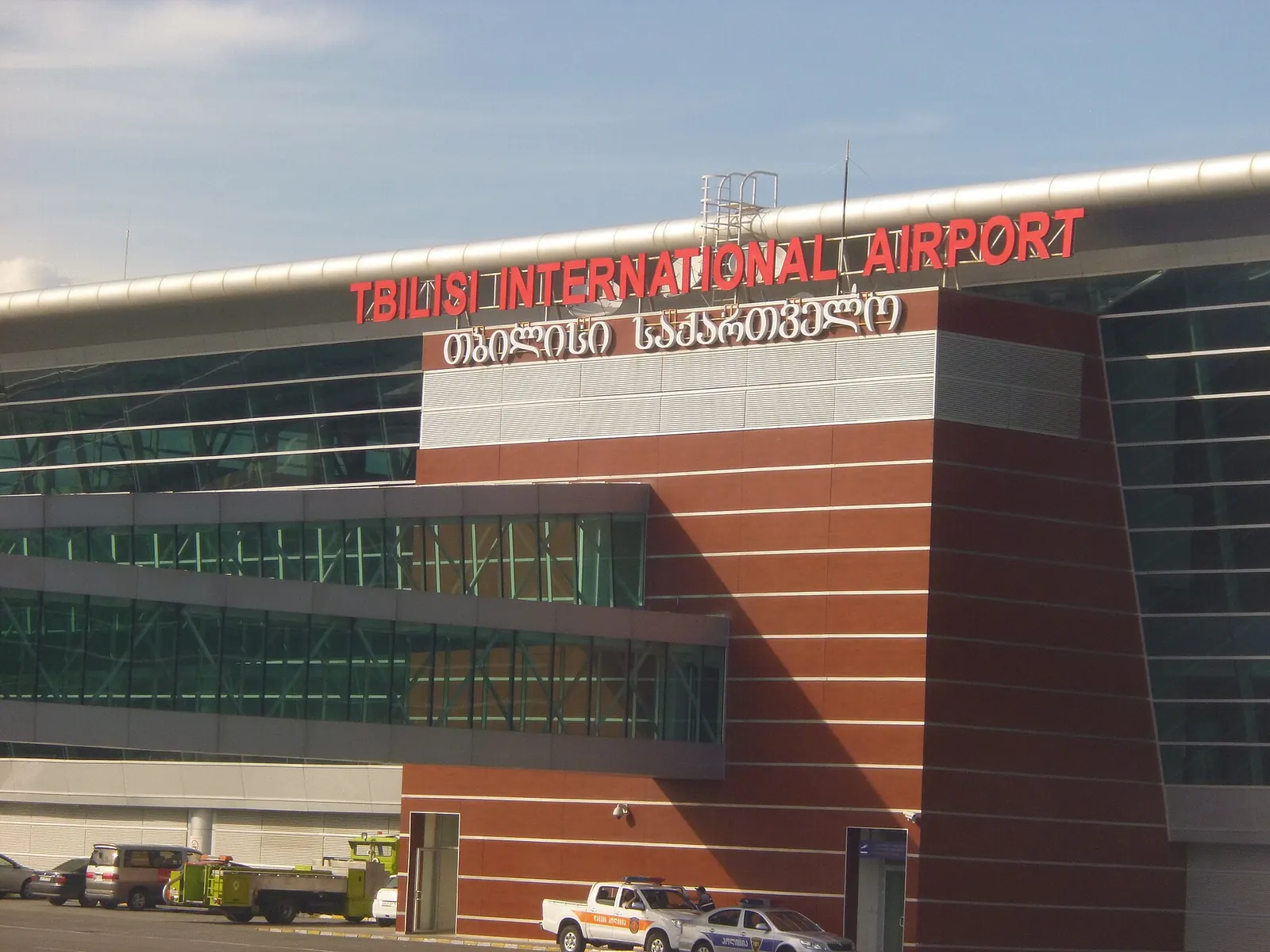
Arriving by air
The main international airports handle arrivals straightforwardly. Immigration is generally quick, the officers are used to visitors, and the questions are minimal.
One charming detail that catches people pleasantly off guard: it is not unusual to be handed a small bottle of wine on arrival. That is not a scam, it is a national introduction.
Photograph your entry stamp before you leave the airport. It costs nothing, it settles any later question about your permitted stay, and it makes replacing a lost passport considerably faster.
Arriving overland, which is where it gets interesting
Georgia has land borders with several neighbours, and overland arrival is common and generally straightforward. A few things worth knowing:
Crossings vary in how busy they are, and queues at the main ones can be long, particularly for vehicles.
Some border regions are subject to travel advisories and access restrictions relating to unresolved territorial disputes. This is not a reason to avoid Georgia, which is a safe country for visitors, but it is a reason to check your own government’s current travel advice for specific areas rather than assuming the whole country is uniform.
Entering with a hire car across a border usually requires the rental company’s explicit written permission, and many prohibit it entirely. Check before you plan a cross-border road trip.
Sort cover before you flyCompare policies on medical and evacuation limits, which matter in the mountains.Passport validity and the practical checks
Validity. Have comfortable validity beyond your travel dates and blank pages available. Airlines enforce this at check-in on the destination’s behalf, which is why the problem usually appears before you have left home.
Onward travel. Airlines may ask to see it. Whether they do is inconsistent, but the carrier bears the risk, so have something bookable rather than arguing at the desk.
Insurance. Since 1 January 2026 this is an entry condition: every foreign visitor needs valid travel health and accident insurance for the whole stay, with at least 30,000 lari of cover. Airlines have been told to check it at boarding and border officers can ask for it, so buy it before you fly and keep the certificate offline. Confirm the current position on an official Georgian source, since this rule is recent.
Staying longer, and what happens if you overstay
Given how long the permitted stays are, most visitors never think about extensions. If you do plan to stay beyond your entitlement, look into the options properly and in advance rather than improvising near the deadline.
Overstaying is fined and recorded, and it complicates future entry. Nobody plans to overstay; people simply lose track of a date they never expected to reach. Put your last permitted day in your phone calendar on the day you arrive.
Sort cover before you flyCompare policies on medical and evacuation limits, which matter in the mountains.What the border actually feels like
Knowing the procedure removes most of the anxiety, and the procedure here is unusually light.
At an airport, you queue, hand over the passport, answer a question or two about why you are visiting and where you are staying, and get stamped. There is generally no form to fill in on arrival, no fee to pay and no requirement to show cash. The whole thing frequently takes less time than collecting your bag.
At a land crossing, the same process happens on foot or in the vehicle queue, and the variable is time rather than difficulty: the busy crossings can back up considerably, particularly for cars and particularly at weekends and holidays.
Two small things worth having ready in both cases. Where you are staying the first night, which is the most common question, and something that looks like an onward plan, which the airline is more likely to want than the border officer.
What you will not usually face is an interrogation. Georgia’s tourism policy is deliberately open, and the border reflects that.
If something goes wrong
Border problems are rare here, and the ones that do happen are administrative rather than dramatic.
A lost or stolen passport is the serious one. Report it to the local police to get documentation, then contact your own country’s nearest diplomatic mission, which may or may not be inside Georgia depending on your nationality, since several countries cover the region from a neighbouring capital. Check where yours is before you travel rather than at the point you need it, and keep a photograph or scan of your passport somewhere you can reach without the passport itself.
A missing entry stamp occasionally happens at busy crossings and can complicate your exit. This is exactly why photographing the stamp on arrival is worth the ten seconds.
A date you lost track of is the most common problem of all, and it is entirely preventable. Put your last permitted day into your phone calendar on the day you arrive, with a reminder a week out.
Long stays, and the trap inside them
The unusual length of the permitted stay changes the psychology of a trip here, and it creates one specific risk worth naming.
Because nobody arrives thinking about the deadline, nobody watches it. Travellers who would count days carefully in Europe simply stop counting in Georgia, and then a month becomes three because the country is cheap, comfortable and easy to live in. That is how ordinary tourists end up with an overstay record they never intended.
If a longer stay is genuinely part of the plan, treat it as a plan rather than a drift: look into the proper routes in advance, understand what your entitlement actually permits, and be aware that working remotely on a tourist entitlement is a question with its own rules, which differ from country to country and change. Confirm anything in that area with an official source or a professional rather than with a forum.
What the generous policy actually means for planning
This is the useful part, and it is why the entry rules deserve a page at all.
Because the permitted stay is long, you are not forced into the compressed itinerary that shapes trips elsewhere. Georgia is a small country with enormous variation, and the natural way to see it is slowly: a week is enough for the capital, the wine region and one mountain range, and a month is not excessive.
If you are planning a first trip, our first time in Georgia guide sets out what that shape looks like. And because the country is inexpensive, staying longer costs far less than most people assume, which our budget guide goes into.
The other planning consequence: with a long entitlement you can afford to base yourself in one place and take your time, rather than moving every second night. If you are deciding between the capital and the coast as a base, our comparison of the two covers what each is actually like to live in for a while rather than just to visit.
The short version
Check your own nationality’s entitlement on an official Georgian source, and check the permitted length rather than just whether you need a visa. If you hold a South African or less commonly covered passport, check specifically rather than reading a guide aimed at British readers. Have comfortable passport validity. Photograph your entry stamp. Diarise your last permitted day.
Then relax, because for most visitors this is one of the easiest borders you will cross.
What passport are you travelling on, and did anything surprise you at the border? Tell me in the comments.