Georgia works better with children than its reputation suggests. Distances are short, food arrives fast and is mostly bread and cheese in some arrangement, families are welcome absolutely everywhere including late in the evening, and there are more caves, cable cars, boats and castles per hour of driving than in most countries this size. What does not work is the classic mountain itinerary: the roads that make Georgia spectacular are long, winding and hard on small stomachs. This plan keeps every drive under about two hours, changes base once, and puts something to climb on, ride in or swim in every day. Read our family guide first, and the food guide for what children here actually eat.
Itinerary at a glance
| Day | Base | The signature experience |
|---|---|---|
| 1 | Tbilisi | The cable car up to the fortress |
| 2 | Tbilisi | The funicular to the hilltop park and its rides |
| 3 | Kutaisi | Mtskheta on the way, then the Colchis fountain |
| 4 | Kutaisi | A boat through the Martvili canyon |
| 5 | Ureki | Dinosaur footprints at Sataplia, then black sand |
Day 1: Tbilisi from above
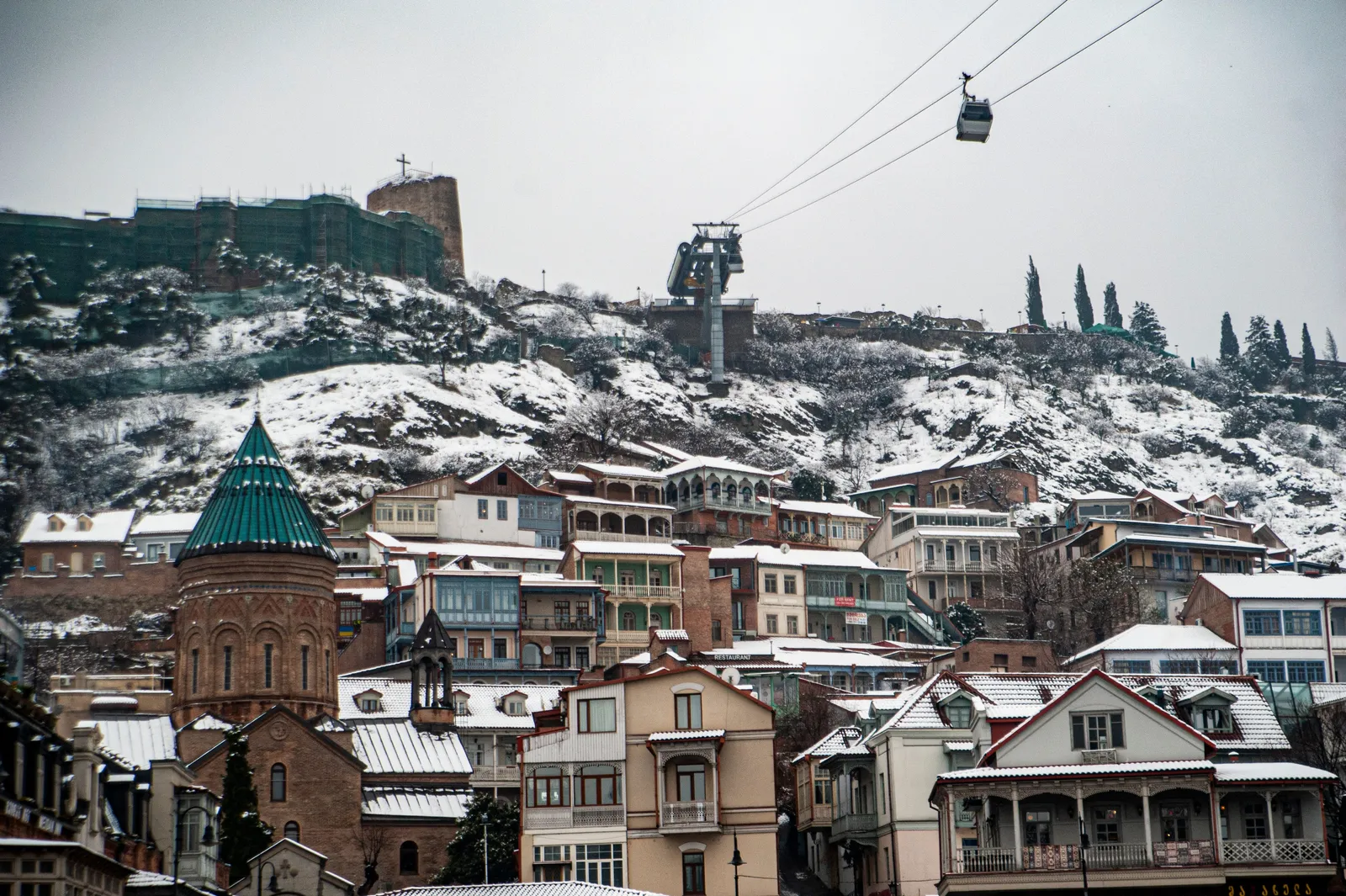
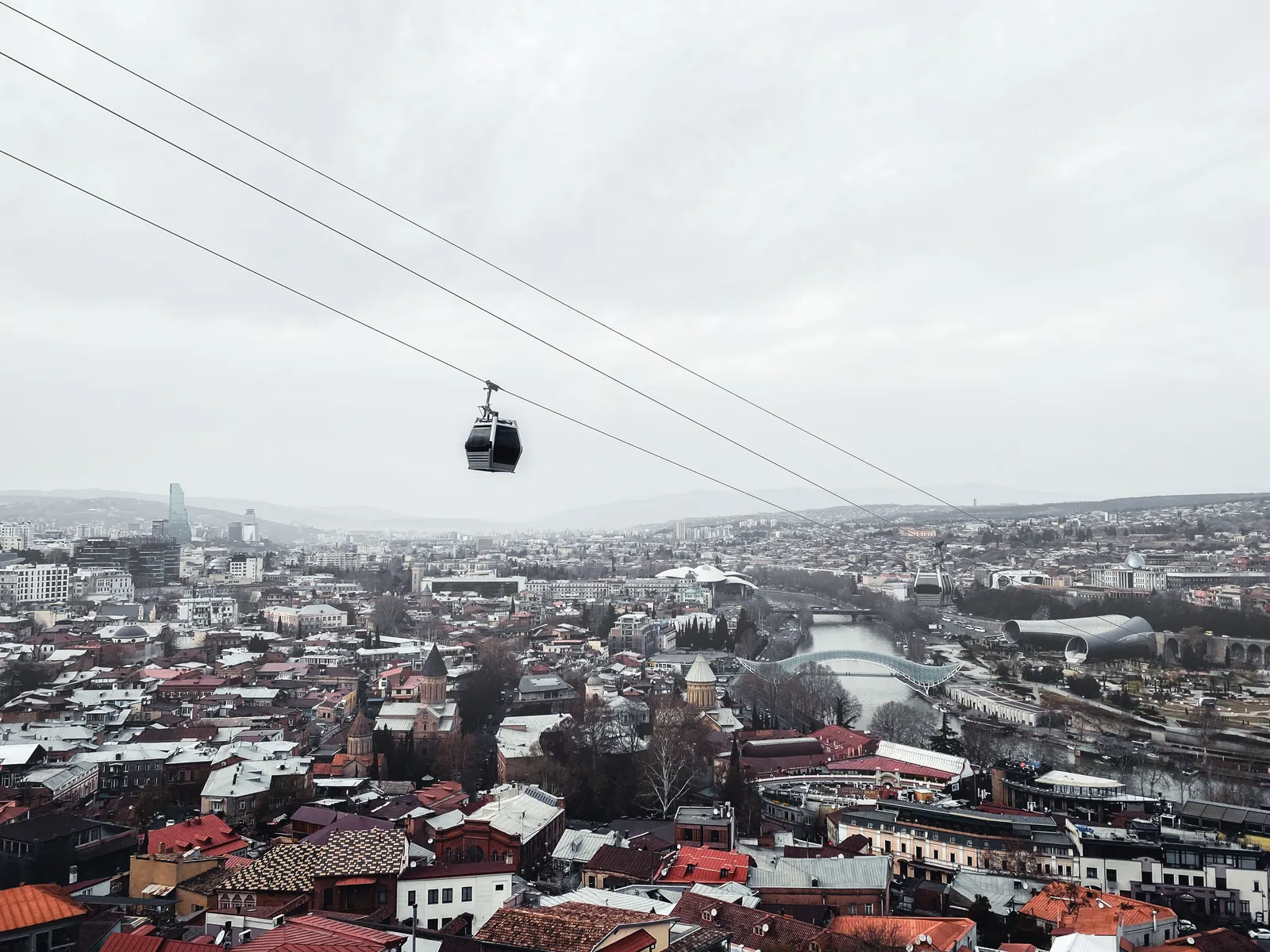
Start with the cable car. It leaves from Rike Park by the river, crosses above the roofs of the old town in a couple of minutes, and lands beside the Narikala fortress, which is a walkable ruin with battlements and a lot of exposed edges to hold on to. The statue of Mother of Georgia is a short walk along the ridge. Coming down through the botanical garden gives you a waterfall, a suspension bridge and shade, which is the right shape for an afternoon.
Down in the old town, the leaning clock tower outside Rezo Gabriadze’s puppet theatre puts on a small mechanical performance on the hour, an angel comes out and strikes a bell, and it is the sort of thing children stand and wait for. The sulphur bath district is next to it, and while the baths themselves suit older children rather than toddlers, the domes in the street are worth walking through.
Food: khachapuri is bread and melted cheese and it solves most fussy eaters on day one; khinkali are dumplings you eat with your hands, which is a game rather than a meal. The signature experience: the cable car over the old town. Optional tour: none needed; this day is a walk with a cable car in the middle.
Day 2: The hill, the park and the river
Mtatsminda is the hill above the city, and the funicular that climbs it is an attraction in itself, a steep old railway from the edge of the centre to a plateau at the top. Up there is an amusement park with a ferris wheel over the edge of the city, gentle rides for small children, and a great deal of open ground to run around. Give it a morning, and go early or late in summer, when the heat in the city is real.
In the afternoon, the National Museum on Rustaveli has the Colchis gold and the archaeology hall, which holds attention for about forty minutes with older children, and the ethnographic open air museum on the hill above Turtle Lake works better with younger ones: reconstructed wooden houses from every region, spread through woodland, with space between them. Turtle Lake itself has pedal boats.
Food: the food courts on Rustaveli are practical, and the bakeries selling shoti bread from a clay oven are more fun. The signature experience: the ferris wheel at the top of Mtatsminda with the whole city below. Optional tour: none; keep this day loose and let them choose the order.
Day 3: Mtskheta, and west to Kutaisi
Break the transfer rather than driving it in one go. Mtskheta is twenty minutes out of Tbilisi and is the old capital: a cathedral the size of a small stadium in the middle of a low town, a river confluence below, and Jvari on the hill opposite with a view over both. An hour and a half is enough with children, and the streets around the cathedral sell churchkhela, the nut and grape juice sweet that looks like a candle and is the best snack in the country.
From there it is about three hours west to Kutaisi, which is the base for the next two days. Arrive in the afternoon and use what is left on the Colchis fountain in the central square, which is ringed with enlarged gold animals copied from local archaeological finds, and the covered market behind it, which is loud, cheap and full of things to point at.
Food: Imeretian khachapuri here, the round one with the cheese inside, hot from a bakery. The signature experience: the churchkhela stalls at Mtskheta, where you can watch them being dipped. Optional tour: our Mtskheta guide covers doing it independently, which is easy.
Day 4: The canyon and the cave
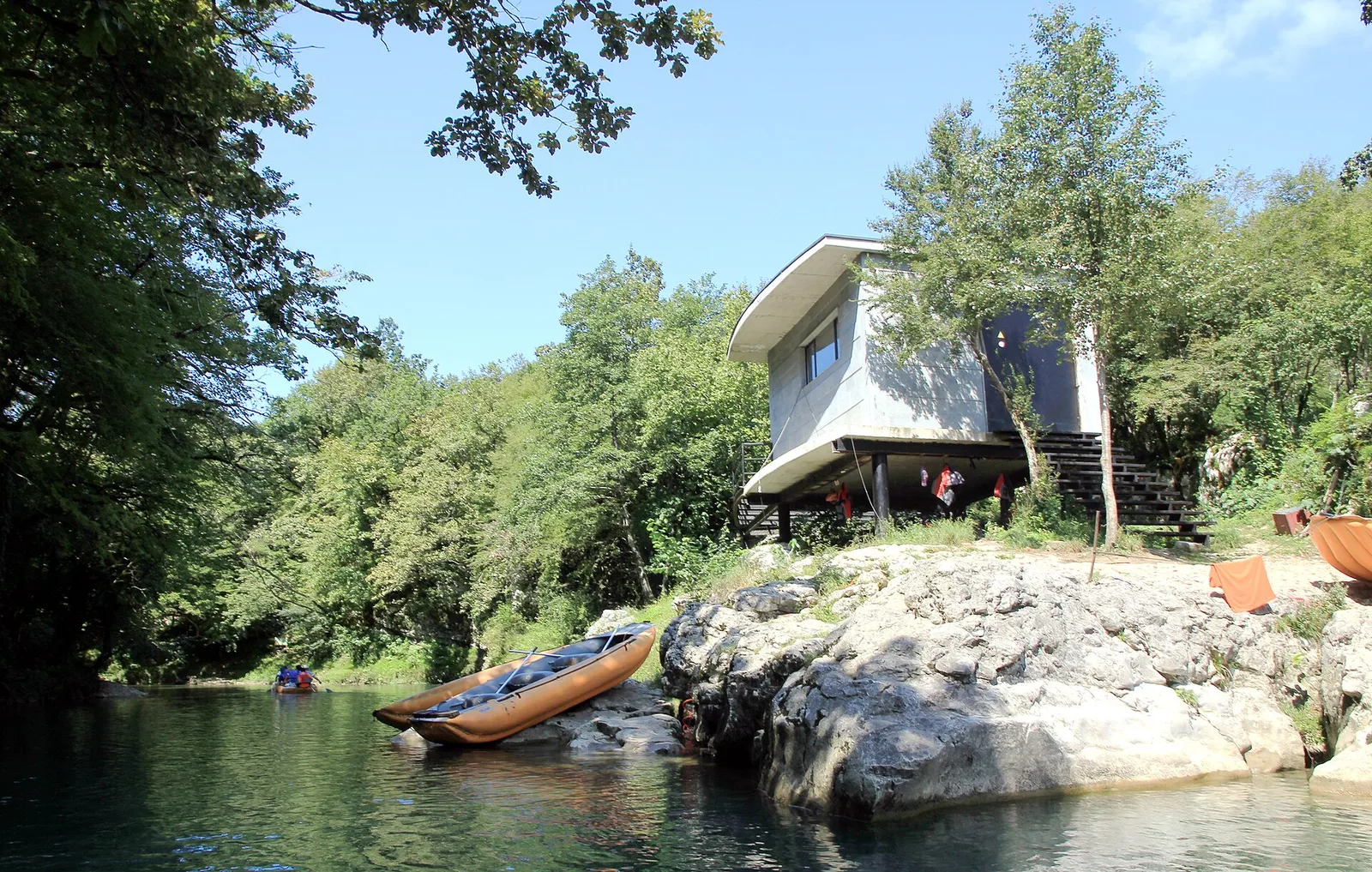
This is the day the trip is built around. The Martvili canyon is a limestone gorge with a river running through it, and the thing to do is the boat: a short ride in an inflatable between mossy walls with waterfalls coming in from the sides, which takes ten to fifteen minutes and is the highlight for most children. Above it, a walkway with viewpoints does the rest, and there is a café at the entrance.
In the afternoon, Prometheus cave is over a kilometre of lit walkway through chambers of stalactites, cool inside on the hottest day, with a boat ride out through the lower gallery at the end for a small extra charge. It is a guided walk in groups rather than a free wander, which suits children who need a pace set for them. Between the two, that is a full day with almost no driving.
Food: eat at the canyon or in a village on the way; the Samegrelo cooking here is spicier than elsewhere in Georgia, which is worth knowing before ordering for small children. The signature experience: the boat between the canyon walls. Optional tour: a combined Martvili and Prometheus day from Kutaisi handles the transport, and the two sites are on different roads.
Day 5: Dinosaur footprints, then the sea
Sataplia, fifteen minutes from Kutaisi, is a small reserve that packs in more than it should: preserved dinosaur footprints in the rock under a shelter, a short cave with a walkway, a glass floored platform out over the valley that children either love or refuse, and a forest path with model dinosaurs along it. An hour and a half covers it.
Then finish at the sea. Ureki, an hour and a half west, has the black magnetic sand that Georgian families come for, and whatever you make of the health claims attached to it, it is the softest beach on this coast and the water shelves gently. Spend the afternoon there and fly out of Kutaisi, or carry on twenty minutes to Batumi if you want a city with a boulevard, a ferris wheel and an aquarium to end on; our Batumi guide has that.
Food: grilled fish along the coast road, and corn on the cob from the beach sellers. The signature experience: the glass platform at Sataplia, and the argument about whether to stand on it. Optional tour: none; this is a slow last day by design.
Practical tips
- Every drive here is under about two hours except the Tbilisi to Kutaisi transfer, which is broken by Mtskheta on purpose.
- Child seats are not standard in taxis and are not guaranteed in hire cars either. Ask specifically when booking; our car hire guide covers the rest.
- Pavements in old Tbilisi are steep, cobbled and uneven, and a pushchair is hard work there. A carrier is easier for the first two days.
- Bread, cheese, cucumber, tomato and grilled meat are on every menu, and portions are large enough to share; nothing on a standard Georgian table is spicy except in Samegrelo.
- The Kutaisi airport has the cheap European flights, which makes this route work as a one way trip rather than a loop.
- Summer in the lowlands is hot and humid. Caves and canyons are the escape, which is why they sit in the middle of this plan; our seasonal guide has the detail.