Kutaisi is where the cheap flights land, and most people leave it within two hours for the mountains or the sea. That is a mistake worth correcting. Within an hour of the city there are two of the most important monasteries in the country, a cave system you walk through for well over a kilometre, two canyons you can go into rather than only look at, and a hillside town carved out of rock that predates almost everything else in Georgia. Five days here is a full trip rather than a stopover, and it is the cheapest region in the country to spend them in. Read our canyons and cave guide before you plan the middle days, and the budget notes if the low prices are the reason you are looking.
Itinerary at a glance
| Day | Base | The signature experience |
|---|---|---|
| 1 | Kutaisi | Gelati’s mosaics and the cliff ledge at Motsameta |
| 2 | Kutaisi | Walking through the chambers of Prometheus cave |
| 3 | Kutaisi | A boat between the walls of the Martvili canyon |
| 4 | Kutaisi | The Okatse walkway bolted to the cliff face |
| 5 | Kutaisi or Tbilisi | The cave town of Uplistsikhe |
Day 1: Gelati, Motsameta and the city
Start above the city rather than in it. Gelati was founded in the twelfth century as a monastery and an academy, and its main church holds a mosaic of the Virgin in the apse that survived when almost nothing else of that period did, along with layers of fresco from several centuries painted over each other. It sits in a walled compound on a wooded slope, and it is quiet in a way that the more visited sites in Georgia are not.
Motsameta, ten minutes away, is smaller and more dramatic: a single church on a ledge above a bend in the river, with a drop on three sides and a legend about two brothers thrown from the cliff. Down in Kutaisi itself, the Bagrati cathedral on its hill has been rebuilt and argued about, the covered market is a working one rather than a display, and the Colchis fountain in the main square is ringed with enlarged copies of gold animals from local archaeological finds.
Food: Imeretian khachapuri, which is the round flat version with the cheese inside rather than the boat, and it is from here; get it hot from a bakery rather than a restaurant. The signature experience: the apse mosaic at Gelati, which is the single best piece of medieval art in western Georgia. Optional tour: a half day guided trip covers both monasteries with the history, which the signage does not attempt.
Day 2: Prometheus cave and Sataplia
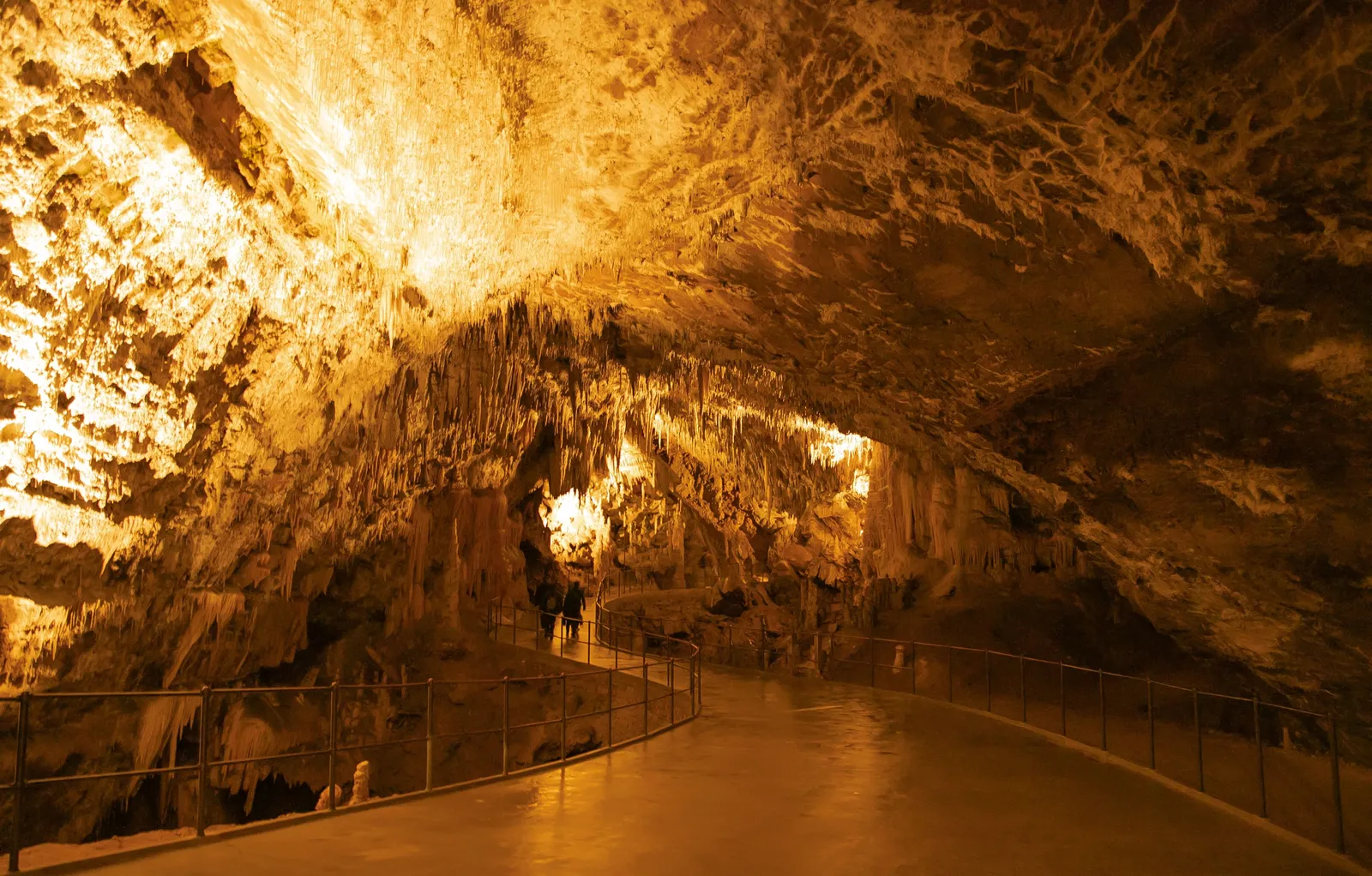
Prometheus is a show cave done properly: over a kilometre of walkway through chambers of stalactites and columns, lit theatrically, with a river running through the lower levels and an optional boat ride out at the end. It is cool inside all year, around the same temperature in August as in February, which makes it the obvious escape on a hot day. Tours leave in groups on a set rotation, so there is usually a short wait rather than a booking.
Sataplia, nearby, packs several things into a small reserve: another cave, a section of preserved dinosaur footprints in rock, a glass floored viewing platform out over the valley and a short forest walk. It is smaller and busier with families than Prometheus and works well as the afternoon half of the day. Both sit close enough to Kutaisi that this is an easy day with time left in it.
Food: the villages between the two do a good cheap lunch, and this is walnut country, so ask for anything with a walnut sauce, particularly aubergine rolls. The signature experience: the boat out of the lower gallery at Prometheus, which is a short ride and an odd, memorable one. Optional tour: a combined day trip covers both plus transport, which matters because public connections here are slow.
Day 3: The Martvili canyon
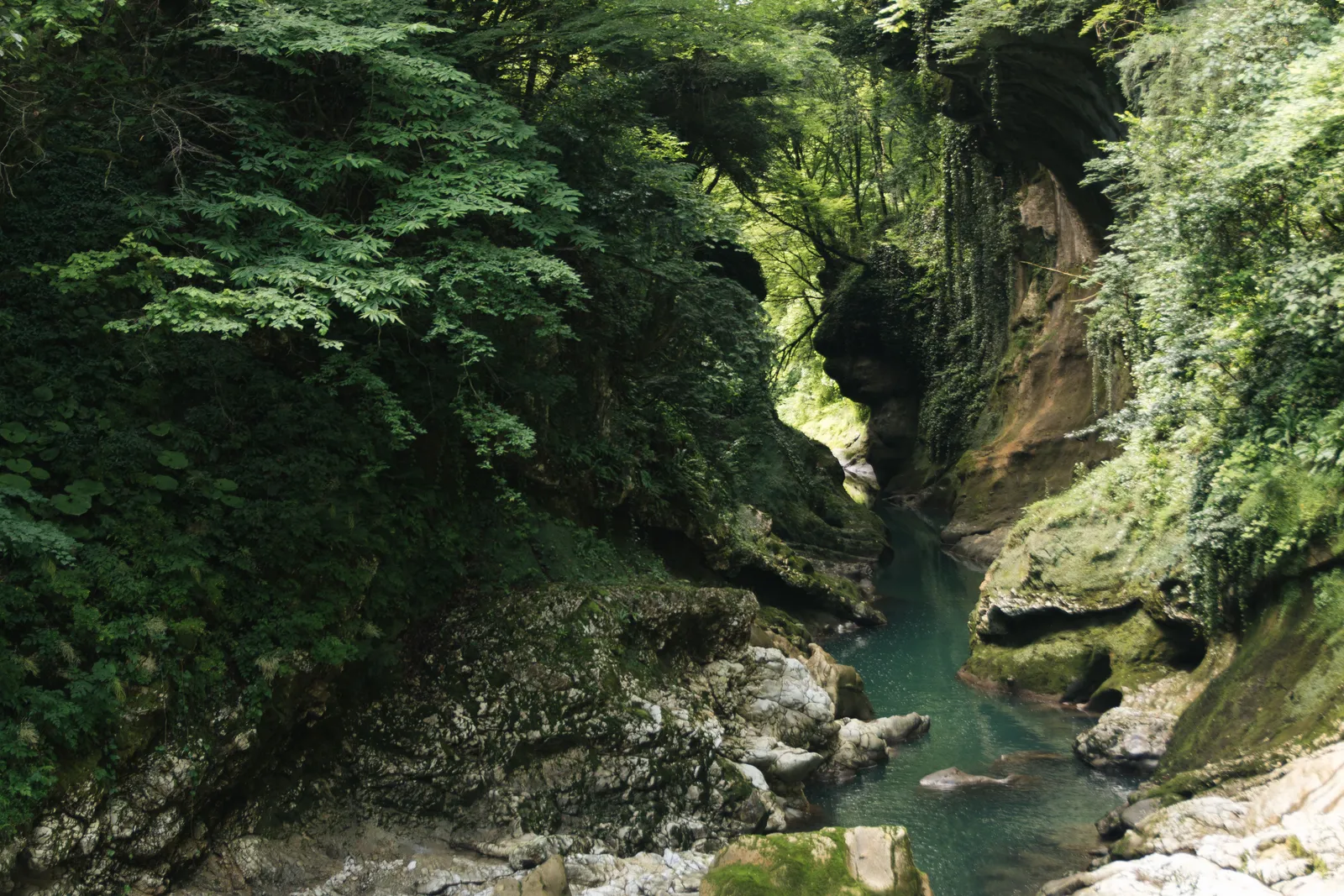
Martvili is the one that photographs best. A river has cut a narrow gorge through limestone, the walls are hung with moss and ferns, small waterfalls come in from the sides, and you go through the middle of it in a rubber boat with a guide pushing off the rock. The ride is short, ten to fifteen minutes, and the walkway above it does the rest of the work with several viewpoints down into the water. The colour of the river changes with the season and the rain, from pale turquoise in dry weather to a churning brown after a storm, which is worth knowing before you build a day around a photograph.
The canyon sits in Samegrelo rather than Imereti, about an hour and a half from Kutaisi, and the drive out passes through country that gets noticeably greener and wetter. If you have the afternoon, the Salkhino estate nearby has a cellar in what were the summer quarters of a princely family, and the local wine here is different again from the amber wines of the east.
Food: Samegrelo cooking is the spiciest in Georgia and elarji, cornmeal beaten with stretchy sulguni cheese, is its most famous dish; the local kharcho with walnut is heavier and excellent. The signature experience: the boat ride, low in the water between the two walls. Optional tour: most visitors come on a Kutaisi day tour that pairs Martvili with Okatse, which is efficient and makes for a long day.
Day 4: Okatse and Kinchkha
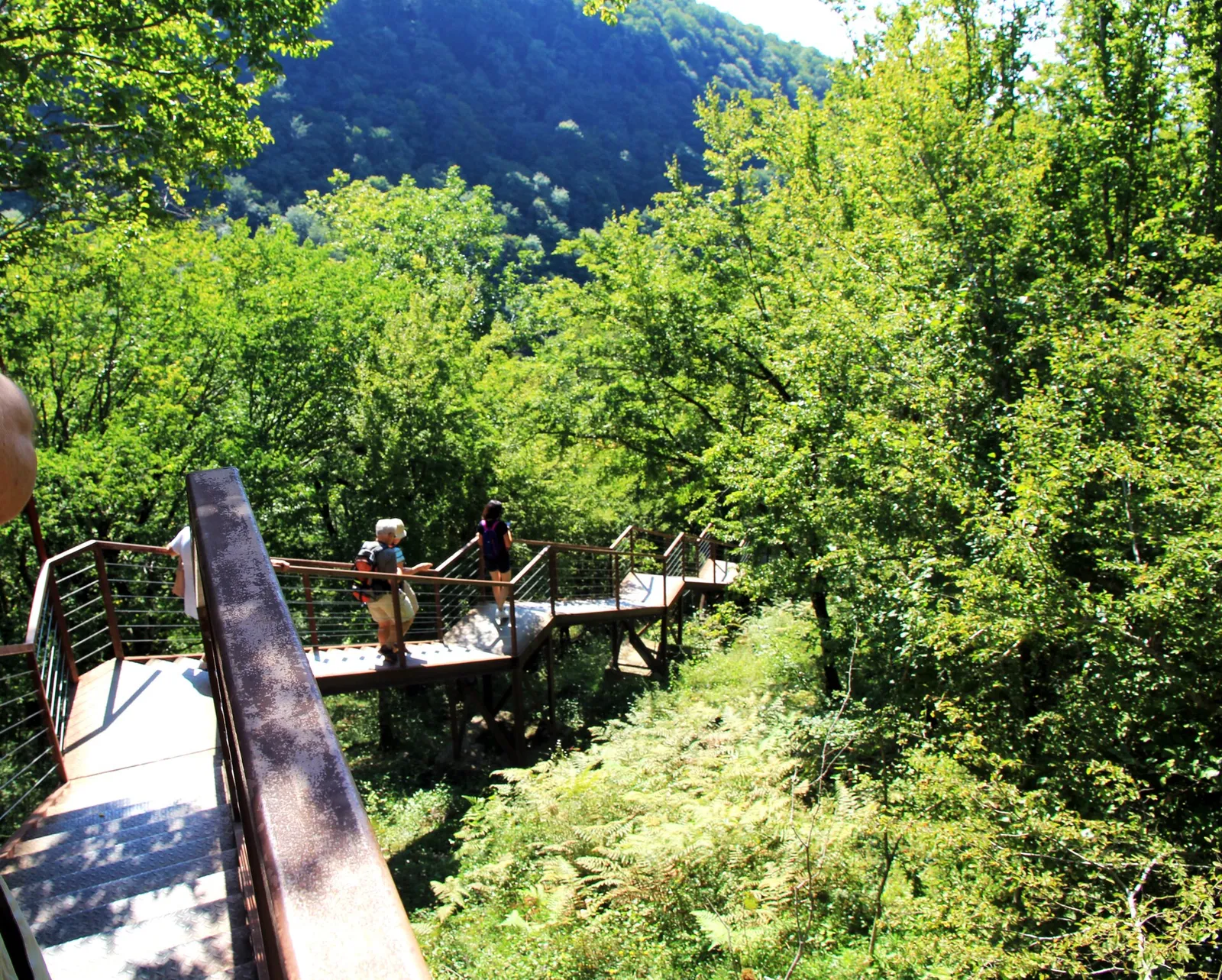
Okatse is the other canyon and it is a completely different experience: instead of going into the water, you walk out over it on a steel walkway bolted to the cliff, seven hundred metres of it, ending in a platform that projects into the air above the gorge. The approach is a pleasant forest walk of a couple of kilometres from the visitor centre, or a shuttle if you would rather save the legs for the walkway itself.
Kinchkha waterfall is close by and pairs with it, a tall drop into a pool that people swim in when the water is high enough and warm enough to make that appealing. Together they fill a day comfortably. Doing Martvili and Okatse on the same day is possible and is what most tours sell, but splitting them across two days is why five days here is better than three.
Food: the villages around Okatse sell honey, churchkhela and cheese from the roadside, and it is the best of the trip; take a picnic to the waterfall rather than looking for a restaurant. The signature experience: standing on the projecting platform with the canyon floor a long way below. Optional tour: the visitor centre organises the shuttle and a guide, and the walkway closes in high wind, which is worth ringing ahead about.
Day 5: Uplistsikhe and onwards
The last day goes east. Uplistsikhe is a town cut into a rock hillside above the Mtkvari river, occupied from well before the Christian era, with carved halls, a theatre, wine cellars cut into stone and a tunnel down to the river cut as an escape route. Later a brick church was built on the top of the ridge, which is why the site reads as pagan and Christian at once. It is exposed and hot in summer, so go early, and the rock is polished and slippery in the wet.
From there the choice is yours. Gori, ten minutes away, has the museum of the man born in it, which is a strange and instructive hour. Or continue to Tbilisi, which is little more than an hour further and the natural end of this route if you are flying out of the capital rather than back through Kutaisi. If you have another day and want the harder version of a cave town, Vardzia is the bigger one, much further south.
Food: there is not much at the site itself, so eat in Gori or bring something from Kutaisi. The signature experience: the escape tunnel down towards the river, which you can walk. Optional tour: day trips from Tbilisi cover Uplistsikhe with Gori and Mtskheta, which is the sensible way to see it if you end your trip in the capital.
Practical tips
- Kutaisi is a low cost airline hub and the flights are why this itinerary exists. Look at what actually flies there before you route through Tbilisi.
- The canyons close in bad weather and after heavy rain the boats at Martvili stop running, so keep them away from your last day if you have a flight.
- A car makes this route much easier, and the marshrutka network here is slow rather than absent; see our car hire guide and the marshrutka notes.
- Modest dress matters at Gelati and Motsameta, both working religious sites, and shawls are usually available at the gate.
- This is the cheapest region in Georgia for accommodation and food, which makes it the right place to spend an extra day rather than cut one; our budget guide covers the numbers.