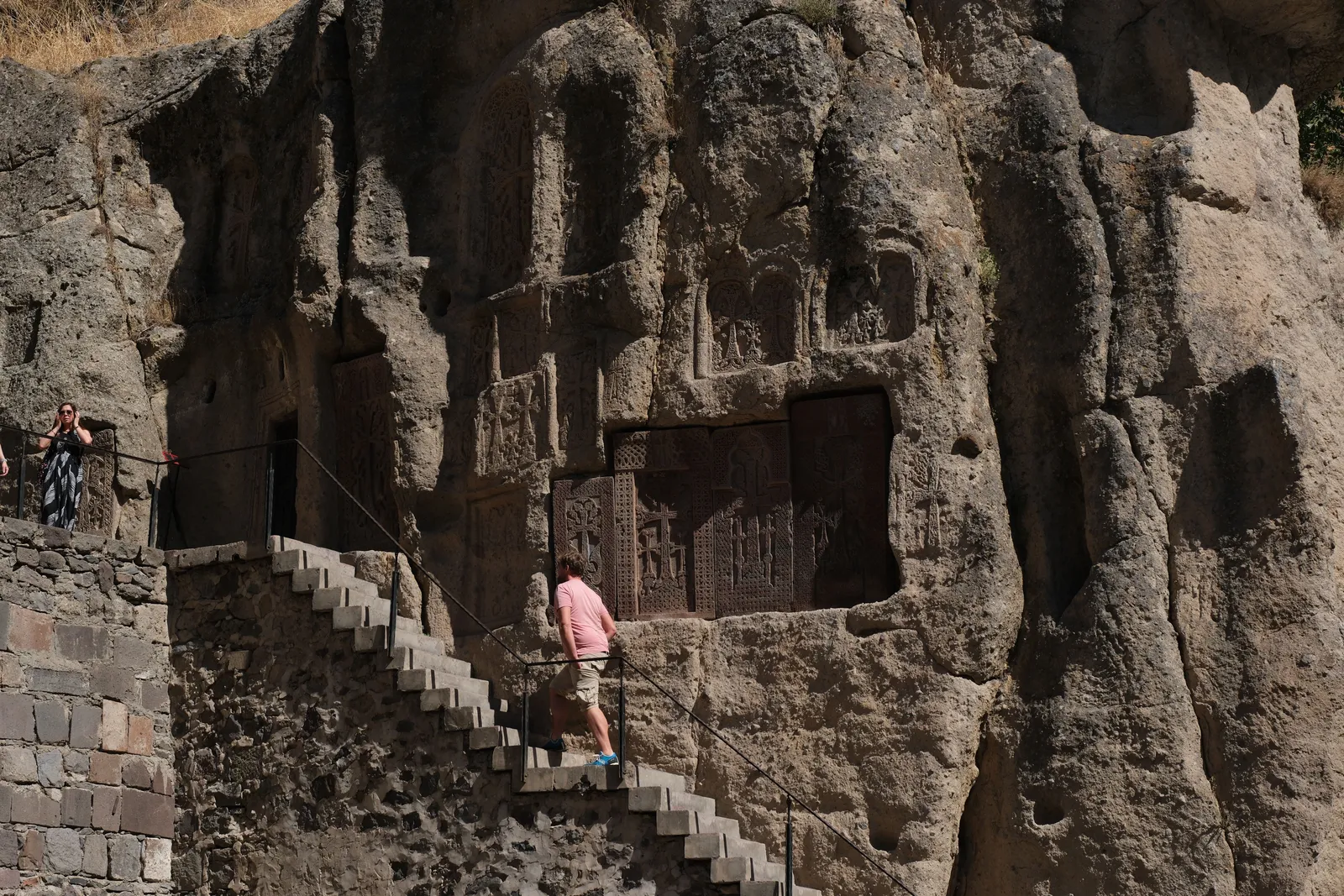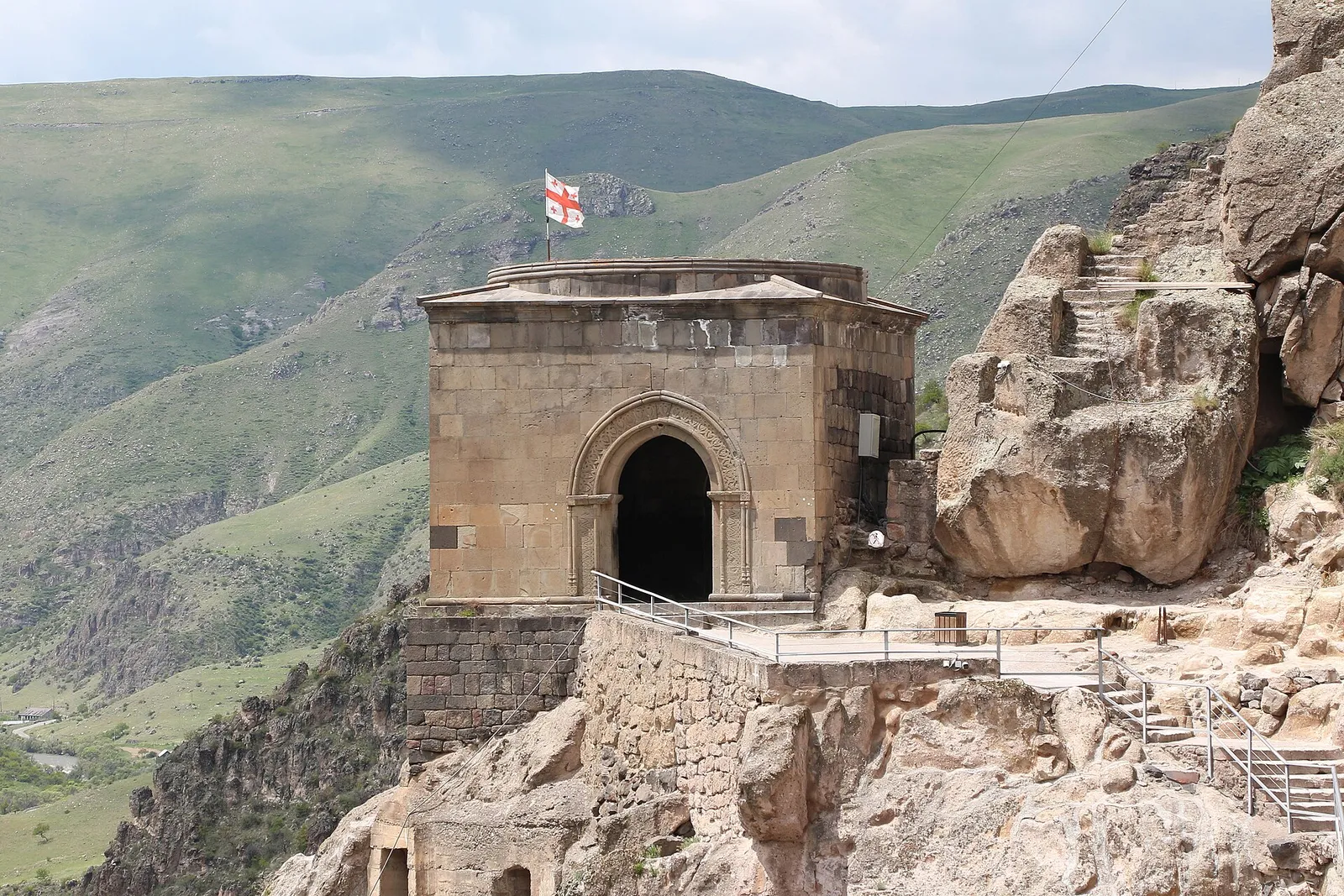
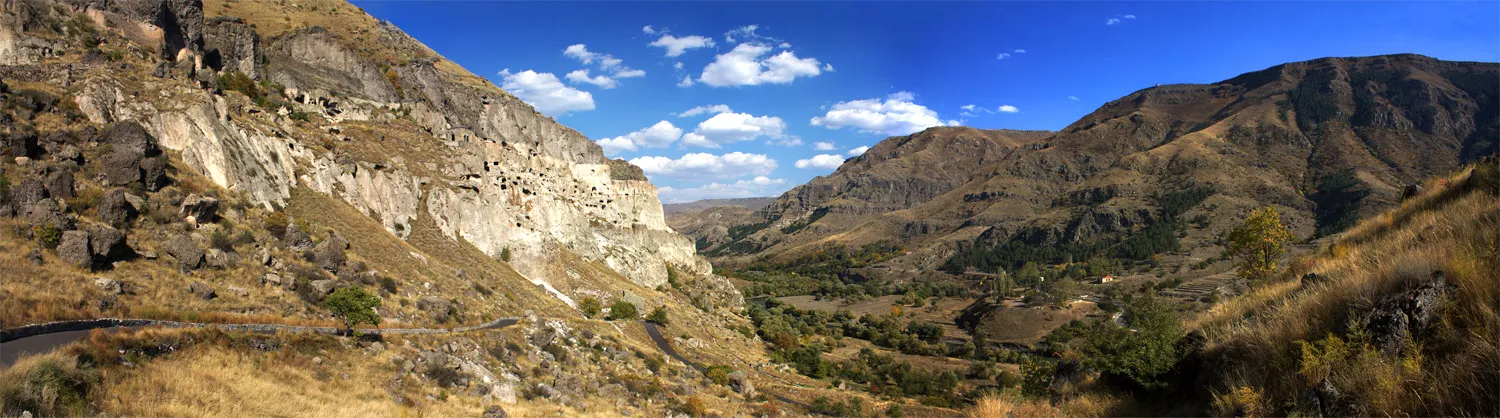
In the far south of Georgia, in a dry valley near the Turkish border, there is a cliff with a city inside it. Vardzia was cut into the rock in the twelfth century as a fortified monastery, at the height of the Georgian golden age, and it ran to hundreds of chambers on many levels connected by tunnels and stairways, with a church, cells, a refectory, storerooms and a water system all inside the stone. Then an earthquake in the following century took away much of the outer wall and turned a hidden fortress into a cross section.
What you actually see
Chambers on many levels, connected by tunnels and cut stairs, open to the valley where the cliff face fell away.
The main church, with twelfth century frescoes including a contemporary portrait of Queen Tamar.
Cells and storerooms, cut into the rock and still identifiable as what they were.
A water system, channels and cisterns inside the stone, which is the part engineers find remarkable.
A working monastery, in part, which is why some areas are closed.
The valley below, dry, wide and empty, which is most of the atmosphere.
Getting there
Akhaltsikhe is the nearest town of any size and the practical base.
Several hours from Tbilisi, and then more, which is the honest cost of the visit.
Marshrutkas run from Akhaltsikhe to the site.
Day tours from Tbilisi exist and make for an eleven hour day.
By car, which is what most independent visitors do.
A funicular at the site helps with the initial climb, when it is running.
The rest of the region
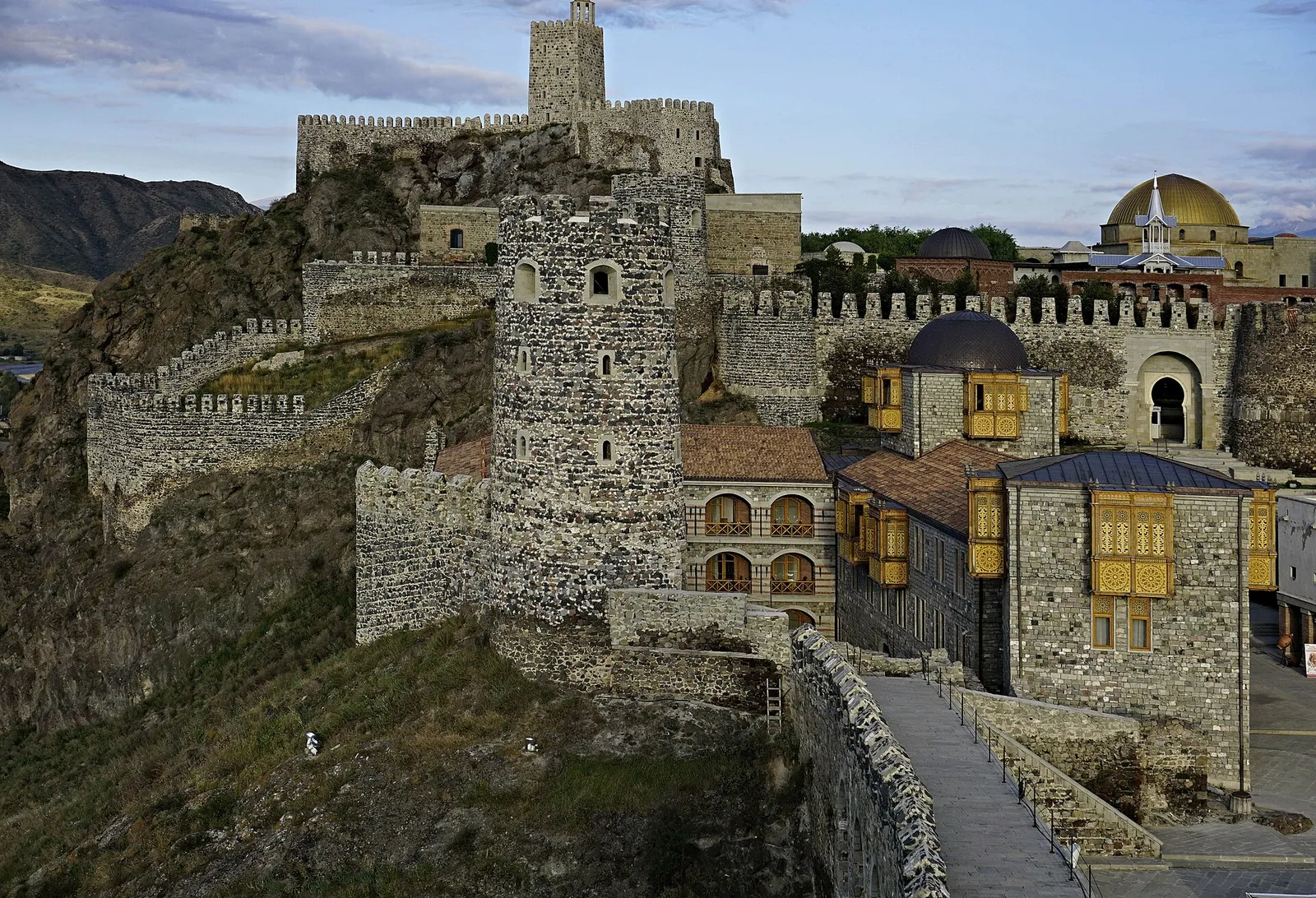
Rabati fortress in Akhaltsikhe, heavily restored, divisive among conservationists and impressive to look at.
Khertvisi fortress, on the road, on a spur above a river confluence.
Sapara monastery, in the hills near Akhaltsikhe, small and quiet.
The Javakheti plateau, volcanic, high, empty and full of lakes and birds.
Border country, which gives the whole region a different feel from the rest of Georgia.
Very few visitors, outside the site itself.
Practical notes
Photography is restricted in the church and enforced.
Dress rules apply at the working parts of the monastery.
Water and a hat in summer, because there is no shade on the cliff.
A torch for the darker passages.
Cash for entry and for the local cafes.
Opening hours are shorter in winter; check before a long drive.
Where this fits in a Georgia trip
Two days from Tbilisi, or a night in Akhaltsikhe on a longer loop through the south.
For how the south fits into a week and what to leave out, our seven day Georgia itinerary covers the shape.
For the far easier and closer piece of Georgian religious history, our Mtskheta day trip covers the old capital.
And for the other regions that reward the extra driving, our guide to off the beaten path Georgia covers where else to go.
The short version
For the wider region around it, our five days in the Georgian south puts Vardzia in a week with Borjomi, the narrow gauge railway, Rabati and the high lakes of Javakheti.
Do not attempt Vardzia as a day trip from Tbilisi unless you enjoy eleven hours in a vehicle. Stay a night in Akhaltsikhe, see the Rabati fortress there, and drive out to the cave city early the next morning for the light and before the rock face heats up. Wear shoes with grip, bring water and a torch, and allow two hours on the site. Add Khertvisi on the road and the Javakheti plateau if you have a third day and a taste for empty places.