The south is the part of Georgia that most itineraries drive past on the way to somewhere else, which is odd, because it holds the country’s most famous mineral water, its most spectacular cave city and a high volcanic plateau that looks like nowhere else in the Caucasus. Five days is enough to do it slowly from two bases, and the driving is on decent roads for most of the way. Read our Borjomi and Bakuriani guide and the Vardzia piece before you set out, because both places reward knowing what you are looking at.
Itinerary at a glance
| Day | Base | The signature experience |
|---|---|---|
| 1 | Borjomi | Drinking the water at the source in the park |
| 2 | Borjomi | The narrow gauge railway up to Bakuriani |
| 3 | Akhaltsikhe | Rabati fortress, rebuilt and enormous |
| 4 | Akhaltsikhe | Vardzia’s tiers of caves and Khertvisi on its spur |
| 5 | Tbilisi | The Javakheti plateau and Lake Paravani |
Day 1: Borjomi
Borjomi is a spa town in a wooded gorge and the water in the green bottles comes from under it. The central park is the point: a long strip along the river with a bandstand, a small funfair and, at the far end, the spring pavilion where you drink it warm from the tap, free, and discover that it tastes far more mineral and far more sulphurous than the bottled version. Most people pull a face. Bring your own bottle to fill.
Walk on past the pavilion and the path continues up the gorge to open air sulphur pools set in the forest, about three kilometres in, which are a genuinely pleasant hour if the weather is cool. Back in town, the Romanov palace at Likani, the summer residence built for the Russian imperial family, sits a short way down the valley, and the Borjomi Kharagauli national park visitor centre is where you organise anything longer.
Food: the town is small and its restaurants are simple; this is a region for trout and for the mountain cheeses. The signature experience: drinking the water at the spring and understanding why it is medicine rather than refreshment. Optional tour: the national park runs guided walks and horse trips of one to several days from the visitor centre.
Day 2: The Kukushka railway and Bakuriani
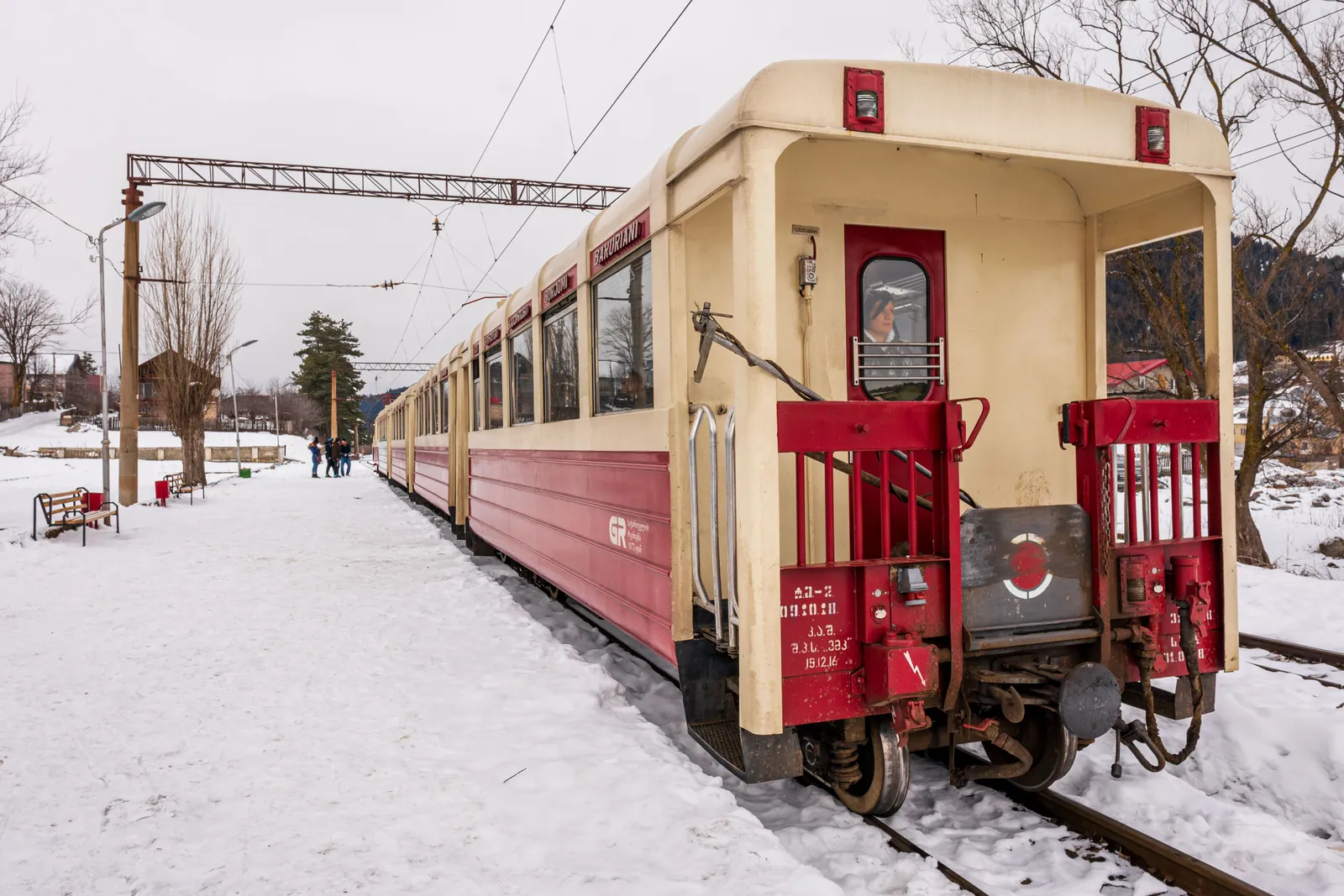
The narrow gauge railway from Borjomi to Bakuriani is the best two and a half hours in the region. It climbs slowly through forest and over a steel viaduct attributed to the Eiffel workshop, in carriages that have not changed much in decades, and it is a working local service rather than a heritage attraction. Check the departure times locally and go up on the train rather than driving.
Bakuriani at the top is a ski resort at around one thousand seven hundred metres that in summer becomes a walking and cycling town with alpine meadows above it. Take the lift up for the view, walk one of the marked trails, and come back down on the train in the afternoon. In winter this is the family ski option in Georgia, gentler and cheaper than Gudauri, and our comparison sets out which suits whom.
Food: Bakuriani does a good line in mountain food and honey, and this is the region where the local pine cone jam is actually made rather than sold as a curiosity. The signature experience: the viaduct crossing on the way up. Optional tour: none needed; the train is the tour.
Day 3: Akhaltsikhe and Rabati
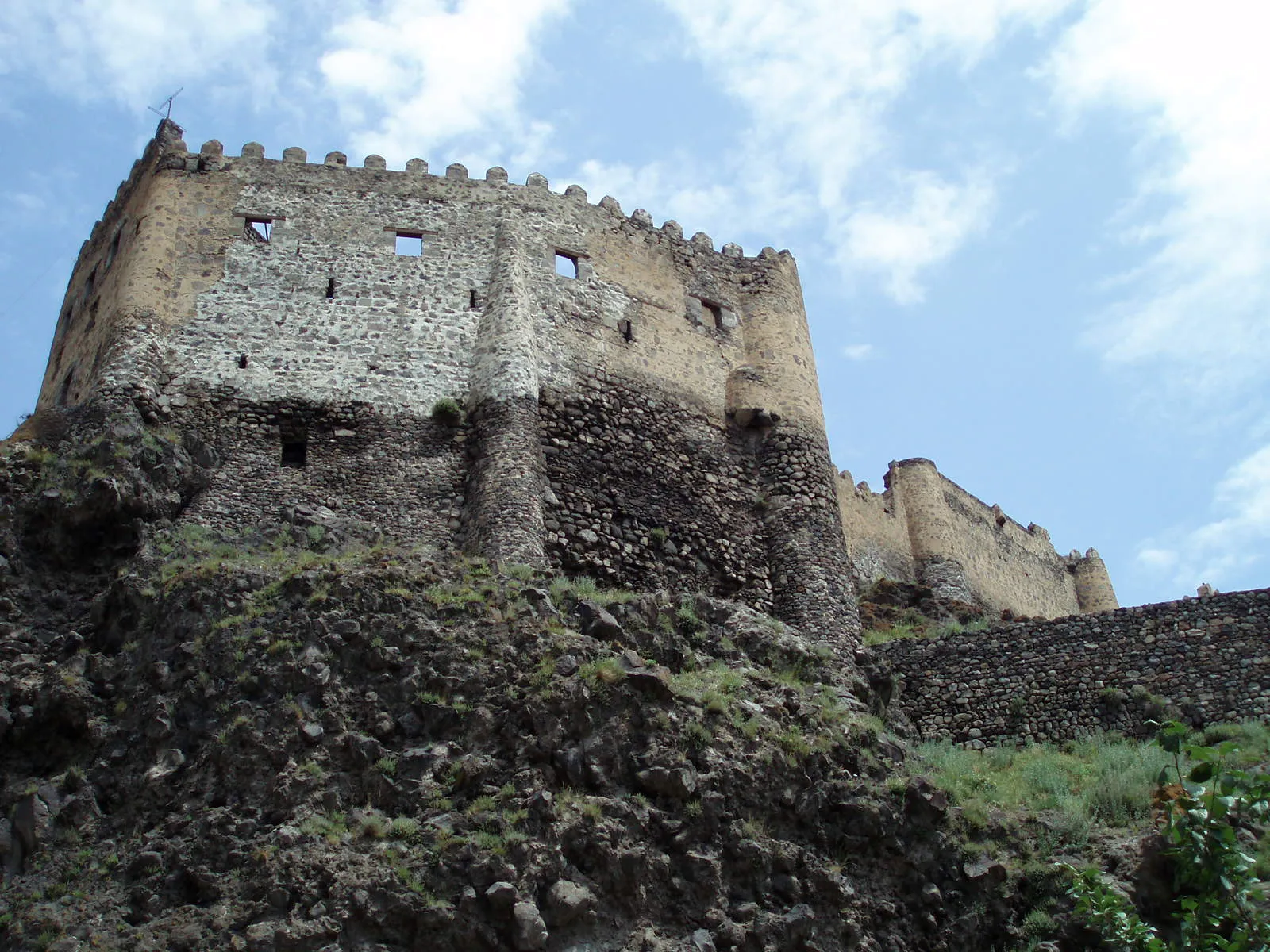
Move west to Akhaltsikhe, where the Rabati fortress covers a whole hillside above the town. It was rebuilt from the ground up in a large restoration a little over a decade ago, and how you feel about that is a matter of taste: purists find it too clean, and everybody else finds it a striking complex of walls, a mosque, a church, a synagogue and a museum inside one compound, which is exactly the point being made about who has lived here.
The museum in the lower courtyard is worth the ticket for the regional archaeology and for the account of the Meskhetian deportation, which is a piece of twentieth century history that few visitors arrive knowing anything about. The town below is ordinary and cheap, and it makes a practical base for the next day rather than a destination in itself.
Food: this is the region where Georgian and Turkish cooking meet, and the local bakeries show it; ask for whatever is coming out of the oven. The signature experience: the view from the upper citadel over the whole valley. Optional tour: a guide inside Rabati helps separate what is original from what was rebuilt, which the signage does not do clearly.
Day 4: Vardzia and Khertvisi
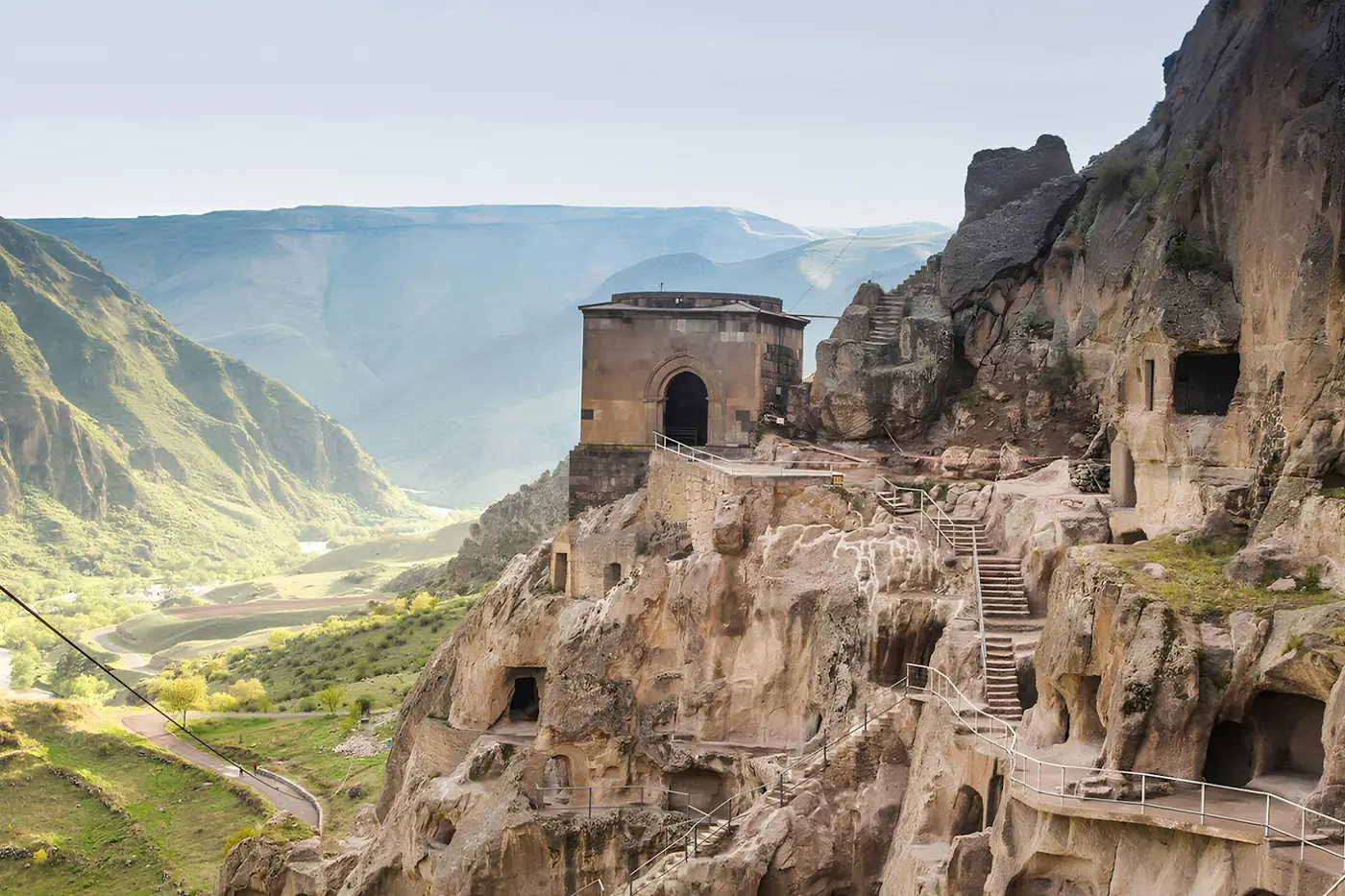
Vardzia is the day. A monastery city was cut into a cliff face in the twelfth century under Queen Tamar, hundreds of rooms on many levels connected by tunnels and stairs inside the rock, with a church at its heart holding frescoes that include a portrait of the queen herself. An earthquake later sheared away the outer wall of the complex, which is why the honeycomb of rooms is now open to the valley and visible from the road below.
It takes two to three hours to walk properly and involves stairs, low tunnels and some exposure; there is a shuttle up from the car park for anyone who would rather not walk the approach. On the way, Khertvisi fortress stands on a spur where two rivers meet, and it is one of the oldest fortifications in the country. If you have the afternoon, the Vanis Kvabebi caves nearby are a smaller and almost empty version of the same idea.
Food: there is a cluster of places near the site and not much else in the valley, so eat when you see them. The signature experience: the fresco of Tamar in the church inside the rock. Optional tour: a guided day from Akhaltsikhe or Borjomi covers Vardzia and Khertvisi together with the history, which is worth having here.
Day 5: The Javakheti plateau
The last day crosses the high country. Javakheti is a volcanic plateau above two thousand metres, largely treeless, with a string of shallow lakes, storks on the poles, and villages where the everyday language is Armenian rather than Georgian. Lake Paravani is the biggest, flat and pale under a huge sky, and the Poka nunnery on its shore sells cheese and chocolate the sisters make.
Continue east through Ninotsminda and down towards the capital, or detour to the Abastumani observatory on the way if the road suits, a Soviet era complex on a forested ridge where the domes are still in use. It is a long drive with very little traffic and it deposits you back in Tbilisi with the sense of having been somewhere genuinely remote without ever leaving a paved road.
Food: the plateau is cheese and bread country and the roadside stalls are the best of it. The signature experience: the emptiness of Paravani, which is the least Caucasian looking landscape in the country. Optional tour: birdwatching trips run in the Javakheti wetlands in spring and autumn, which is what the lakes are actually known for.
Practical tips
- A car makes this route work, and the roads are mostly paved with a few rough sections; see our car hire guide and driving notes.
- Vardzia involves narrow tunnels and steps and is not suitable for anyone unsteady on their feet or strongly claustrophobic.
- The plateau is high and cold, and snow can close roads there well outside the winter you would expect; our seasonal guide covers the pattern.
- Bakuriani and Borjomi are busy in the Georgian holiday season and quiet the rest of the year, and the prices follow.
- Bring a bottle to fill at the Borjomi spring, and expect the taste to be nothing like the bottled water.
- Marshrutkas reach Borjomi, Akhaltsikhe and Vardzia, but connecting them without a car turns each of these days into a whole day.