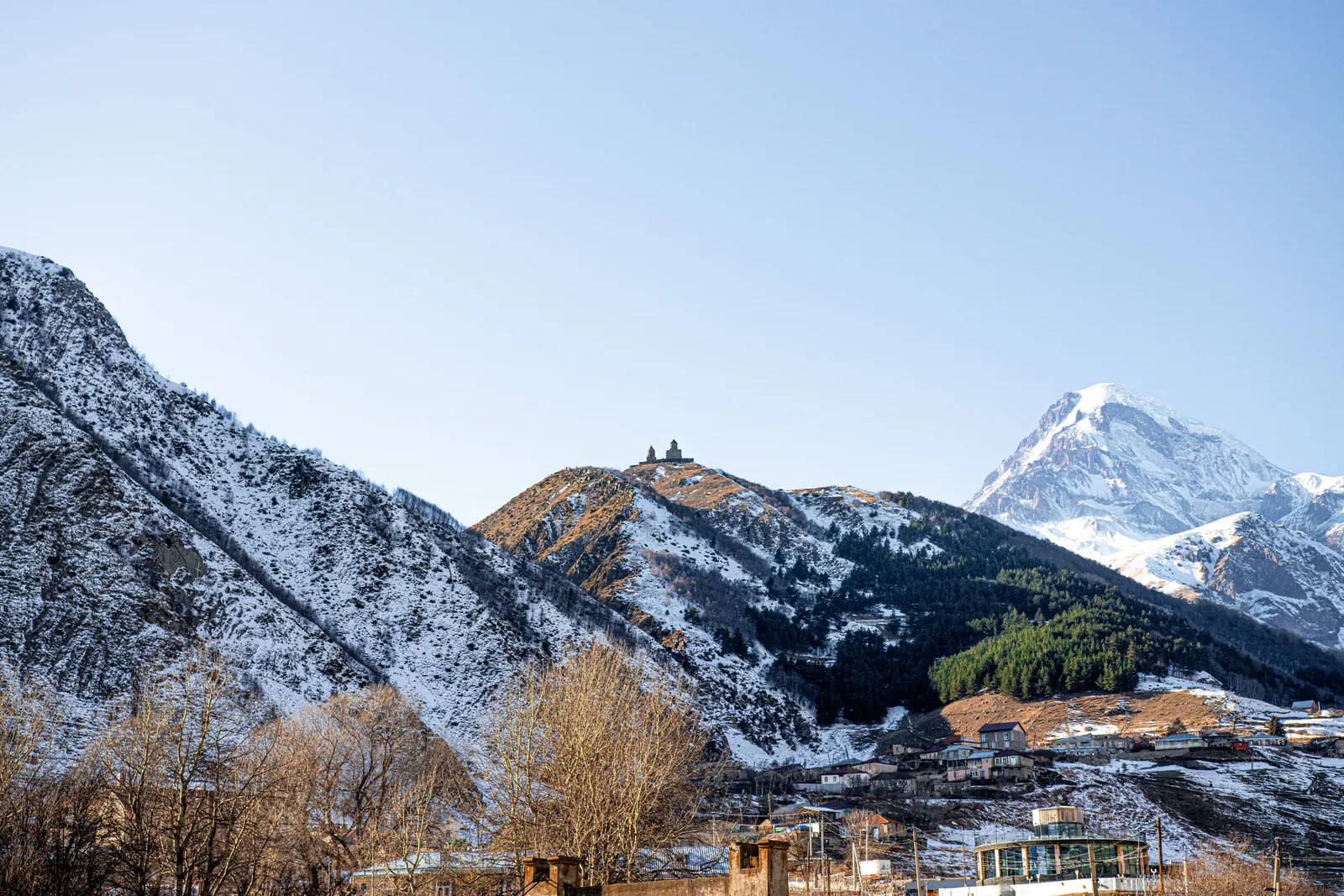
The Georgian Military Highway runs north from Tbilisi through the Caucasus to the Russian border, and it has been the way through these mountains for as long as anyone has been going through them. It is also, in five days, the easiest big mountain trip in the country: the road is paved, the drive is short by Georgian standards, and the view at the top is the one on every cover. This plan puts two nights near the pass and two in Stepantsminda, adds a valley almost nobody drives into, and keeps one day loose because the weather here decides things. Read the Tbilisi to Kazbegi notes and our Gergeti guide before you set off, and the driving rules if you intend to be at the wheel yourself.
Itinerary at a glance
| Day | Base | The signature experience |
|---|---|---|
| 1 | Gudauri | Ananuri fortress above the reservoir |
| 2 | Gudauri | The pass, the mosaic arch and the ridge above the resort |
| 3 | Stepantsminda | Gergeti Trinity with Kazbek behind it |
| 4 | Stepantsminda | The travertine springs and towers of the Truso valley |
| 5 | Tbilisi | Juta under the Chaukhi wall, then the road south |
Day 1: Out of Tbilisi and up to the reservoir
The road leaves the capital and follows the Aragvi north, and the first stop is the one everybody makes for good reason. Ananuri is a fortified complex on the edge of the Zhinvali reservoir, with two churches inside a curtain wall and a carved stone facade of a vine growing up towards a cross. Below the walls the reservoir is a strong green blue, and the two together are the first sign that this drive is not going to be a transfer.
Further up, Pasanauri sits where the black and white Aragvi rivers meet, and the two colours run side by side in the same channel for a stretch before they mix, which is easier to see from the bridge than it sounds. The town’s other claim is khinkali, and it is a reasonable claim. Push on to Gudauri in the afternoon and settle in; at around two thousand metres, the air is noticeably thinner and cooler than the city you left after breakfast.
Food: khinkali at Pasanauri, ordered by the dozen and eaten with pepper and nothing else, and read how to hold them before you try. The signature experience: Ananuri’s vine facade with the reservoir behind it, which is worth walking the full circuit of the walls for. Optional tour: a driver for the whole route costs less than you would expect and turns the switchbacks above Gudauri from work into scenery.
Day 2: The pass and the mosaic arch
Gudauri is a ski resort, which in summer means an almost empty village with lifts running for walkers and paragliders, and in winter means the best skiing in the country at a fraction of Alpine prices. Either way the ridge above it is the day: the gondola takes you up, the walking on the open shoulder is easy, and the whole Caucasus front range is laid out on both sides.
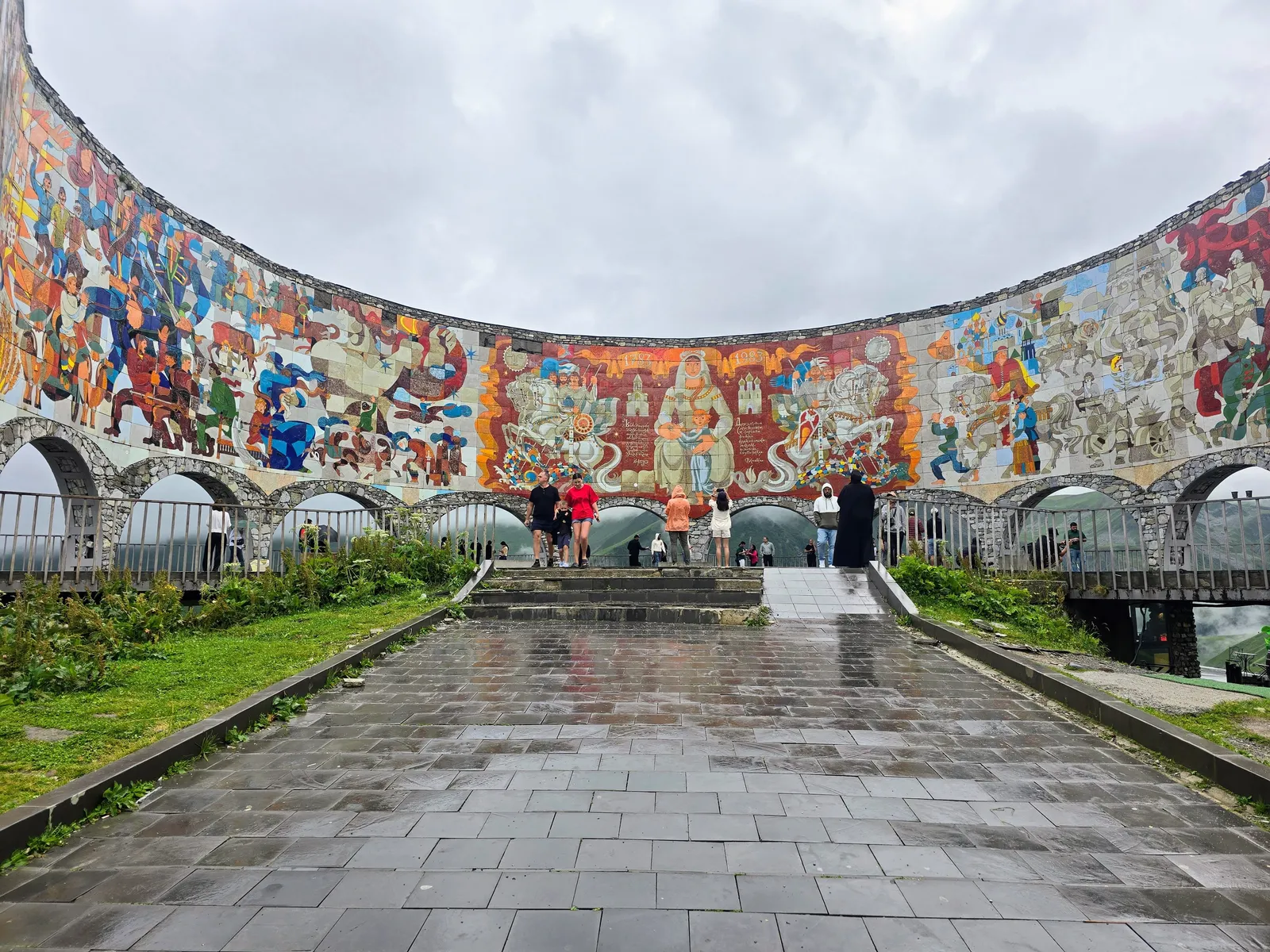
North of the village the road climbs to the Jvari Pass at over two thousand three hundred metres, and just before it stands the Russia Georgia Friendship Monument, a curved concrete drum lined inside with a huge Soviet era mosaic of scenes from both countries’ histories. It sits on the lip of the Devil’s Valley with a drop straight off the edge, and it is one of the strangest and most photogenic things on the road. Come early or late: it is a coach stop by the middle of the day.
Food: the guesthouses along the ridge do a good mountain table, and this is the region for lobio, beans cooked in a clay pot, with cornbread. The signature experience: standing inside the mosaic drum with the valley falling away behind you. Optional tour: paragliding tandem flights run off the Gudauri ridge in season and are the way to see this landscape if you have the nerve.
Day 3: Stepantsminda and Gergeti Trinity
Over the pass the landscape changes and Stepantsminda, the town most people still call Kazbegi, sits in a bowl below Mount Kazbek at just over five thousand metres. Above the town, on a green hill at around two thousand one hundred, stands Gergeti Trinity, a fourteenth century stone church with the mountain directly behind it. It is the photograph of Georgia.
There are two ways up and they suit different people. The walk takes most visitors between an hour and a half and two and a half hours on a steep track through forest and then open pasture, and it is the better version if your legs are willing. Four wheel drive taxis run up the rough road from the town square all day and are cheap, which is a perfectly good choice, particularly in the afternoon heat. Whichever you pick, the mountain is often behind cloud, so if it is clear when you wake up, change the plan and go straight up.
Food: back in town, mountain trout and khinkali, and the local guesthouse dinners are usually better than the restaurants. The signature experience: the church with Kazbek clear behind it, which is entirely a weather lottery and worth reorganising a day for. Optional tour: a guided walk up and a jeep down is the arrangement most people wish they had booked.
Day 4: The Truso valley
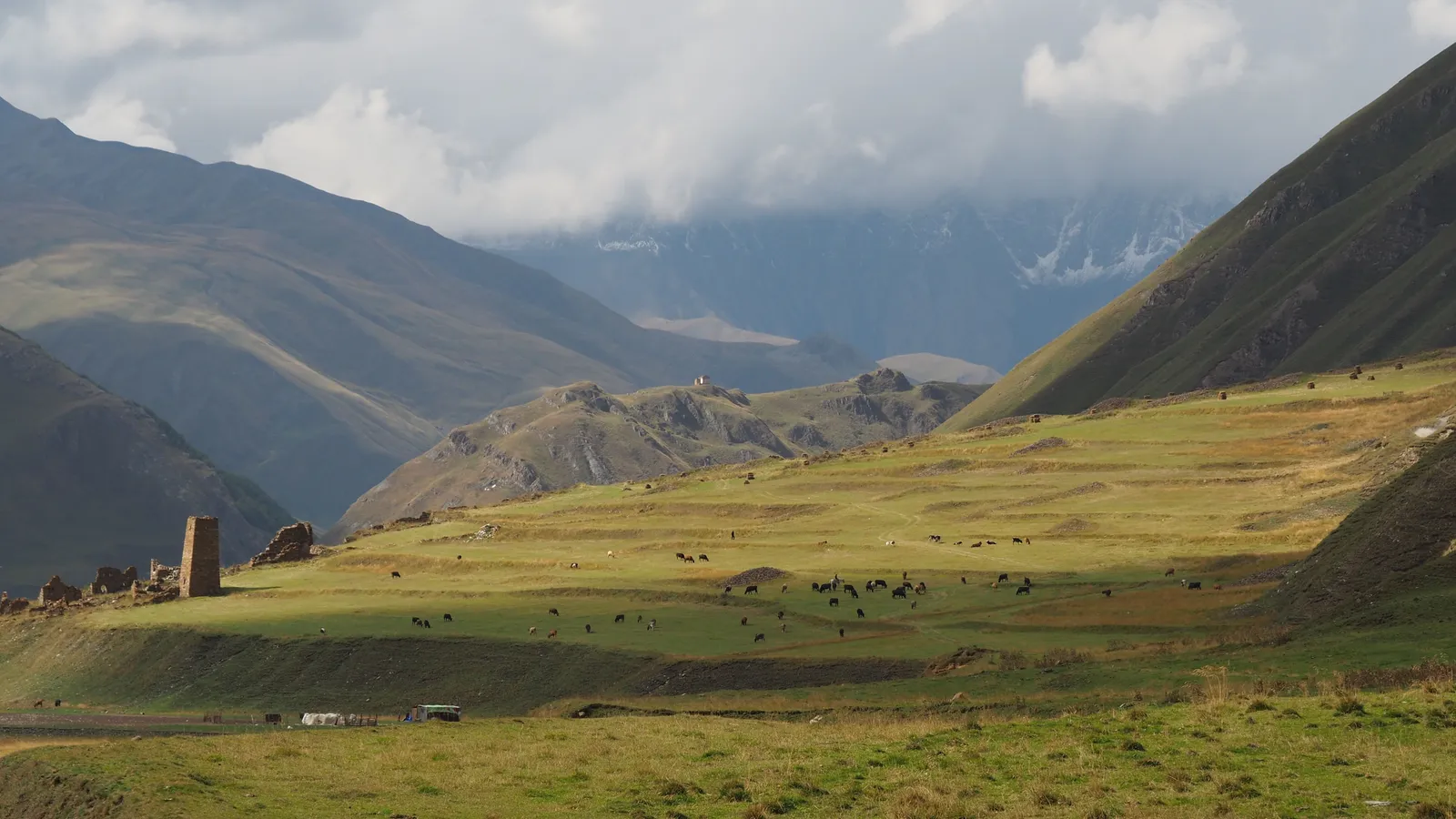
Truso is the day that separates this itinerary from the standard version. A side valley opens west from near Kobi, and inside it are travertine terraces stained orange by mineral springs, a bright blue pool, abandoned stone villages and defensive towers left standing in the grass. Almost nobody is there. The valley floor is a rough track that four wheel drives take, and the walk in from the gate is flat and long rather than steep, which makes it a genuine option for a slow day.
Two things to know. The valley runs up towards a de facto border and there are checkpoints on the way in, so bring your passport and ask locally, on the day, whether the full length is currently open. And the mineral water bubbles up cold rather than hot, so this is scenery rather than a bathing trip. On the way back, the Sno valley with its giant carved stone heads and the Gveleti waterfalls in the Dariali gorge both make short additions.
Food: there is nothing in Truso, so take lunch from Stepantsminda and water for the whole day. The signature experience: the orange travertine terraces with an empty tower village behind them. Optional tour: a shared jeep from Stepantsminda is the normal way in and any guesthouse arranges it the evening before.
Day 5: Juta, and the road back
Juta is the last valley and one of the highest settlements in the country, a cluster of houses at around two thousand two hundred metres below the Chaukhi massif, a wall of rock spires that climbers come for. The walk from the village up towards the base of the wall is gentle for most of its length and gives you an alpine amphitheatre with almost no infrastructure in it. It is a half day, which makes it the right last morning: you finish it, eat, and drive south.
The road back to Tbilisi is the same one you came up, which is not a complaint. Ananuri looks different in the other direction and the light in the afternoon is better on the reservoir. If you have an hour to spare near the end, Mtskheta is a short detour off the highway and the old capital’s cathedral is a fitting last stop before the city.
Food: the guesthouses in Juta serve simple food to walkers and it is worth eating there rather than waiting for the road. The signature experience: the Chaukhi wall from the meadow below it, which very few visitors to Georgia ever see. Optional tour: guides in Stepantsminda run the Juta walk and the harder crossing over the Chaukhi pass towards Roshka for anyone with more time.
Practical tips
- The pass is the whole risk in this itinerary. It closes in heavy snow and for avalanche control in winter, sometimes for a day at a time, so leave slack and check conditions before you commit; our winter guide covers what that season looks like here.
- Altitude is real on this route. Gudauri sits around two thousand metres and Gergeti above two thousand one hundred, and people who drive straight up from Tbilisi and climb the same afternoon often feel it.
- Hire cars are frequently restricted from unpaved roads, which covers the tracks to Gergeti and into Truso. Read our car hire guide and use the local jeeps for those two.
- Carry cash. Stepantsminda has machines, the valleys do not, and the jeep drivers do not take cards; see money and payments.
- Guesthouses rather than hotels are the norm and dinner is usually part of the rate, which is the best value in Georgian travel.