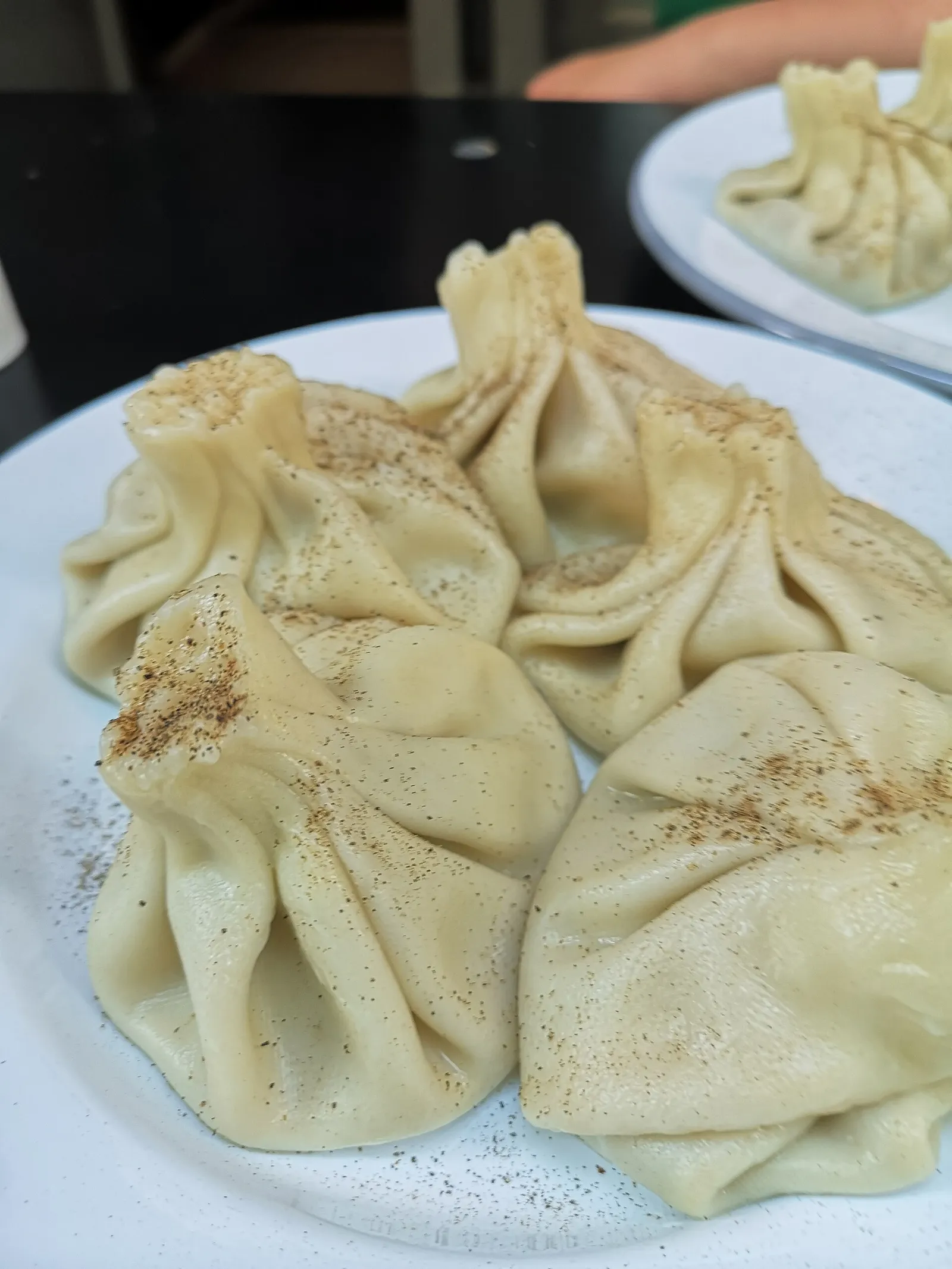
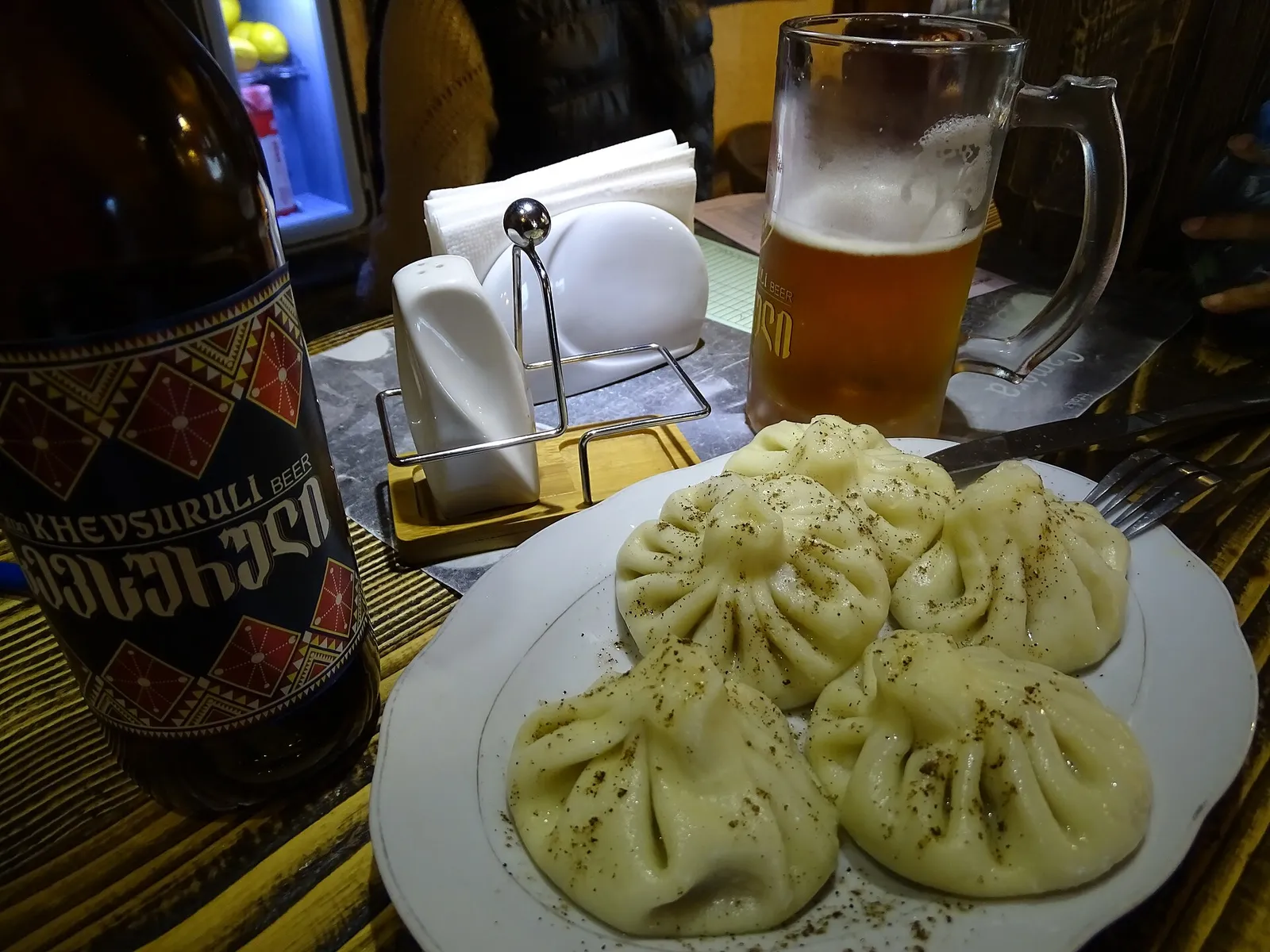
Khinkali is the Georgian dish most likely to catch a visitor out, because it looks like a dumpling and behaves like a cup. Inside the twisted dough there is spiced meat and a quantity of hot broth, and the broth is the point. Everything about how it is eaten, the hand, the upside down grip, the small bite, the knot left on the plate, exists to get that liquid into you rather than onto the table. Do it wrong and you will scald your shirt and lose the best part of the dish.
The method, in order
Pick it up by the twisted top, with your fingers, never with a fork.
Turn it upside down, so the broth collects away from the knot.
Bite a small hole in the side of the dough.
Drink the broth through the hole, all of it, before anything else.
Eat the rest of the dumpling.
Put the knot on your plate, uneaten, and leave it there.
Why each step exists
By hand, because a fork punctures it and the broth ends up on the table.
Upside down, because gravity is the whole trick.
A small hole, because a big one empties it before you get there.
The broth first, because it is the concentrated version of the filling.
The knot uneaten, because it is thick dough that never cooks through properly.
The knots counted, because the pile on your plate is the scoreboard.
The variations
Kalakuri, city style, with coriander and herbs in the filling, which most restaurants serve.
Mtiuluri, mountain style, plain meat without herbs, from the regions where the dish comes from.
Beef and pork, mixed, which is the standard filling.
Lamb, in some mountain areas.
Mushroom, cheese and potato versions, which are common and genuinely good.
Fried khinkali, made from leftovers the next day, which is a household thing rather than a menu item.
What to drink with them
Beer, which is the traditional pairing and the one Georgians will insist on.
Chacha, in small quantities, if somebody is pouring.
Not wine, according to most Georgians, who reserve it for other dishes.
Water, because the filling is salty and peppered.
Nothing complicated, because this is a plain dish eaten quickly.
Where this fits in a Georgia trip
One dedicated khinkali meal, ideally in a plain restaurant full of Georgians rather than a smart one.
For the wider picture of what to eat here and in what order, our guide to Georgian food covers the ground.
For the other dish everybody comes for, which has a regional map of its own, our guide to khachapuri covers the variations.
And for the versions that suit anybody not eating meat, our guide to being vegetarian in Georgia covers the options.
The short version
Pick it up by the knot, turn it upside down, bite a small hole in the side, drink the broth, eat the dumpling and leave the knot on your plate. Black pepper only, no sauce, no fork. Order five at a time and eat them the moment they arrive, because they are excellent hot and dull ten minutes later. Drink beer with them rather than wine. And if the plate of knots gets embarrassing, that is the correct outcome.