Almost every Georgia itinerary gives Tbilisi two days and then leaves for the mountains. It is the wrong call. This is a city of a million and a half people built along a river gorge, with a fortress on the ridge, a bath district fed by hot springs, a century of Russian and Soviet building on top of a much older town, and a food scene that has changed faster in ten years than anywhere else in the region. Five days lets you walk it properly, take two half days out to the places that made the country, and still have a morning to spend badly. Read our Tbilisi guide first and where to stay before you book, because the district you pick decides how much walking you do.
Itinerary at a glance
| Day | Focus | The signature experience |
|---|---|---|
| 1 | Old town | The cable car up to Narikala, then a sulphur bath |
| 2 | The other Tbilisi | Soviet mosaics, Fabrika, and Rustaveli |
| 3 | Mtskheta | Jvari on its hill above the confluence |
| 4 | Uplistsikhe | A town carved into rock, and Gori |
| 5 | Markets | The Dry Bridge, Dezerter market and a last supra |
Day 1: The old town, the ridge and the baths
Start low and go up. The old town below the fortress is a tangle of carved wooden balconies, half collapsed courtyards, small churches and a great deal of restoration, and the pleasure of it is walking without a plan for an hour. Anchor the morning at Sioni cathedral and the Anchiskhati basilica, the oldest surviving church in the city, then cross to Metekhi on its bluff for the view back over the water.
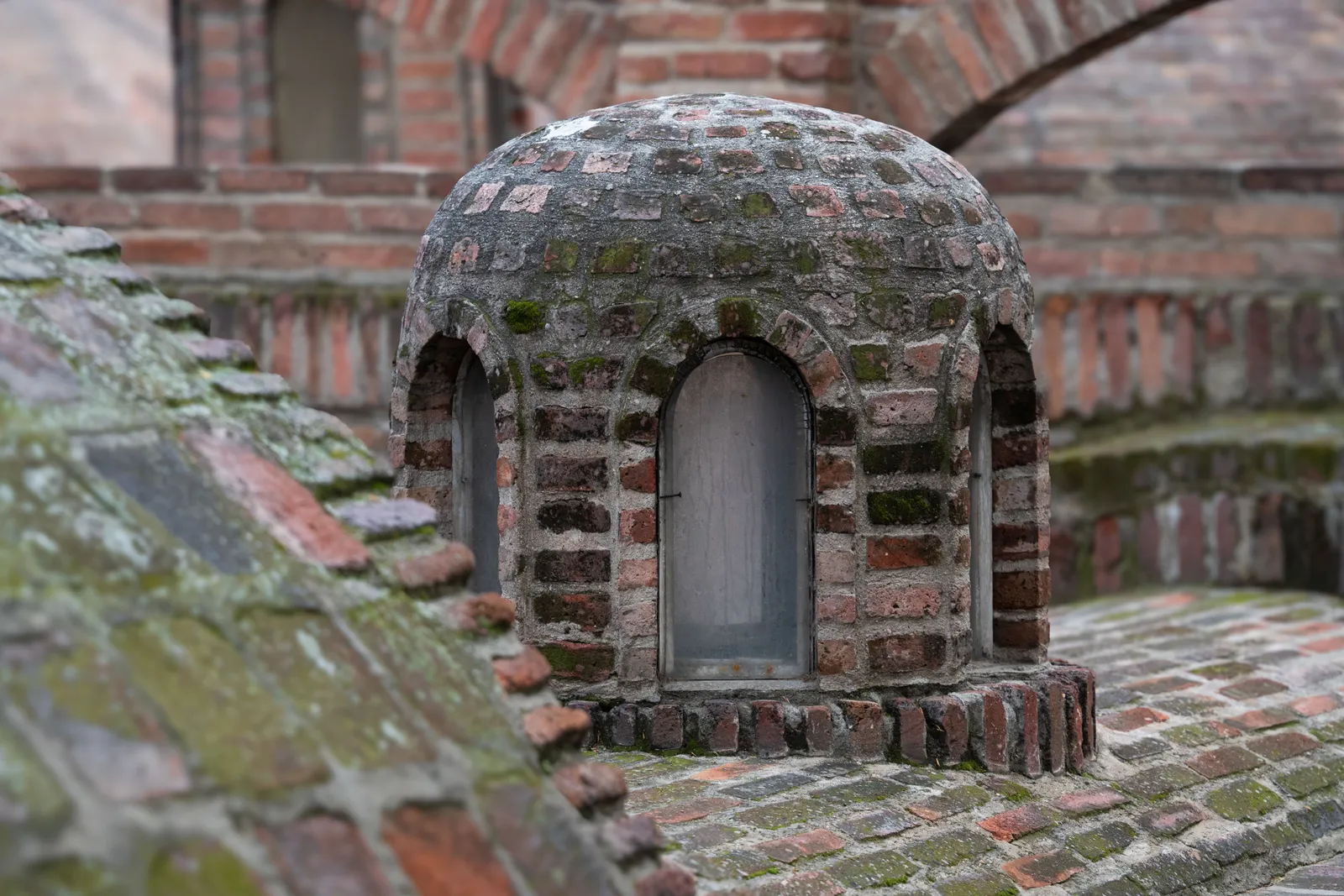
In the afternoon take the cable car from Rike Park up to Narikala, walk the wall, stand under the aluminium Mother of Georgia holding a sword in one hand and a bowl of wine in the other, and come down the path through the botanical garden or the Betlemi stairs. Then the baths. Abanotubani is a cluster of brick domes over sulphur springs, with private rooms by the hour and a scrubbing that is more vigorous than you expect. It is the correct way to end a first day of walking, and our guide to the baths explains how the rooms and prices work.
Food: khinkali somewhere unpretentious, eaten by the dozen, and read how to hold them first. The signature experience: an hour in a private sulphur room with the scrub, which costs less than a cinema ticket in most of Europe. Optional tour: a walking tour of the old town covers the layers, which are hard to read alone: Persian, Russian, Soviet and the last twenty years, all on one street.
Day 2: The other Tbilisi
The second day is for the city that is not on postcards. Rustaveli Avenue is the Soviet ceremonial spine, lined with the parliament, the opera house and the national museum, whose two floors matter: the gold from Colchis in the archaeology hall, and the Soviet occupation exhibition upstairs, which is short, unsparing and the best twenty minutes of history you will get here.
North of the river, Fabrika is a Soviet sewing factory turned into a hostel with a courtyard of bars, studios and shops, and it is the single easiest place to understand where young Tbilisi went. Around it, Chugureti and Marjanishvili have the balconies without the tourists. Fill the gaps with the mosaic hunt: bus stops, wedding palaces and the ceiling of the Ministry of Roads building carry Soviet modernist mosaics that are being lost building by building.
Food: this is the district for the new Georgian kitchen, and also for the best bakeries; ask for a shoti straight out of the clay oven wall. The signature experience: the courtyard at Fabrika in the early evening, which is a genuine cross section of the city. Optional tour: a Soviet architecture and mosaics tour, which sounds niche and is the tour people talk about afterwards.
Day 3: Mtskheta and the confluence
Half an hour out of the city sits the old capital, and it is the reason Georgia is Christian. Svetitskhoveli, the eleventh century cathedral in the middle of Mtskheta, is where the country’s church was founded and where the robe of Christ is said to be buried; it is enormous, plain and still in constant use, and the frescoes and carved facades reward a slow circuit. The town around it is small, walkable and busier with Georgian visitors than foreign ones, particularly at weekends.
Above the town, on a bare hill across the water, Jvari looks down on the meeting of the Aragvi and the Mtkvari from the sixth century. It is one of the oldest surviving churches in the country and the view of the two rivers joining is the image that a poem every Georgian schoolchild learns is built on. Go up in the late afternoon. On the way back, the Shiomghvime cave monastery in its gorge is a quiet detour that very few day trips include.
Food: the bakeries around the cathedral do lobiani, a bean filled bread, and the town has a good line in churchkhela. The signature experience: Jvari at the hour before sunset with the two rivers below. Optional tour: our Mtskheta guide covers doing this alone, and a driver for the afternoon adds Shiomghvime without difficulty.
Day 4: Uplistsikhe and Gori
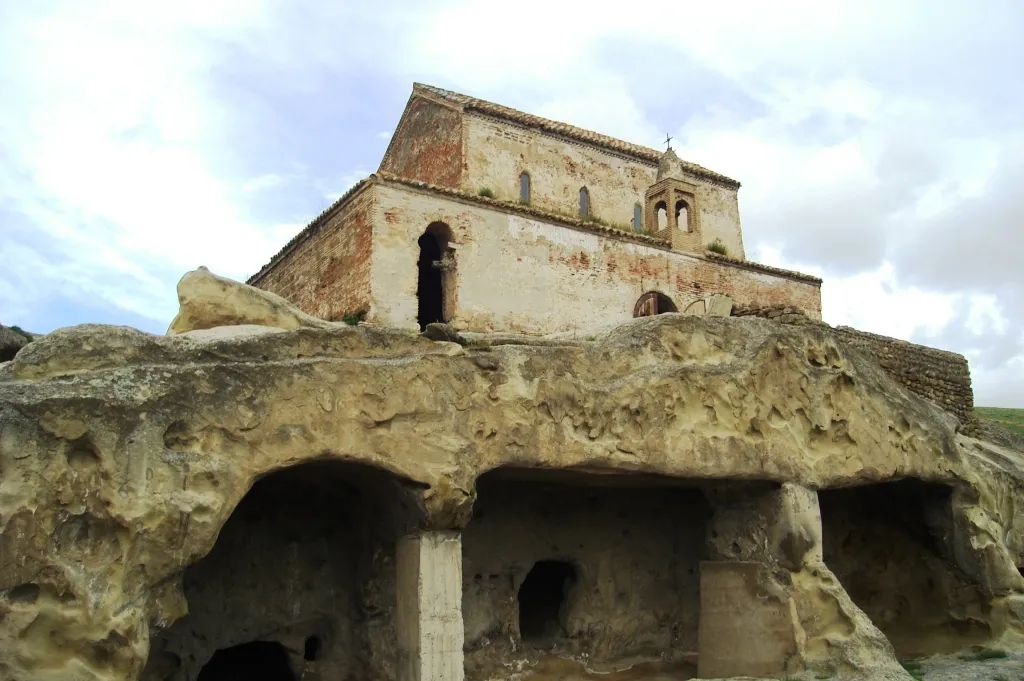
The long day out goes west. Uplistsikhe is a town cut into a rock hillside above the Mtkvari, lived in from well before the Christian era and abandoned after the Mongols: carved halls, a theatre, wine cellars in stone, and an escape tunnel down to the river that you can walk. A brick church sits on top of the ridge, which is why the site reads as two religions at once. Go early, because there is no shade, and mind the rock underfoot after rain.
Ten minutes away, Gori has the museum of the man born in the house preserved under a canopy outside it, with his railway carriage parked alongside. It is a strange and instructive hour, presented largely as it was decades ago, and it says as much about how the past is handled here as about the man himself. If you would rather not, the fortress above the town and the ruined cave town of the same region fill the time.
Food: eat in Gori rather than at the site, where there is very little. The signature experience: the tunnel at Uplistsikhe, cut through rock down to the water. Optional tour: most people take a day tour from Tbilisi that pairs the two, which solves the transport problem in one stroke.
Day 5: Markets, and the way you leave
Spend the last day buying things and eating. The Dry Bridge market is a permanent flea market by the river where Soviet cameras, medals, porcelain, carpets and genuine antiques are laid out on tables next to reproductions of all of them, and it is the best souvenir hunting in the country if you are willing to look. Dezerter market, near the station, is the food one: cheese by the wheel, spice mounds, churchkhela strung by the metre and pickled everything.
Finish with a supra, the long Georgian table, ideally somewhere that does the toasts properly, and understand that this is a structure rather than a meal: a tamada leads, the toasts have an order, and the evening has an arc. If you have an hour spare before the airport, the funicular up Mtatsminda gives you the whole city from above, with an old amusement park at the top.
Food: at the market, buy sulguni, tkemali plum sauce and a bag of svanetian salt; at dinner, order what the table orders. The signature experience: the Dry Bridge on a Sunday morning, when the sellers are out in full. Optional tour: a food tour through the markets is the efficient version of this day and comes with the vocabulary.
Practical tips
- The metro is cheap and quick and the same card works on the buses; our transport notes cover the minibus network for the day trips.
- The old town is steep and cobbled and the pavements are uneven everywhere. Shoes matter more than in most cities this size.
- Sulphur baths are booked by the room and by the hour rather than per person, so the price splits well between two or three.
- Sunday is the day for the Dry Bridge and for Mtskheta being full of Georgian families, which is a feature rather than a problem.
- For where the city sits against the coast if you are choosing a base for a longer trip, Batumi against Tbilisi sets out the trade.
- Cash still matters in the markets and for the bath rooms; see money and payments.